

What if that recurring calf tightness or nagging shoulder ache isn't actually a "tight muscle" problem? You've likely spent hours on a foam roller or booked a standard sports massage Liverpool only to find the same familiar tension returning just days later. It's exhausting to feel stuck in a cycle of short-term relief that never quite translates into better performance or freedom of movement. You deserve a recovery strategy that respects your training volume and addresses why your body is creating tension in the first place.
We agree that temporary fixes are no longer enough for your athletic goals. In this guide, you'll learn how to move beyond passive rubbing and use sports massage as a tactical tool for long-term recovery and movement mastery. We'll break down the difference between symptomatic relief and structural resolution, explaining how a root cause approach identifies the true source of your restriction. By the end, you'll understand exactly how to integrate soft tissue work into your training to unlock your full physical potential and move with confidence.
Key Takeaways
- Understand why traditional, symptom-focused treatments often lead to a cycle of recurring tension rather than lasting relief.
- Discover how a specialist sports massage liverpool session acts as a diagnostic window to identify underlying movement dysfunctions.
- Learn to distinguish when you need soft tissue maintenance and when a full physiotherapy assessment is required for injury rehabilitation.
- Gain a practical framework for managing your recovery between sessions, including the importance of building core strength to support sustainable movement.
- Shift your perspective from passive recovery to a proactive partnership that prioritises long-term performance and physical resilience.
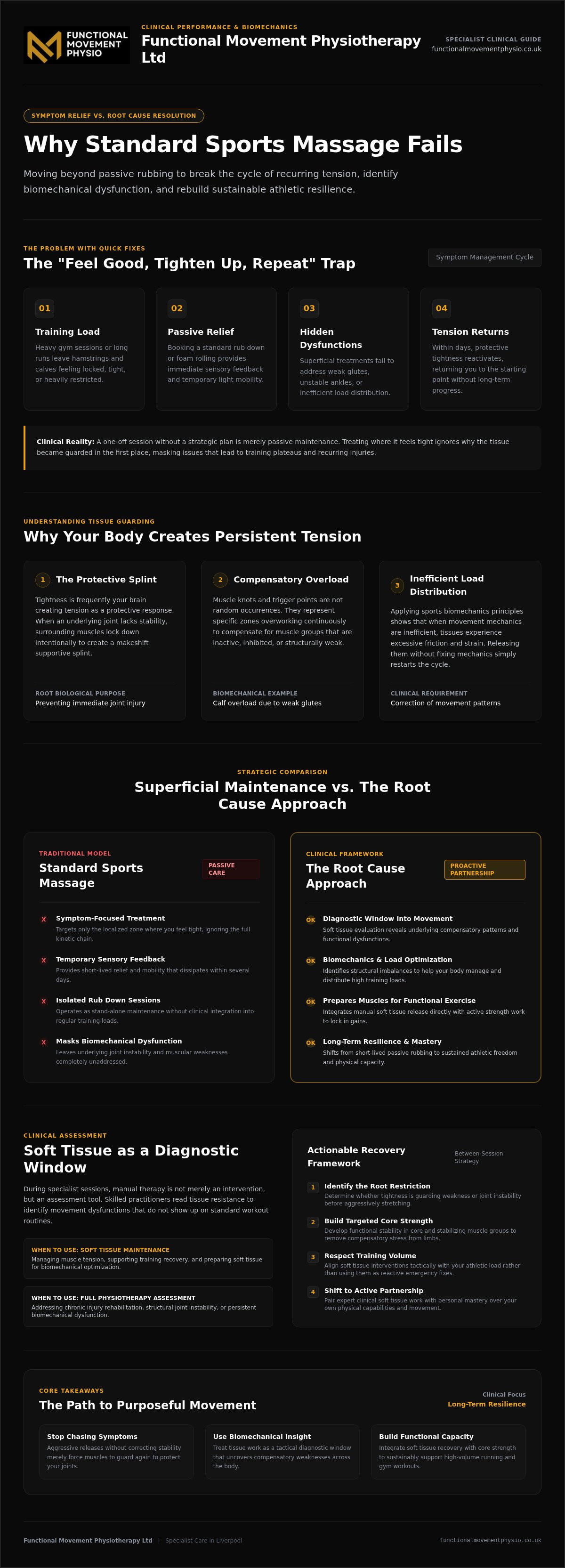
The Problem with Quick Fixes: Why Standard Sports Massage Often Fails
You know the feeling well. You finish a heavy session at the gym or a long run along the Mersey, and your hamstrings feel like lead. You book a sports massage liverpool to "rub it out." It feels fantastic at the time, and you walk out of the clinic feeling lighter and more mobile. But by Thursday, that same nagging restriction is back. This "feel good, tighten up, repeat" cycle is the primary frustration for many active individuals who feel they're doing everything right but getting nowhere with their recovery.
To better understand why superficial relief isn't the whole story, watch this helpful video on athletic performance and anatomy:
Passive treatments are often seductive because they provide immediate sensory feedback. When a therapist works on a tight muscle, it feels productive. However, if that tightness is a compensatory response to a weak glute or an unstable ankle, the relief will always be temporary. Relying on short-term fixes masks underlying biomechanical issues that, if left unaddressed, eventually lead to recurring injuries and training plateaus.
The Trap of Symptom Management
Treating where it feels tight often ignores why the tissue became guarded in the first place. A one-off session without a long-term plan is just maintenance, not a solution. Effective recovery requires clinical oversight to ensure that soft tissue work isn't just a "rub down" but a strategic intervention. By applying the principles of sports biomechanics, we can see how your body distributes load. If your movement patterns are inefficient, your muscles will tighten up again simply to protect you from further damage. This is why a massage alone is rarely a complete solution for chronic issues.
Breaking the Cycle of Recurring Tightness
It's common to feel a sense of anxiety when your body feels constantly "stiff" despite stretching every morning or using a foam roller. You might worry that you're just "getting old" or that your body isn't built for high-performance training. In reality, your brain often creates tension as a protective mechanism. If a joint lacks stability, the surrounding muscles will lock down to provide a makeshift splint. This is why a standard sports massage in Liverpool must be part of a broader strategy. We want to validate your desire for a permanent resolution. You don't need more "releasing"; you need to understand the root cause of the tension so you can move with genuine freedom and confidence.
The Root Cause Approach: Integrating Soft Tissue Therapy with Biomechanics
A root cause approach is the difference between surviving your training and mastering it. Instead of viewing tension as an isolated problem to be "fixed," we see it as a symptom of a deeper movement dysfunction. When you book a sports massage in Liverpool, the session becomes a window into your movement habits. We aren't just looking for tight spots; we're looking for the biomechanical reasons your body has stopped moving efficiently. Our goal is to help you transition from physical limitation to peak performance by identifying the source of your discomfort.
By integrating soft tissue work with an understanding of how your body moves, we can prepare your muscles for functional exercise. This isn't about passive recovery. It's about a partnership where we provide the expert intervention and you gain the mastery over your own physical capabilities. We focus on optimization and physical capacity, ensuring that every session moves you closer to your long-term athletic goals.
Soft Tissue as a Diagnostic Tool
During a session, a skilled therapist uses manual therapy to identify specific imbalances that might not be obvious during a standard workout. Muscle knots or "trigger points" aren't random occurrences. They often represent areas of the body that are overworking to compensate for a lack of stability elsewhere. For example, chronic calf tightness might actually be a sign that your gluteal muscles aren't engaging properly during your running gait.
This hands-on assessment aligns with NHS guidance on physiotherapy, which emphasises the importance of a professional diagnosis for managing musculoskeletal issues. Understanding these patterns is a vital step in your recovery journey. It's why we often recommend an Initial Physiotherapy Consultation to map out a clear, evidence-based path forward that addresses your specific movement habits.
Unlocking Movement through Manual Therapy
The true power of manual therapy lies in its ability to reduce neural sensitivity. When your nervous system feels "threatened" by poor movement or old injuries, it keeps your muscles in a state of high tension. A targeted sports massage liverpool helps dial down this protective response, creating a window of opportunity where you can retrain your movement patterns without pain.
This preparation is essential before moving into more active, strength-based interventions. We often use this improved mobility to support the results of a comprehensive gait analysis or to ensure you get the most out of clinical pilates in Liverpool. By softening the tissue first, we make it easier for you to build the stability required for sustainable results. If you're ready to move beyond temporary relief, it might be time to book an appointment and start your journey toward movement mastery.
Sports Massage vs. Physiotherapy: Choosing the Right Tool for Your Recovery
Choosing between a standard rub down and a full clinical assessment often causes confusion for athletes and gym goers. While both involve manual contact, their objectives differ significantly. A sports massage liverpool is primarily a maintenance tool designed to manage soft tissue tension and support recovery. Conversely, physiotherapy is a diagnostic process aimed at identifying and treating the underlying cause of pain or dysfunction. Understanding which one you need is the first step toward a sustainable training plan.
Both modalities work best when they aren't used in isolation. We view them as complementary parts of a structured recovery strategy. Whether you need a quick reset after a race or a deep dive into a chronic injury, selecting the right tool ensures you don't waste time on treatments that only offer temporary relief.
When to Book a Sports Massage
A sports massage is your primary choice for recovery between intense training blocks. It's particularly effective for managing general muscle fatigue and the psychological stress that comes with high volume training. According to an NCCIH review on massage therapy, manual work is highly effective for easing short-term pain and tension, making it an excellent choice for maintaining mobility in healthy athletes.
We offer two distinct durations to suit your specific needs:
- 30 Minute Sports Massage: Ideal for targeted work on a specific area, such as focusing purely on the calves and hamstrings after a marathon or heavy leg day.
- 60 Minute Sports Massage: Best for a more comprehensive session that addresses multiple muscle groups, allowing time for deeper work and a more systemic recovery effect.
When a Physiotherapy Consultation is Essential
If your muscle tightness is accompanied by sharp pain, swelling, or a loss of strength, a massage is likely insufficient. These are red flags that indicate a need for a full clinical assessment. Recurring pain that persists for more than 48 hours requires a formal diagnosis rather than just a superficial release. This is where sports physiotherapy in Liverpool becomes necessary to rule out structural damage or significant biomechanical failures.
Physiotherapy allows us to use advanced modalities that massage cannot replicate. For example, shockwave therapy in Liverpool is often used to treat chronic tendon issues that have become resistant to manual therapy. If you feel stuck in a cycle of injury, a consultation provides the diagnostic clarity needed to build a long-term resolution. We move beyond the "where" of your pain to answer the "why," ensuring your recovery is built on a foundation of evidence rather than guesswork.
Actionable Advice: Strategies for Sustainable Progress
Sustainable results don't happen by accident. They require a partnership between the professional care you receive in the clinic and the habits you maintain at home. While a sports massage liverpool provides the necessary reset for your soft tissues, your daily choices dictate how long that relief lasts. To help you move beyond temporary fixes, we recommend a simple four step framework for managing your physical health.
- Identify early: Use a weekly body scan to spot "niggles" before they become injuries. If a specific area feels restricted for more than three consecutive days, it's time to investigate.
- Manage the load: Avoid the "boom and bust" cycle by tracking your training volume. Sudden spikes in intensity are the primary driver of tissue breakdown.
- Prioritise active recovery: Replace complete rest with low intensity movement to promote blood flow and tissue healing.
- Support the structure: Focus on building core strength to prevent back pain, ensuring your spine has the stability it needs to handle athletic loads.
Optimising Your Recovery Habits
Your soft tissue health is deeply influenced by your systemic environment. Sleep and hydration are often overlooked, yet they're the foundation of cellular repair. Aim for consistent sleep patterns to allow your nervous system to fully recover from training stress. When you're dehydrated, your fascia becomes less pliable, increasing the risk of the very "knots" you're trying to avoid.
Active recovery is almost always superior to complete rest for the modern athlete. Gentle movement, such as walking or mobility drills, helps clear metabolic waste and maintains joint range of motion. Use this time to check in with your body. If you notice a persistent restriction, it's a sign that your current training load might be exceeding your tissue capacity.
Maintaining Long-Term Results
Professional sessions are the heavy lifting of your recovery, but tools like foam rolling can act as a useful supplement. Think of rolling as a way to maintain the pliability we achieve during your massage. However, remember that you cannot roll away a strength deficit. Progressive loading is the only way to improve the actual capacity of your tendons and muscles.
Integrating clinical pilates for back pain into your weekly routine is a powerful way to bridge the gap between treatment and performance. It teaches you how to control your movement and distribute force evenly across your joints. This proactive approach ensures that your sports massage liverpool remains a tool for optimization rather than a recurring necessity for pain relief.
Specialist Care in Liverpool: Your Path to Purposeful Movement
Functional Movement Physio operates on a clear principle; your recovery should be as tactical as your training. We don't believe in the passive, one off treatments that often dominate the industry. Instead, we offer a high performance mentorship that treats sports massage liverpool as a vital component of a larger movement strategy. Our clinic serves as a specialist hub for Liverpool athletes, runners, and gym goers who are tired of the cycle of recurring pain and want to unlock their genuine physical potential.
Our commitment is to long term results rather than temporary relief. By partnering with us, you aren't just getting a treatment; you're gaining a clear understanding of your body's mechanics. We focus on the restoration of full, purposeful movement, ensuring that every session contributes to your resilience and physical capacity. We help you master your own capabilities so you can stop managing symptoms and start focusing on performance.
What to Expect from Your Session
When you enter our clinical environment, you'll find a space dedicated to professional standards and evidence based care. Every sports massage liverpool session begins with a clinical check in to align the treatment with your specific training goals for that week. Whether you're tapering for a marathon or recovering from a heavy lifting block, the work is tailored to your immediate needs and long term objectives.
You won't leave with just a "feel good" factor. You'll receive expert guidance on the next steps for your recovery, which might include specific mobility drills or advice on training load. This structured approach ensures you feel professionally guided at every touchpoint, removing the confusion that often follows generic treatments. We believe in a partnership where our expertise helps you achieve sustainable results.
Take the Next Step Toward Peak Performance
If you're a runner, you might benefit from our specialist Runner's Assessment, which includes video gait analysis to pinpoint the root cause of your recurring niggles. We also offer clinical pilates in Liverpool and shockwave therapy in Liverpool to address the complex issues that manual work alone cannot solve. Our goal is to provide you with the tools to maintain a healthy, active lifestyle without the fear of re-injury.
Don't let frustration or the fear of physical limitation hold you back from your training goals. Partner with an expert who understands the demands of high performance movement and provides a clear, actionable path forward. We're here to help you move beyond temporary fixes and achieve movement mastery.
Master Your Movement and Unlock Your Performance Potential
You now understand that sustainable recovery isn't about chasing symptoms or accepting temporary relief as the norm. By shifting your focus to the root cause of your tension, you transform your sports massage liverpool from a simple maintenance task into a tactical performance tool. We've explored how integrating soft tissue therapy with biomechanical insights allows you to break the cycle of recurring tightness and move with genuine freedom during your training.
Our physiotherapy-led approach ensures that every session is underpinned by clinical expertise and a deep understanding of your athletic goals. Whether you're utilizing our specialist biomechanical gait analysis for runners or seeking expertise in chronic injury rehabilitation, our goal remains the restoration of full, purposeful movement. You have the power to master your physical capabilities and move beyond the limitations of your current restrictions.
It's time to stop settling for short-term fixes and start building a foundation for long-term athletic success. We're here to guide you through every step of that transition, ensuring you move with confidence and reach your peak performance.
Frequently Asked Questions
Do I need a sports massage if I am not an elite athlete?
You don't need to be a professional athlete to benefit from a sports massage liverpool. This treatment is designed for anyone who participates in regular physical activity, whether you're a recreational runner or a gym enthusiast. It helps manage the physical stress of training and supports functional movement patterns. Our goal is to help you master your own physical capabilities and prevent the niggles that often hinder daily life and personal performance goals.
How often should I have a sports massage to see performance benefits?
Frequency depends entirely on your training volume and specific goals. For most active individuals in Liverpool, a session every four to six weeks provides a necessary reset for the soft tissues and helps identify potential biomechanical issues early. If you're in a high intensity training block for a marathon or competition, you might require more frequent support. We work with you to create a structured recovery plan that respects your body's specific loading patterns.
Is sports massage supposed to be painful to be effective?
Effective treatment shouldn't be excessively painful. While you might experience some "good pain" or discomfort when we work on restricted areas, the goal is therapeutic release rather than endurance. If you're tensing up against the pressure, your nervous system will actually resist the treatment, making it less effective. We maintain a constant dialogue to ensure the intensity is appropriate for your tolerance while still achieving the deep tissue changes required for better mobility and performance.
What is the difference between deep tissue massage and sports massage?
Deep tissue massage focuses on general muscle tension and relaxation using firm pressure. In contrast, a sports massage liverpool is a more tactical intervention that considers your specific movement habits and training demands. We use a variety of manual techniques to address functional restrictions and support your performance. It's less about a general rub down and more about a clinical partnership aimed at optimising how your body moves during your favourite activities.
Can sports massage help with an injury I have had for a long time?
Soft tissue work can certainly help manage long term discomfort, but chronic issues often require a more comprehensive diagnostic approach. If you've been stuck with an injury for months, we usually recommend an Initial Physiotherapy Consultation first. This allows us to determine if the issue is purely muscular or if you require advanced interventions like shockwave therapy. Once we identify the root cause, targeted massage becomes a powerful tool for restoring long term mobility and physical resilience.
Should I have a massage before or after a big race or event?
Both have distinct roles. A pre-event session, usually performed two to three days before a race, focuses on light, fast movements to stimulate blood flow and prepare your nervous system. Post-event sessions are designed for recovery, helping to ease muscle soreness and restore tissue pliability after heavy loading. We advise against having a deep, intense massage immediately before a race, as your body needs time to settle and adapt to the manual changes.
What should I wear to my sports massage appointment in Liverpool?
We recommend wearing loose, comfortable clothing that allows easy access to the areas requiring treatment. For lower limb issues, please bring a pair of shorts. If we're focusing on your upper body, a vest or sports bra is ideal. This ensures we can perform a thorough biomechanical check and apply manual techniques effectively. We prioritise your comfort and professional standards, ensuring the clinical environment feels safe and structured throughout your entire consultation and treatment.
How long do the effects of a sports massage typically last?
You'll often feel immediate relief and improved mobility that lasts for several days following a session. However, the long term benefits depend on how you integrate our advice into your daily routine. If we identify a movement dysfunction, the results will be temporary unless you also address the underlying cause through progressive loading or core stability work. We focus on providing you with the mastery and knowledge needed to sustain those physical gains between your clinic visits.
Article by
Stuart Goldfinch
HCPC PH112156
Specialist MSK Physiotherapist
Ex UK SAS Trainer
Graduate Sports Rehabilitator


