

What if the recurring pain in your calf or back isn't a sign of weakness, but a signal that your body is compensating for an entirely different issue? You've likely spent hours scrolling through conflicting online advice or been told to simply rest and wait it out. It's frustrating to feel like you're walking on eggshells, fearing that one wrong move at the gym or on a run will set your recovery back by months. If you're struggling with a persistent musculoskeletal strain: it's time to stop guessing and start looking at the mechanics of how you move.
You deserve more than a temporary fix that merely masks the symptoms. This guide will show you how to move beyond basic symptom management and identify the true source of your injury for a sustainable return to peak performance. We'll explore why traditional rest often fails, how to pinpoint the mechanical drivers of your pain, and the exact steps you can take to rebuild confidence in your body's resilience. By shifting your focus from the site of the pain to the root cause, you can stop managing an injury and start mastering your physical capabilities again.
Key Takeaways
- Learn to identify the severity of your injury by understanding the grading system that separates simple overstretching from complex tissue ruptures.
- Discover why relying on total rest and passive treatments like ice often stalls progress and fails to provide sustainable results.
- Master the ability to identify the mechanical source of a musculoskeletal strain: by viewing your body as a connected kinetic chain.
- Transition from fear to confidence by applying optimal loading strategies that promote tissue healing and long term physical resilience.
- Understand how specialist assessments in Liverpool can help you move past temporary symptom relief to achieve a full return to peak performance.
Understanding Musculoskeletal Strain and the Limits of Traditional Care
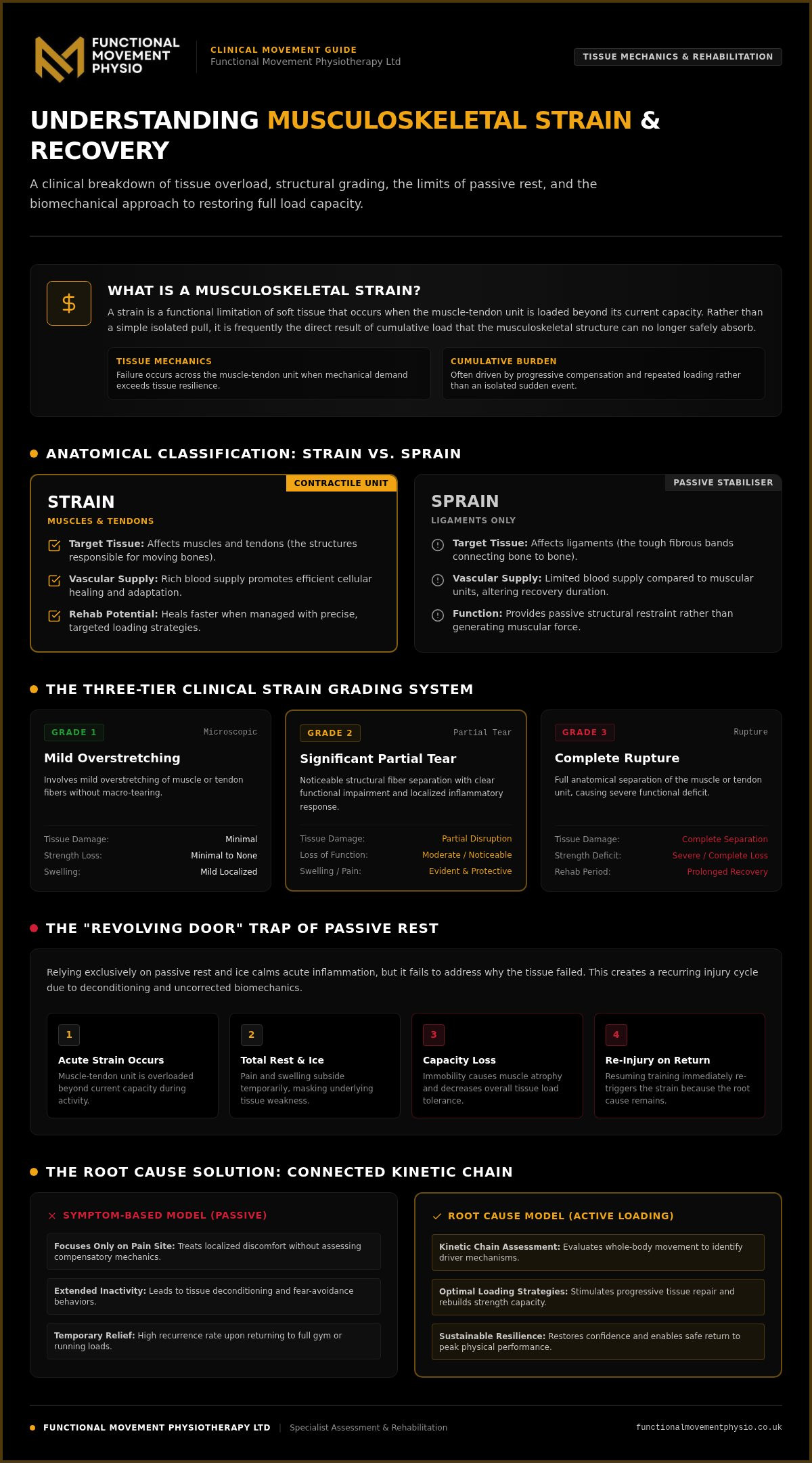
A musculoskeletal strain: is more than a simple tear or a localized pull. It represents a functional limitation of the soft tissue that occurs when the muscle-tendon unit is overloaded beyond its current capacity. While many people view an injury as a single point of failure, it's often the result of a cumulative load that your body can no longer manage. Understanding the severity of your injury is the first step toward a successful recovery.
Clinicians use a three-tier grading system to categorize these injuries. A Grade 1 strain involves mild overstretching of the fibers with minimal loss of strength. A Grade 2 strain is a more significant partial tear, often accompanied by noticeable swelling and a loss of function. A Grade 3 strain is a complete rupture of the muscle or tendon, which usually requires a much longer rehabilitation period. According to anatomical classifications of muscle strain injuries, these disruptions range from microscopic damage to complete tissue separation.
To better understand how these injuries impact your movement, watch this helpful video:
When you experience stiffness or swelling, your body is using inflammation to protect the injured site. This process is essential for the early stages of healing, but it can also lead to a cycle of pain and inactivity if not managed correctly. Generic advice often focuses on simply making these symptoms disappear with rest or ice. This approach fails to address why the injury happened in the first place, leading to a high risk of the strain returning the moment you head back to the gym.
The technical difference between a strain and a sprain
It's easy to confuse a strain with a sprain, but the distinction is vital for your recovery timeline. Strains involve muscles or tendons, which are the tissues that move your bones. Sprains affect ligaments, the tough bands of tissue that connect bone to bone. Because muscles have a rich blood supply compared to ligaments, a musculoskeletal strain: typically heals faster, provided you apply the correct loading strategies. Ultimately, a musculoskeletal strain is a functional limitation of soft tissue that requires a targeted approach to restore full capacity.
When your symptoms signal a deeper issue
If you find that your pain persists beyond a few days or you notice significant bruising, your strain might be more than a minor pull. While inflammation is a natural part of the cellular healing cascade, chronic swelling can signal that the tissue is struggling to adapt to the loads you're placing on it. This physical limitation often carries a psychological weight, too. Feeling fragile or fearing that your body will fail you again is a common response to injury. This fear of movement can be just as limiting as the physical tear itself. Acknowledging this mental barrier is a key part of moving from a state of injury back to peak performance.
The Problem: Why Quick Fixes and Passive Rest Often Fail
For years, the standard response to a musculoskeletal strain: has been to stop everything and wait. You've likely heard the advice to "just rest" or seen NHS guidance on sprains and strains that emphasizes the PRICE protocol. While these steps can manage acute discomfort, they're often insufficient for a long term solution. Total rest is a double-edged sword. While it might calm initial inflammation, it also leads to muscle atrophy and a decrease in tissue load tolerance.
This creates a "revolving door" of injury. You rest for two weeks, the pain subsides, and you head back to the gym. Suddenly, the same sharp pull returns because the underlying weakness was never addressed. It's incredibly frustrating to be told to "just stop running" when your goal is to stay active. Passive treatments like ice and rest only address the symptoms of a musculoskeletal strain: without fixing the mechanical dysfunction that caused the tissue overload in the first place.
The trap of symptom-based treatment
Relying on painkillers or anti-inflammatories to get through a workout is a dangerous strategy. These medications mask the pain signals that your body uses to prevent further damage. If you can't feel the strain, you're more likely to push past your safe limits. This often turns a minor issue into a chronic problem that takes months to resolve.
The spot where you feel the pain isn't always where the problem started. A calf strain might be the result of poor hip stability, or lower back pain might stem from stiff ankles. By only treating the spot that hurts, you ignore the root cause. Long periods of inactivity also lead to deconditioning. Your muscles become less capable of handling stress, making you more vulnerable to future injuries when you finally try to resume your routine.
Why your current rehab might be incomplete
Many people feel stuck because their rehabilitation lacks a clear bridge back to their specific sport or activity. A generic exercise sheet from a GP isn't designed for an athlete or a regular gym-goer. These handouts often focus on low-level movements that don't prepare your tissues for the high-impact forces of running or lifting.
The missing link is progressive loading. Tissues need controlled stress to repair and get stronger. Without a plan that gradually increases the demands on your body, you'll remain in a state of physical limitation. If you're tired of temporary fixes, you can schedule a specialist consultation to identify the mechanical gaps in your recovery plan. This transition from passive rest to active, purposeful movement is how you break the cycle of recurring injury and return to full capacity.
The Root Cause Approach: Identifying the Source of Your Strain
Your body doesn't operate as a collection of isolated parts; it functions as an integrated kinetic chain. When you experience a musculoskeletal strain: the site of the pain is rarely the actual source of the problem. Instead, the injured tissue is often the "victim" of a mechanical failure occurring elsewhere in your movement pattern. If one joint is stiff or a specific muscle group isn't firing correctly, your body compensates by overloading another area to complete the task.
While the MedlinePlus guide to sprains and strains provides a clear clinical baseline for understanding tissue damage, a specialist approach looks beyond the tear itself. We focus on identifying these hidden dysfunctions before they lead to a cycle of recurring injury. Understanding this connection is the first step toward finding the root cause of my running pain and ensuring that your recovery is built on a solid foundation.
Biomechanical imbalances and movement patterns
Biomechanical imbalances are often the silent drivers of chronic soft tissue issues. For example, if you have restricted hip mobility, your body may force your hamstrings or calves to work overtime to generate power during a run or a squat. Over time, this excessive demand leads to a musculoskeletal strain: that won't resolve with rest alone because the hip restriction remains.
Your gait matters regardless of whether you are a competitive athlete or a casual gym-goer. The way your foot strikes the ground and how your pelvis rotates dictates how force is distributed through your limbs. Undergoing a comprehensive gait analysis in Liverpool allows us to see these movement inefficiencies in real-time. By correcting these patterns, we take the unnecessary stress off your injured tissues, allowing them to heal and grow stronger.
How specialist assessment changes your outcome
A specialist assessment involves a detailed functional movement screen. This process goes beyond a standard physical exam by testing how you move under load and across different planes of motion. We look for muscle compensations where stronger muscles take over for weaker ones, a common cause of recurring pulls and tears.
Identifying these gaps allows us to transition your care from simply "fixing" a broken part to "optimising" your entire movement system. This shift in perspective is vital for long-term health. It moves you away from the fear of re-injury and toward a proactive state where you understand your body's capabilities. When you address the root cause, you aren't just recovering; you're building a more resilient, high-performing version of yourself.
Actionable Advice: Realistic Steps for Sustainable Progress
Managing a musculoskeletal strain: requires a shift in mindset from passive waiting to active, intentional recovery. The goal is to move as much as you safely can without overstressing the healing tissue. This is known as optimal loading. Unlike total rest, which can lead to weakness, optimal loading involves finding the "sweet spot" of activity that stimulates tissue repair without causing further damage. It allows you to maintain your cardiovascular fitness and muscle tone while your injury heals.
You can monitor your progress by using a simple pain scale from zero to ten. During your rehab exercises, a pain level of two or three is often acceptable, provided it doesn't increase after you finish or feel worse the next morning. If your pain stays low and your range of motion improves, you're on the right track. This data-driven approach replaces guesswork with confidence, helping you understand exactly what your body can handle at each stage of the journey.
Immediate management for the first 48 hours
Modern sports medicine has moved beyond the old RICE protocol. We now use the PEACE & LOVE framework for acute injuries. During the first few days, focus on PEACE: Protect the area from further stress, Elevate the limb, Avoid anti-inflammatory medications that can blunt the natural healing response, Compress the site to manage swelling, and Educate yourself on the recovery process. This phase is about creating the best environment for your body to begin its cellular repair work.
While icing was once the standard, current evidence suggests that prolonged icing can actually delay healing by reducing the activity of cells that clear away damaged tissue. Use ice sparingly for short-term pain relief, but don't rely on it as a cure. Once the initial sharp pain subsides, usually after 48 hours, gentle heat can help increase blood flow and relax tight muscles. Follow this early-phase checklist to stay safe:
- Prioritize gentle, pain-free range of motion over complete immobilization.
- Avoid heavy lifting or high-impact activities that cause sharp, sudden pain.
- Keep the injured limb elevated above your heart when resting to assist drainage.
- Focus on light movements in other parts of your body to keep your circulation active.
Long-term strategies for injury prevention
True resilience comes from addressing the imbalances that led to the strain in the first place. Targeted strength training is the most effective way to proof your body against future issues. By building capacity in your muscles and tendons, you ensure they can handle the high-impact forces of the gym or the road. This is where core stability becomes vital. Many runners and athletes benefit from clinical pilates in Liverpool to build the deep structural support needed for high-performance movement.
Recovery is just as important as the training itself. Tools like expert sports massage in Liverpool play a key role in maintaining tissue health and managing the muscle tension that often precedes a strain. By integrating these strategies into your routine, you move away from the "fix and break" cycle and toward a lifestyle of sustainable, purposeful movement.
Specialist Physiotherapy in Liverpool: Your Path to Full Capacity
Choosing the right partner for your recovery is the difference between a temporary fix and a permanent return to the activities you love. At our Liverpool clinic, we don't just treat the site of your pain; we work alongside you as high-performance mentors. Our focus is on bridging the gap between basic rehabilitation and your peak physical capacity. Whether you're a runner aiming for a personal best or a gym-goer tired of a recurring musculoskeletal strain: our goal is to help you master your own movement patterns.
A personalised treatment plan is the foundation of this journey. We move beyond generic exercises to create a roadmap that reflects your specific goals and lifestyle. This structured approach ensures that every session builds on the last, moving you through a logical progression from initial tissue protection to full, purposeful activity. You'll gain a deep understanding of your body's mechanics, replacing the anxiety of injury with the confidence of resilience.
Advanced treatments for complex strains
For individuals dealing with chronic or stubborn injuries, we integrate advanced clinical tools to accelerate the healing process. Shockwave therapy is a particularly effective option for long-standing muscle-tendon issues that haven't responded to traditional care. It uses acoustic waves to stimulate blood flow and trigger the body's natural repair mechanisms at a cellular level. This is often paired with medical acupuncture to manage deep-seated muscle tension and reset the nervous system's response to pain.
These interventions are never used in isolation. They are part of a comprehensive strategy delivered through expert physiotherapy in Liverpool that prioritises long term movement health. By combining these modern treatments with evidence-based loading protocols, we ensure that your tissues aren't just healed, but are actually stronger and more resilient than they were before the injury occurred.
Taking the first step toward lasting results
You don't have to settle for a life of "managing" a recurring musculoskeletal strain: or avoiding the sports you enjoy. The first step toward lasting results begins with a thorough initial consultation. During this session, we conduct a deep dive into your injury history, your current movement limitations, and your long term aspirations. This isn't a rushed assessment; it's a detailed evaluation designed to find the mechanical gaps that others have missed.
Expect a clear explanation of your condition and a transparent plan for your recovery. We'll outline exactly what needs to happen to get you back to the gym or the running track safely. This is your invitation to take control of your recovery journey and move past the frustration of generic advice. By focusing on the root cause, we help you transition from physical limitation to a state of peak performance where you can move with freedom and purpose.
Master Your Movement and Reclaim Your Performance
You don't have to stay stuck in a cycle of recurring injury and frustration. By moving away from generic rest and focusing on a root cause diagnostic approach, you can rebuild your body's resilience. Understanding that a musculoskeletal strain: is often a symptom of movement dysfunction allows you to address the mechanical gaps that hold you back. Our specialist Liverpool clinic provides the expertise in sports injury rehabilitation needed to bridge the gap between recovery and peak capacity.
Whether you're dealing with a recent pull or a chronic issue that refuses to clear, a personalised plan ensures your recovery is sustainable. We focus on identifying the specific imbalances in your kinetic chain, ensuring that when you return to the gym or the track, you're moving better than ever before. It's time to stop managing symptoms and start mastering your physical capabilities.
Take the first step toward lasting results today. You have the inherent potential to move without fear and return to the activities that define your lifestyle. We are ready to help you unlock that potential and achieve your peak performance.
Frequently Asked Questions
How long does it take for a musculoskeletal strain to heal completely?
Healing times for a musculoskeletal strain: vary based on the severity of the tissue damage. A mild Grade 1 strain usually resolves within one to three weeks with proper management. More significant Grade 2 partial tears can take four to eight weeks, while complete Grade 3 ruptures often require months of rehabilitation. Your recovery isn't just about the absence of pain; it's about restoring the tissue's ability to handle the specific loads of your sport.
Can I continue to exercise with a minor muscle strain?
You can often continue to exercise, but you must modify your intensity to stay within a safe threshold. Total rest is rarely the answer. Instead, we recommend optimal loading: performing movements that don't increase your pain above a three out of ten. If running causes sharp pain, you might swap it for cycling or swimming to maintain your fitness while the injured fibers repair. This keeps your movement system active without risking further damage.
What is the difference between a muscle strain and a muscle tear?
A muscle strain and a muscle tear are essentially the same clinical event occurring on a spectrum of severity. Every strain involves some degree of tearing at the microscopic or macroscopic level. A minor pull is a small tear of a few fibers, whereas a severe musculoskeletal strain: involves a significant disruption or a complete rupture of the muscle-tendon unit. Understanding the specific grade of your tear is vital for setting a realistic recovery timeline.
Why does my musculoskeletal strain keep coming back every time I run?
Recurring pain usually signals that you haven't addressed the underlying movement dysfunction. While the muscle might have healed, the reason it was overloaded in the first place, such as poor hip mobility or foot mechanics, remains. At our Liverpool clinic, we use specialist gait analysis to find these mechanical gaps. If you don't fix the root cause, you'll likely continue to experience the same injury every time you increase your running mileage.
Is heat or ice better for a musculoskeletal strain?
Neither is a cure, but both have specific roles in your recovery. Ice is useful for short-term pain relief in the first 48 hours, though you should avoid over-icing as it can delay the natural healing process. After the initial inflammatory phase, heat is often more beneficial. It helps to relax tight tissues and increase blood flow to the area, which supports the vascularisation stage of the PEACE & LOVE protocol for soft tissue repair.
When should I see a specialist physiotherapist for a muscle strain?
You should book an Initial Physiotherapy Consultation if your pain doesn't improve within 72 hours or if the injury keeps coming back. Waiting too long often leads to compensatory patterns that make the problem harder to fix later. If your injury prevents you from performing daily tasks or your favourite sport, a specialist assessment in Liverpool will help you identify the root cause and provide a clear, structured plan to return to full capacity.
Can sports massage help with a musculoskeletal strain?
Sports massage is an excellent tool for managing the muscle tension and stiffness that often accompany an injury. It helps to improve circulation and can desensitise painful areas, making it easier for you to perform your rehabilitation exercises. However, massage alone won't fix a mechanical weakness. It works best when integrated into a wider plan that includes progressive loading and functional movement training to ensure your results are sustainable and long term.
How can I prevent musculoskeletal strains in the future?
Prevention is built on increasing your physical capacity and improving your movement efficiency. This involves a combination of targeted strength training and mobility work to ensure your body can handle the demands you place on it. Many of our clients in Liverpool use Clinical Pilates 1:1 to build core stability and address biomechanical imbalances. By identifying your specific movement gaps early, you can stop injuries before they happen and maintain peak performance year-round.
Article by
Stuart Goldfinch
HCPC PH112156
Specialist MSK Physiotherapist
Ex UK SAS Trainer
Graduate Sports Rehabilitator


