

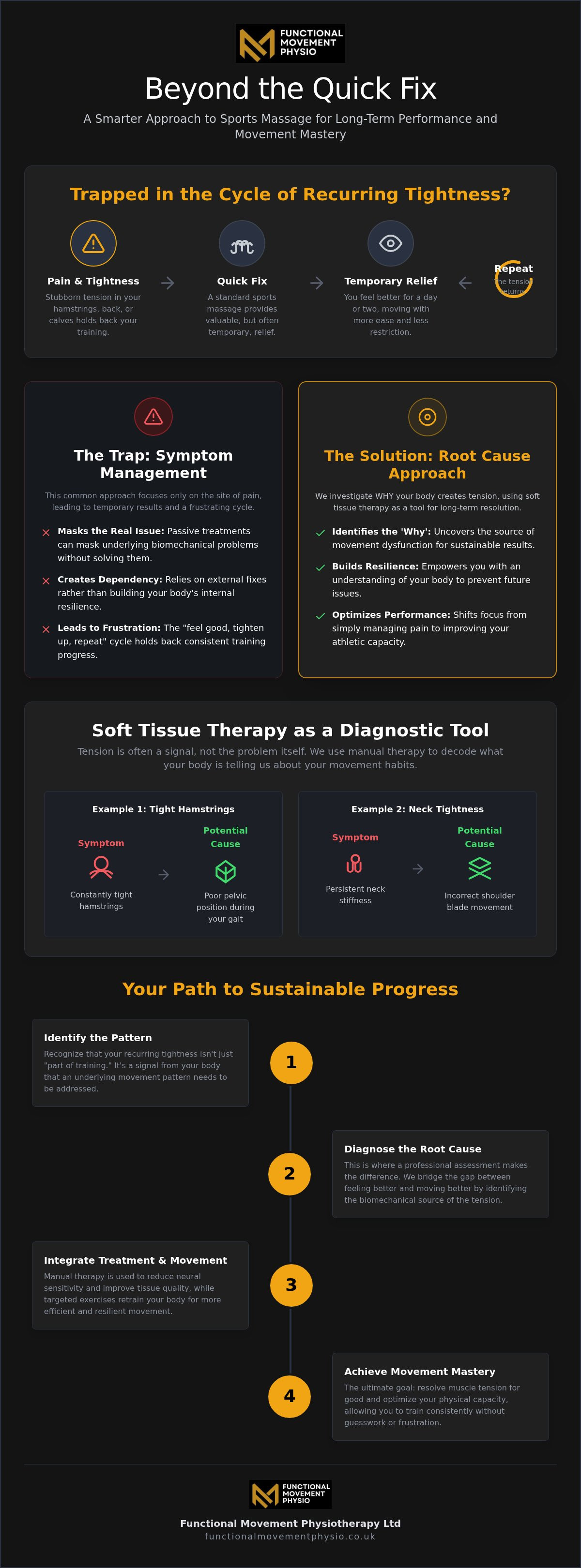
Why does that stubborn tightness in your hamstrings or lower back always seem to return just days after your last session? If you find yourself trapped in a cycle of temporary relief followed by recurring frustration, you aren't alone. Many active individuals seeking a sports massage liverpool discover that while the immediate release feels excellent, it rarely addresses why the tension accumulated in the first place.
It's exhausting to feel like your training is constantly being held back by the same physical limitations. You deserve a recovery strategy that actually sticks. In this article, you'll learn how to move beyond basic symptom management and use sports massage as a tactical tool for long-term performance and movement mastery. We'll examine the difference between a quick fix and a root cause approach, helping you understand exactly how professional soft tissue work fits into your broader training plan for sustainable, purposeful movement. By the end, you'll have a clear path to resolving muscle tension and improving your athletic capacity without the guesswork.
Key Takeaways
- Understand why the "feel good, tighten up, repeat" cycle happens and how to break free from the trap of temporary fixes.
- Discover how a strategic approach to sports massage liverpool acts as a diagnostic tool to uncover your underlying movement habits.
- Learn the specific differences between soft tissue maintenance and professional physiotherapy to ensure you choose the right recovery tool.
- Master a sustainable four-step framework to manage your recovery and maintain mobility between your clinic appointments.
- Shift your focus from simply managing pain to optimizing your physical capacity for long-term athletic success.
The Problem with Quick Fixes: Why Standard Sports Massage Often Fails
You book a session because your calves feel like lead or your lower back is constantly "on." For a day or two, you feel lighter and move with more ease. Then, during your next run or gym session, that familiar pull returns. This cycle is incredibly frustrating for anyone committed to their training. It creates a dependency on external fixes rather than building internal resilience. While a sports massage liverpool provides valuable relief, relying on it as a standalone solution is where many athletes get stuck.
The reality is that passive treatments only address the symptoms of tension. If your muscles are tight, there is always a functional reason for it. By only focusing on the soft tissue, you might be masking underlying biomechanical issues that require a more comprehensive intervention. A massage is a powerful tool, but it's rarely a complete solution for recurring injuries or chronic stiffness. To achieve lasting results, we have to look at how your body moves as a whole system.
The Trap of Symptom Management
Treating the site of pain is a common mistake that leads to temporary results. If your neck is tight, it might be because your shoulder blades aren't moving correctly during your overhead press. If your hamstrings feel short, it could be a sign that your pelvis is poorly positioned during your gait. One-off sessions lack the clinical oversight needed to identify these patterns. Without a long-term plan that integrates assessment with treatment, you're simply managing a symptom rather than solving a problem. True recovery requires a partnership that looks beyond the massage table.
Breaking the Cycle of Recurring Tightness
It's common to feel anxious about persistent stiffness. You might stretch every morning or use a foam roller religiously, yet the results don't last. This happens because your brain often creates tension as a protective mechanism. If a joint feels unstable or a movement pattern is inefficient, your nervous system will "lock down" the surrounding muscles to prevent perceived injury.
A standard massage might temporarily override this signal, but the brain will quickly re-establish that tension because the underlying instability remains. We want to help you move beyond this cycle. Real progress starts when we stop asking where it hurts and start asking why your body feels the need to protect itself. Resolving this requires a shift from passive relaxation to active movement mastery. We validate your desire for a permanent resolution, and that begins with identifying the root cause of your discomfort.
The Root Cause Approach: Integrating Soft Tissue Therapy with Biomechanics
A root cause approach means we don't just ask where you feel tight; we investigate why your body is creating that tension. In our clinic, sports massage in Liverpool isn't just a treat. It's a strategic intervention. We use manual therapy to identify the source of movement dysfunction, ensuring your recovery is sustainable rather than fleeting. This philosophy shifts the focus from managing symptoms to optimising your physical capacity.
When you understand that tension is often a signal rather than the problem itself, your entire perspective on recovery changes. We act as your mentor in this process, helping you decode what your body is telling you. By integrating soft tissue work with a deep understanding of biomechanics, we ensure that every session moves you closer to your performance goals.
Soft Tissue as a Diagnostic Tool
During a session, your therapist isn't just looking for knots. They are mapping your biomechanics. Specific muscle imbalances often point to larger issues in how you move. For example, chronic tension in the hip flexors might be a sign of poor glute engagement or a compensation for a previous ankle injury. By identifying these patterns, we turn a standard session into a diagnostic window that reveals your daily movement habits.
This insight is why we often recommend an Initial Physiotherapy Consultation for those with recurring issues. It allows us to bridge the gap between feeling better and moving better. When we understand the "why" behind the tightness, we can provide a targeted sports massage liverpool that actually contributes to long-term resolution. It's about moving beyond the massage table and into the gym with a clearer understanding of your body.
Unlocking Movement through Manual Therapy
Manual therapy serves a vital role in reducing neural sensitivity. When your brain perceives a threat, it tightens muscles to protect you. Massage helps dial down this "threat" signal, creating a window of opportunity where you can move more freely. We use this window to introduce functional exercises that build strength in your new range of motion. This ensures the relief you feel isn't just a temporary chemical flush, but a doorway to better training.
This transition is crucial. Soft tissue work supports the results of a comprehensive gait analysis by ensuring your muscles are physically capable of adopting the more efficient patterns we identify. From there, we might move into active clinical pilates in Liverpool to solidify those changes. Our goal is to help you master your own physical capabilities, turning you from a passive recipient of care into an active participant in your own performance. If you're ready to stop guessing and start mastering your movement, booking a session is the first step toward sustainable results.
Sports Massage vs. Physiotherapy: Choosing the Right Tool for Your Recovery
Choosing between a massage and a full clinical assessment doesn't have to be confusing. While both involve hands-on work, their objectives are distinct. A standard session for sports massage liverpool focuses on tissue quality, circulation, and the relaxation of overworked muscles. In contrast, physiotherapy is a diagnostic process designed to identify and treat specific injuries or structural dysfunctions. Both tools are valuable, but they serve different purposes in your performance toolkit.
For many athletes, the choice comes down to the current state of their training. If you're looking to maintain your current level and manage general soreness, a massage is likely the right tool. We offer both 30-minute and 60-minute sports massage sessions to suit your specific requirements. A 30-minute session is ideal for targeted work on a single area, such as the lower limbs after a heavy week of running. A 60-minute session allows for a more comprehensive approach, addressing multiple muscle groups and their interactions across the entire body.
When to Book a Sports Massage
You should view massage as a proactive maintenance tool rather than a reactive fix. It is the primary choice for recovery between intense training blocks or during a deload week. Beyond the physical benefits of improving local circulation and mobility, it plays a significant role in managing psychological stress. Training for a marathon or a powerlifting meet is mentally taxing; the relaxation provided by soft tissue work can improve sleep quality and overall readiness. It is about keeping healthy athletes healthy and ensuring small niggles don't evolve into significant setbacks.
When a Physiotherapy Consultation is Essential
There are times when a massage isn't just ineffective; it might actually delay your recovery. If you experience sharp pain, swelling, night pain, or numbness, a sports physiotherapy in Liverpool consultation is essential. These are red flags that require a formal diagnosis from a regulated professional. Relying on a massage for recurring pain is like painting over a damp patch on a wall. It looks better for a few days, but the underlying leak remains.
A physiotherapist can determine if your pain is caused by a tendon issue, a joint restriction, or a neural entrapment. For chronic conditions like Achilles tendinopathy or plantar fasciitis, we might utilise shockwave therapy in Liverpool. This advanced treatment stimulates healing in tissues that manual massage simply cannot reach. Ultimately, both modalities work best when integrated into a structured plan that prioritises your long-term movement mastery and sustainable results.
Actionable Advice: Strategies for Sustainable Progress
Real progress happens in the hours between your sessions for sports massage liverpool. To move beyond temporary relief, you must adopt a proactive strategy that supports your body’s natural healing processes. We recommend a simple four-step framework to manage your physical health: assess your daily "niggles" early, prioritise active recovery over total rest, monitor your total training load, and schedule maintenance sessions before pain becomes restrictive. This proactive approach ensures you stay ahead of potential injuries rather than constantly playing catch-up.
One of the most effective ways to ensure long-term resilience is building core strength to prevent back pain. When your trunk is stable, your limbs can move more efficiently, reducing the compensatory tension that often leads people to seek a massage. Monitoring your training load is equally vital. If you increase your mileage or intensity too quickly, no amount of soft tissue work can offset the resulting tissue fatigue. Master the basics of load management to avoid the plateaus that frustrate so many dedicated athletes.
Optimising Your Recovery Habits
Soft tissue health is heavily influenced by your lifestyle. Sleep is your body's primary window for cellular repair; without seven to nine hours of quality rest, your muscles remain in a state of heightened sensitivity. Hydration is also non-negotiable for maintaining the elasticity of your fascia. Choose active recovery, such as a light walk or swimming, over complete rest. This keeps blood flowing to recovering tissues without adding significant stress to your nervous system. Use a simple checklist to track morning stiffness or localised soreness to identify issues before they escalate.
Maintaining Long-Term Results
Use foam rolling as a daily supplement to professional work to maintain the range of motion gained during your sports massage liverpool. However, remember that "rolling it out" is not a substitute for progressive loading. Your tendons and muscles need to be challenged with weight to become stronger and more resilient. For many, integrating clinical pilates for back pain into a weekly routine provides the necessary balance of mobility and stability to support your primary sport.
Specialist Care in Liverpool: Your Path to Purposeful Movement
At Functional Movement Physio, we view recovery as a tactical partnership rather than a passive service. Our approach to sports massage liverpool is grounded in the belief that every individual deserves a strategy that addresses the source of their physical limitations. We've established our clinic as a specialist hub for Liverpool's athletes and runners, offering a level of care that prioritises long-term results over the fleeting relief of a standard rub-down. By choosing to work with us, you aren't just booking a session; you're investing in your own physical resilience and movement mastery.
We understand the frustration of feeling stuck in a cycle of injury and recovery. Our role is to act as your high-performance mentor, providing the clinical expertise and empathetic encouragement you need to move beyond these barriers. We focus on the restoration of full, purposeful movement, ensuring that your body is a tool that supports your lifestyle rather than hindering it. Our commitment is to help you understand your body so you can train with confidence and clarity.
What to Expect from Your Session
You can expect a clinical environment that reflects our commitment to high professional standards. We don't follow generic protocols or "one size fits all" routines. Instead, every session is meticulously tailored to your specific training goals and current physical state. Whether you book a 30-minute targeted session or a 60-minute comprehensive treatment, your therapist will utilise manual therapy to gain insights into your biomechanics. You'll receive clear, expert guidance on how to manage your recovery between sessions, ensuring that the progress we make in the clinic translates to your performance on the track or in the gym. This structured approach provides the reassurance you need to push your limits safely.
Take the Next Step Toward Peak Performance
Taking the next step toward peak performance starts with a decision to stop settling for temporary fixes. If you're a runner dealing with recurring tightness, our specialist Runner's Assessment with video gait analysis provides the clarity you've been looking for. We offer the technical expertise needed to decode your movement patterns and the supportive coaching required to help you master them. We're here to provide the immediate support you need to resolve discomfort and the long-term strategy required to keep it from returning. It's time to unlock your full potential and achieve the sustainable results your hard work deserves.
Master Your Movement and Unlock Sustainable Results
Transitioning from physical limitation to peak performance requires more than just rubbing a sore muscle; it demands a physiotherapy-led clinical approach that identifies why tension returns. By integrating manual therapy with specialist biomechanical gait analysis for runners, you can finally move beyond the cycle of recurring tightness. Every intervention should be a step toward long-term movement mastery rather than a temporary pause in discomfort.
Our expertise in chronic injury rehabilitation and performance ensures that every session serves your broader training goals. Choosing a professional sports massage liverpool is the first step toward a partnership that values sustainable wellness over temporary relief. You don't have to settle for training around pain when a root cause strategy can unlock your true physical capacity. It's time to take control of your recovery and build a foundation for resilient, purposeful movement.
We look forward to helping you resume the activities you love with quiet confidence and lasting strength.
Frequently Asked Questions
Do I need a sports massage if I am not an elite athlete?
You definitely don't need to be an elite athlete to benefit from professional soft tissue work. Most of our clients are regular gym-goers, runners, or individuals dealing with the physical stresses of a demanding job. Whether you are training for your first 5k or struggling with desk-based postural tension, a sports massage liverpool helps manage the daily accumulation of muscle fatigue. It is a tool for anyone who values physical longevity and movement quality.
How often should I have a sports massage to see performance benefits?
Frequency depends entirely on your training volume and specific goals. For most active individuals, a maintenance session every four to six weeks is sufficient to manage general tightness and monitor biomechanical patterns. If you are in a high-intensity training block for a marathon, you might benefit from more frequent sessions every two to three weeks. We focus on creating a sustainable plan that supports your recovery without creating a dependency on the massage table.
Is sports massage supposed to be painful to be effective?
Effective treatment should never be excruciating or cause you to hold your breath. While you may experience some discomfort when we address specific areas of high tension, the goal is therapeutic discomfort rather than pain. If a treatment is too aggressive, your nervous system will naturally tighten the muscles to protect them, which defeats the purpose of the session. We work within your tolerance to ensure your brain feels safe enough to let the muscles relax.
What is the difference between deep tissue massage and sports massage?
Deep tissue massage is a general technique focused on applying firm pressure to release tension for relaxation. In contrast, sports massage is a functional, biomechanical intervention designed for individuals with specific physical goals. We use soft tissue work as a diagnostic tool to identify movement dysfunctions and imbalances. This clinical focus ensures that the treatment supports your training and addresses the root cause of your tightness, making it a far more tactical choice for athletes.
Can sports massage help with an injury I have had for a long time?
It can certainly play a role, but chronic injuries often require a more comprehensive clinical assessment. If you have been dealing with a persistent issue for months, we might recommend an Initial Physiotherapy Consultation first. This allows us to determine if you need advanced interventions like Shockwave Therapy or Clinical Pilates to address underlying instability. Soft tissue work is excellent for managing the secondary tension that develops around a long-term injury while we fix the primary cause.
Should I have a massage before or after a big race or event?
Timing is critical for event preparation. We generally recommend a recovery massage 48 to 72 hours after a big event to help clear metabolic waste and soothe overworked muscles. For pre-event sessions, it's best to book three to five days before your race. This allows your body to settle and ensures you don't feel heavy or overly relaxed on the starting line. Avoid having a deep, intense session the day before a major physical challenge.
What should I wear to my sports massage appointment in Liverpool?
Comfort and accessibility are the priorities for your session. We recommend wearing loose-fitting gym clothes, such as shorts and a t-shirt or a sports bra. This allows your therapist to easily access the relevant muscle groups while ensuring you feel comfortable and secure throughout the treatment. If we are focusing on your lower limbs for a sports massage liverpool, bringing a pair of running shorts is particularly helpful for performing movement tests during the session.
How long do the effects of a sports massage typically last?
The immediate physical relief from a session typically lasts for several days as local circulation improves and neural sensitivity decreases. However, the true value of our approach lies in the long-term results. By identifying your movement niggles and providing actionable advice on training load, we help you extend those benefits indefinitely. Sustainable progress isn't about how long the massage lasts; it's about how well you master your movement patterns in the weeks that follow.
Article by
Stuart Goldfinch
HCPC PH112156
Specialist MSK Physiotherapist
Ex UK SAS Trainer
Graduate Sports Rehabilitator


