

What if the recurring calf strain or that persistent "niggle" in your knee isn't actually a problem with your muscle, but a hidden flaw in how you move? You have likely spent hours on the foam roller or followed generic stretching routines, yet the fear of a season-ending injury still lingers as the 2026 local league fixtures approach. It is exhausting to deal with conflicting advice while your performance plateaus. A professional pre-season sports injury screening Liverpool identifies these underlying movement compensations before they turn into a crisis, ensuring you don't spend the year on the sidelines.
We understand that you want to play with total confidence rather than holding back to protect an old injury. By focusing on how your body functions as a complete system, we can move beyond temporary fixes and address the actual source of your discomfort. This article provides your essential 2026 checklist for a successful pre-season. You will discover how a specialist movement screen helps you understand your specific injury risks and provides a clear, actionable path to peak physical capacity and sustainable results.
Key Takeaways
- Learn why generic pre-season fitness routines often fail and how symptom-based treatments only mask underlying issues.
- Discover how a professional pre-season sports injury screening Liverpool identifies specific movement flaws before they result in a season-ending injury.
- Understand the five critical pillars of athletic resilience that ensure your body is prepared for the demands of competitive play.
- Gain a clear strategy for building a sustainable training plan that focuses on fixing the root cause of recurring pain.
- Find out how to transition from physical limitation to peak performance with a personalised movement assessment.
The Problem: Why Traditional Pre-Season Training Often Fails
You have spent the last six weeks grinding through hill sprints and heavy lifting. You feel fit, fast, and ready to dominate. Then, ten minutes into the first match of the season, your calf pings. This frustration is a common reality for many local athletes who mistake cardiovascular fitness for physical resilience. Traditional pre-season training often focuses on aerobic output and raw strength while completely ignoring the quality of your fundamental movement patterns.
A comprehensive pre-season sports injury screening Liverpool is the missing piece of the puzzle. Standard gym routines frequently neglect the deep stabilising muscles required for the chaotic, multi-directional demands of sport. If you only train in linear planes, your body isn't prepared for the sudden pivots or decelerations that happen on the pitch. Ignoring old injuries only compounds the risk, as your brain creates clever but destructive compensation patterns to keep you moving at the cost of long term health.
The Cycle of Recurring Niggles
That "tight" hamstring you have been stretching for months probably isn't a hamstring problem at all. In many cases, it is a pelvic stability issue where the hamstring is overworking to compensate for a weak glute or a core that isn't firing correctly. This is the "weak link" in your kinetic chain. When you don't address these imbalances, you end up in a cycle of frustration, feeling stuck and unable to progress in your sport while your rivals pull ahead.
The internet is full of conflicting advice that often does more harm than good. You might read one article telling you to stretch and another telling you to strengthen, leaving you fearful that any movement will make the situation worse. Professional Functional Movement Screening cuts through this noise by providing objective data on how you actually move. It moves the conversation away from guesswork and toward a precise, evidence based understanding of your body.
The Failure of Symptom Based Treatment
Rubbing a sore spot or applying ice might provide temporary relief, but it never fixes the issue. Symptom-based treatment is like silencing a fire alarm while the building is still burning. If you don't identify the root cause, the pain will return as soon as you increase your training intensity. This is why our sports physiotherapy Liverpool clinic focuses on long term results rather than the "quick fixes" that fail when the pressure is on.
Rest alone is rarely the answer for a sports injury. While it might reduce inflammation, it does nothing to fix the movement flaws that caused the injury in the first place. Entering a high intensity season with unresolved flaws is a gamble that often leads to major setbacks, such as ACL tears or severe muscle ruptures. You need a proactive plan that builds resilience from the ground up, ensuring you can play at 100 percent intensity without the nagging fear of a breakdown.
The Root Cause Approach: What is Functional Movement Screening?
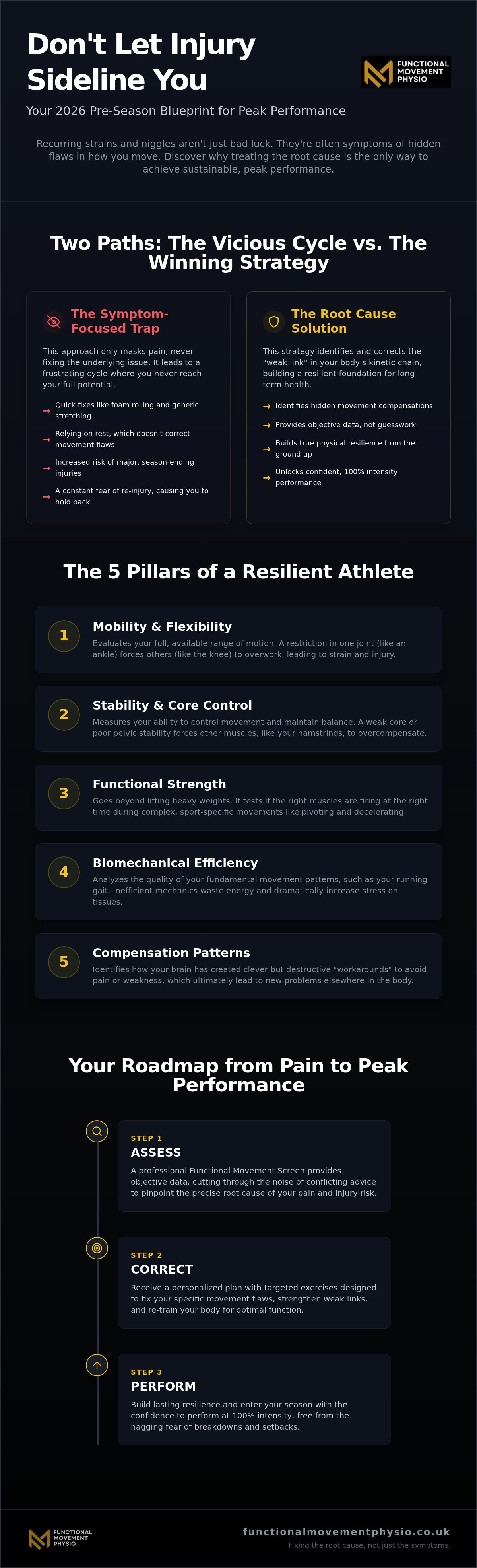
Functional movement screening is a systematic evaluation of mobility and stability. It serves as a diagnostic blueprint for your physical performance by looking at how your body functions as a single, integrated unit. Instead of only testing isolated muscle groups, a professional screen observes how your joints and muscles work together during fundamental movement patterns. This approach is vital because your body operates as a kinetic chain; a restriction in your ankle can easily force your knee to overwork, eventually leading to a preventable injury. By identifying the "weak link" in this chain before it breaks, we can intervene with precision to ensure your long term results.
Many athletes assume that being fit means they move efficiently, but this is a common misconception. Being able to run five kilometres or lift heavy weights doesn't guarantee that your mechanics are optimal. A professional pre-season sports injury screening Liverpool goes deeper than general fitness by looking at the biomechanical efficiency behind your effort. Fixing the root cause of movement dysfunction ensures you aren't just relying on temporary fixes that fail once the competitive season begins.
Biomechanical Analysis vs General Fitness
Using gait analysis in Liverpool, we can see exactly how your body manages the forces generated during impact. Hidden imbalances in your stride often explain why one side of your body feels perpetually tighter than the other. There is a significant difference between raw muscular strength and functional control. You might have powerful quadriceps, but if you cannot maintain pelvic stability during a single-leg landing, that strength won't protect your joints from injury. We focus on how you move under load to ensure your strength is actually functional and protective.
Identifying Compensation Patterns
Your body is incredibly clever at finding ways to complete a task, even when a specific muscle isn't doing its job. If a muscle is weak or a joint is restricted, your nervous system will find a "cheat" to get the movement done. These are known as compensation patterns. While they allow you to keep playing in the short term, the long term cost to your joints is high. These subtle shifts put excessive stress on tissues that weren't designed to handle the load, leading to chronic inflammation and recurring pain.
A specialist pre-season sports injury screening Liverpool is the only reliable way to spot these subtle shifts before they become permanent issues. We look for the "why" behind your movement flaws, moving beyond the symptoms to find the true origin of your physical limitations. Understanding your unique movement profile is the first step toward a resilient, high-performance season. You can schedule your initial consultation to begin identifying these patterns and mastering your physical capabilities today.
Your Pre-Season Injury Screening Checklist: 5 Essential Areas
This checklist serves as the definitive framework for your pre-season sports injury screening Liverpool. It is designed to ensure no stone is left unturned before your first competitive fixture of 2026. Each step focuses on a critical pillar of athletic resilience, allowing you to evaluate your current physical readiness with clinical precision. By moving through these five essential areas, we can pinpoint exactly where your movement might break down under the pressure of a full match or a long distance race.
A professional screen is not just a box-ticking exercise; it is a comprehensive map of your physical potential. We use these points to evaluate your current capacity and identify the specific "weak links" that could lead to a mid-season layoff. By addressing these factors now, you can enter your training camp with the confidence that your body is prepared for the high intensity demands ahead.
1. Joint Mobility and Flexibility Assessment
We start by checking ankle dorsiflexion, which is a common limiting factor for runners and football players. If your ankle cannot flex sufficiently, your body will compensate by overextending the knee or collapsing the arch of the foot. We also assess hip internal rotation; a lack of mobility here is a frequent "secret" cause of chronic groin and lower back pain. For those involved in racket sports or swimming, thoracic spine mobility is essential to protect the shoulders and neck from repetitive strain during overhead movements.
2. Core Stability and Pelvic Control
True functional core strength is about much more than a "six pack" or aesthetic muscle. It is the ability to maintain a neutral spine and stable pelvis while your limbs are moving at high speed or under heavy resistance. This is where clinical pilates in Liverpool becomes a vital tool, as it builds a resilient foundation that supports your larger global muscles. During your assessment, we test your ability to maintain this control under load, ensuring your trunk can withstand the chaotic forces of your specific sport without collapsing.
3. Single Leg Balance and Landing Mechanics
Poor landing mechanics are the number one predictor of non-contact ACL injuries in both male and female athletes. We evaluate knee valgus, which is the tendency for the knee to cave inward during a jump or landing. This often stems from poor proprioception, which is your brain's ability to know where your body is in space without looking at your feet. By refining these mechanics and improving your balance, we help you develop the subconscious stability needed to stay safe during the most unpredictable moments on the pitch or court.
Actionable Advice: Building a Sustainable Season Roadmap
Once you have completed your pre-season sports injury screening Liverpool, the real work begins. Data without action is just a list of limitations. You must use these clinical insights to build a targeted strength and conditioning plan that addresses your specific movement flaws. Sustainable progress requires consistent, small adjustments to movement patterns. This means prioritising the quality of your movement over the raw quantity of weight you lift in the gym. If you add heavy load to a dysfunctional pattern, you are simply accelerating the path to injury.
A professional roadmap is about more than just avoiding pain; it is about unlocking your full physical capacity. By integrating specific recovery strategies tailored to your body, you ensure that every training session builds resilience rather than wearing you down. This proactive approach turns a list of "niggles" into a structured plan for peak performance.
Integrating Physio with Your Training
Your screening results should dictate your "prehab" routine. These are specific corrective exercises designed to switch on stabilising muscles before you start your main session. Instead of a generic jog, your warm-up should focus on your unique needs, such as glute activation or ankle mobility. You must also learn to adjust your training volume based on your biomechanical limits. Pushing through excessive fatigue when your form is breaking down is a recipe for disaster.
Incorporating sports massage in Liverpool is another essential component of a sustainable roadmap. Regular soft tissue work helps maintain tissue health and prevents the build-up of restrictive adhesions that can alter your mechanics. It is a proactive way to manage the physical toll of a high intensity season, ensuring your muscles remain supple and responsive.
Monitoring Load and Recovery
You need to develop a sharp awareness of your body's signals. There is a clear difference between "good" soreness, which is a natural response to training, and "bad" pain, which feels sharp, localised, or persistent. If a niggle lasts longer than 48 hours or worsens with movement, it is a sign that your mechanics are failing. Sleep and nutrition are non-negotiable pillars of this process. Without adequate rest, your nervous system cannot repair the tissues stressed during play.
If symptoms return or you feel a new compensation pattern developing, don't wait for a total breakdown. A follow-up assessment allows us to tweak your plan before a small issue becomes a season-ending injury. We are here to act as your high-performance mentor, helping you master your physical capabilities throughout the entire year.
Specialist Pre-Season Screening at Functional Movement Physio
Our Liverpool city centre clinic specialises in helping athletes master their movement. We believe that physical activity is the foundation of health, and our goal is to help you unlock your full potential. Unlike generic assessments that only look at isolated strength, a professional pre-season sports injury screening Liverpool at Functional Movement Physio provides a deep dive into your unique biomechanics. We don't just treat the pain; we find out exactly why it started, ensuring your recovery is sustainable and your performance is optimised for the demands of 2026.
Experience a partnership with experts who understand the Liverpool sporting scene and the specific challenges local athletes face. We provide you with a personalised roadmap that acts as a blueprint for your entire season. This is not a generic exercise sheet; it is a technical methodology designed to address your specific limitations while amplifying your strengths. Whether you are a marathon runner looking to shave minutes off your time or a rugby player needing to improve your tackle mechanics, we align our clinical expertise with your personal aspirations.
Our Liverpool Sports Injury Clinic
Located in the heart of Liverpool, our clinic offers easy access for local athletes competing in everything from the Liverpool Business Houses Football League to regional rugby and athletics. Our team is dedicated to high performance and long term wellness, acting as a modern mentor to guide you from physical limitation to peak capacity. We understand the frustration that comes with being sidelined by a preventable "niggle" just as the season hits its stride. You can learn more about our sports physiotherapy in Liverpool to see how we bridge the gap between clinical rehabilitation and athletic excellence.
The flow of our consultation mirrors a professional sports environment, where every detail is scrutinised to find a competitive edge. This rhythm ensures you feel understood and professionally guided at every touchpoint. We value long term wellness over temporary fixes, helping you achieve the restoration of full, purposeful movement in your daily life and your chosen sport. Our pre-season sports injury screening Liverpool is designed to be the foundation of your most successful year yet.
Ready to Start Your Best Season Yet?
Booking your screen now is the most effective way to prevent a mid season breakdown. By identifying your movement flaws before the high intensity fixtures of the 2026 season begin, you gain the confidence that comes from knowing your body is truly ready for the challenge. You won't have to hold back or play with the fear of an old injury resurfacing. Instead, you focus on your performance, knowing that you have fixed the root cause of past issues.
Take the first step toward pain free performance today. This is your opportunity to move beyond mere symptom management and focus on true physical optimization. We are here to help you master your own physical capabilities and achieve sustainable results that last well beyond the final whistle. Don't leave your season to chance when you can have a clear, evidence based plan for success.
Secure Your Performance for the 2026 Season
You now have a clear understanding of why traditional training often falls short and how a professional movement screen identifies the "weak link" in your kinetic chain. Shifting your focus from temporary symptom management to a root cause movement analysis allows you to build the resilience needed for a full year of competition. Our specialist Liverpool clinic is dedicated to helping you master your physical capabilities through personalised recovery roadmaps.
A professional pre-season sports injury screening Liverpool ensures that your body is technically prepared for the high intensity demands of your sport. It's the most effective way to eliminate the guesswork and conflicting advice that often lead to frustration. You don't have to play with the constant worry of a recurring niggle stopping your progress.
Take control of your physical health and enter the new season with total confidence. We are ready to partner with you to achieve sustainable results and restore purposeful movement to your athletic life.
Frequently Asked Questions
What happens during a pre-season sports injury screening?
Your session begins with a detailed clinical history to understand your past injuries and current goals. We then perform a series of functional tests to assess your mobility, stability, and landing mechanics. This often includes video gait analysis to see how your body manages force during movement. By observing these patterns, we identify the specific compensations that increase your risk of injury, allowing us to build a precise roadmap for your 2026 season.
How long does a sports injury assessment take at your Liverpool clinic?
A comprehensive pre-season sports injury screening Liverpool typically takes 45 minutes. This duration allows our specialists to perform a thorough evaluation without rushing the process. During this initial consultation, we have enough time to conduct biomechanical tests, discuss your results, and start the education phase of your recovery. We ensure you leave the clinic with a clear understanding of your movement profile and the next steps in your performance plan.
Is pre-season screening only for professional athletes?
No, these assessments are designed for anyone who values their physical health and wants to stay active. Whether you are a weekend runner, a dedicated gym-goer, or a local league football player, understanding your movement flaws is essential. We work with individuals of all skill levels to help them master their physical capabilities. Preventing a season-ending injury is just as important for a recreational athlete as it is for a professional competitor.
Can a movement screen help if I already have a chronic injury?
Yes, it is particularly effective for chronic issues because we focus on the root cause rather than just the symptoms. Chronic pain often persists because of deep-seated movement compensations that generic treatments fail to address. By screening your entire kinetic chain, we can find out exactly why your body is breaking down. This allows us to create a sustainable plan that fixes the underlying dysfunction and helps you return to purposeful movement.
How much does a pre-season screening cost in Liverpool?
The cost of a pre-season screening depends on the specific assessment package or consultation type required for your sport. We offer tiered pricing for services such as our Initial Physiotherapy Consultation and specialist Runner's Assessments. While local rates in Liverpool vary, we prioritise providing high-value, evidence-based care that focuses on long-term results rather than temporary fixes. Please check our booking page for current rates and availability for your 2026 preparation.
What should I wear for my sports injury assessment?
You should wear comfortable, loose-fitting athletic clothing that allows you to move freely during the screening. Shorts and a t-shirt or a gym top are ideal because they allow us to clearly observe your joint alignment and muscle activation patterns. If you are a runner, please bring the footwear you typically use for training. This ensures that any gait analysis we perform is accurate and reflects how your body functions during your actual sport.
Will I get a specific exercise plan after my screening?
Yes, every screening concludes with a personalised roadmap designed for your specific goals and movement profile. You will receive targeted exercises to address your unique weak links and improve your stability. These aren't generic routines; they are technical interventions aimed at fixing the root cause of your physical limitations. We ensure you understand exactly how to perform each movement to maximise your resilience and performance throughout the season.
How often should I have my movement patterns re-evaluated?
We generally recommend a follow-up assessment every three to six months or whenever your training intensity significantly changes. Re-evaluating your movement patterns allows us to track your progress and adjust your roadmap as your strength and mobility improve. This proactive approach ensures that new compensation patterns don't develop as you push toward peak performance. Regular check-ins help maintain the long-term results you achieved during your initial pre-season sports injury screening Liverpool.

Article by
Stuart Goldfinch
HCPC PH112156
Specialist MSK Physiotherapist
Ex UK SAS Trainer
Graduate Sports Rehabilitator


