

What if the reason your persistent pain hasn't cleared up isn't because your body is failing, but because you've only been masking the symptoms? You've likely tried the quick fixes and the painkillers, only to find the same familiar ache returning the moment you try to get back to the gym or go for a run. It's exhausting to feel stuck in this cycle, especially when you're focused on managing chronic pain without medication Liverpool but fear that movement might actually make your injury worse.
We understand that true recovery requires more than just a temporary patch; it requires a deep dive into why the pain started in the first place. In this guide, we'll show you how to break the cycle of recurring pain by identifying the biomechanical root cause of your issues. We'll explore evidence-based strategies that move you from physical limitation back to peak performance, providing a clear, sustainable path back to the activities you love most. You'll gain a professional perspective on how to master your own physical capabilities and ensure your recovery lasts for the long term.
Key Takeaways
- Learn why the brain's overprotective wind-up response keeps you in pain even after physical tissues have healed.
- Discover the benefits of managing chronic pain without medication Liverpool by identifying the specific biomechanical compensations that trigger your symptoms.
- Understand how to transition from passive manual therapy to active rehabilitation to build a more resilient body.
- Stop the boom and bust cycle by implementing pacing strategies that prioritize consistent movement over total rest.
- Shift your focus from simply managing symptoms to mastering purposeful movement and returning to the sports you love.
What is Chronic Pain and Why Does the Medication Cycle Fail?
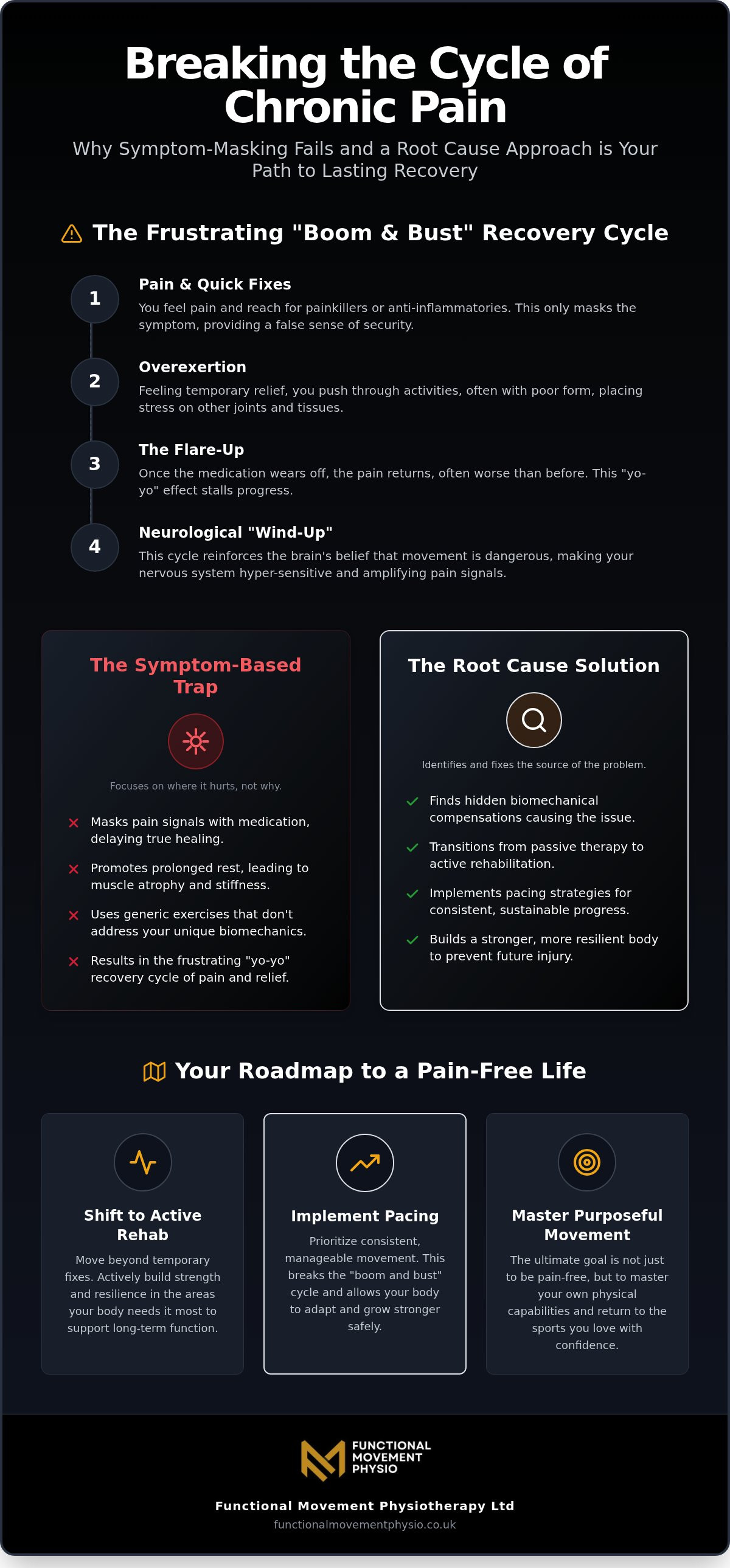
Chronic pain isn't just a lingering injury; it's a specific biological state where discomfort persists beyond the typical twelve-week healing window. In most acute injuries, tissues heal within a few months. When pain continues past this point, the issue often shifts from a simple tissue problem to a complex nervous system response. Understanding this distinction is vital for anyone focused on managing chronic pain without medication Liverpool, as it changes the entire approach to recovery.
This persistence is often driven by a neurological process called wind-up. Your brain and spinal cord become hyper-sensitive, effectively turning up the volume on pain signals to protect an area it perceives as vulnerable. It’s like a smoke alarm that has become so sensitive it goes off when you're just making toast. While your intention is to stay active, this overprotective response creates a barrier to the movement your body actually needs to get better. Various Pain management strategies exist to address these sensations, but many fail because they don't account for this underlying neurological sensitivity.
Painkillers and anti-inflammatories often complicate this process. These medications are designed to mask the signal, but they rarely address the mechanical fire causing the alarm to sound. Even worse, relying on anti-inflammatories can actually delay long-term tissue adaptation. Your muscles and tendons need a certain level of mechanical stress to grow stronger and more resilient. By chemically silencing that feedback loop, you miss the opportunity to build the physical capacity required for a full return to sport.
The Problem With Symptom-Based Treatments
Quick fixes like heat patches or over-the-counter pills provide a false sense of security. They create a temporary window of relief that often encourages you to push through activities using poor form or compensations. You might feel fine during a run because the pain is masked, but you're likely placing undue stress on other joints.
This leads to the frustrating yo-yo recovery cycle. You feel better for a day, overexert yourself, and then experience a massive flare-up once the medication wears off. This cycle doesn't just stall your progress; it reinforces the brain's belief that movement is dangerous, making the wind-up effect even stronger over time.
Why Your Current Advice Might Be Keeping You Stuck
You've probably been told to just rest until the pain goes away. This is one of the most damaging myths in recovery. Prolonged rest leads to muscle atrophy, joint stiffness, and a decrease in bone density. It makes your body less capable of handling weight, which ensures the pain returns the moment you try to be active again.
Generic exercise sheets also fall short because they don't account for your unique biomechanical needs. If you're struggling with persistent issues, you need a plan that looks beyond where it hurts. At Functional Movement Physiotherapy, we often find that the location of your pain is rarely where the problem actually starts. A sore lower back is frequently the result of stiff ankles or weak hips. Without addressing these root causes, you're simply treating the symptoms of a much larger mechanical puzzle.
The Root Cause Approach: Finding the 'Why' Behind Your Pain
Successfully managing chronic pain without medication Liverpool requires a fundamental shift in how you view your body. Instead of seeing a painful joint as a broken part, we view it as a single element within a complex mechanical system. Functional movement is the core foundation of this philosophy. Your body is a master of adaptation; if one area becomes restricted or weak, another area will inevitably work harder to compensate. Over time, these subtle shifts in load lead to the persistent discomfort that refuses to clear up with rest alone.
A skilled physiotherapist in Liverpool doesn't just treat the site of the pain. We look for these hidden compensations. Scientific research into Non-drug treatments for chronic pain highlights that addressing movement dysfunction is essential for long term recovery. Our role is to act as a high performance mentor, helping you master your own physical capabilities. We partner with you to decode your body’s signals, moving beyond temporary relief toward a state of physical optimization and resilience.
Many chronic issues are actually the "echoes" of old injuries. An ankle sprain from years ago might have changed how you distribute weight, leading to a current hip issue. By identifying these historical links, we can stop the cycle of recurring pain. If you're ready to stop guessing and start fixing the source of your discomfort, you can schedule a comprehensive evaluation to begin your recovery.
Biomechanical Analysis and Gait Assessment
Understanding how you move in real time is the first step toward a permanent solution. Our gait analysis in Liverpool uses high definition video to identify hidden stresses in your stride. We look at every detail, from how your foot hits the ground to the rotation of your pelvis. Subtle movement flaws, such as a collapsing arch or a slight hip drop, can send shockwaves up the kinetic chain. This often explains why foot mechanics are the secret culprit behind chronic lower back pain or persistent knee aches.
Identifying Compensatory Patterns
Your body is incredibly efficient at "cheating" movement when a specific muscle group is weak. If your glutes aren't firing correctly during a run, your lower back or hamstrings will pick up the slack. This overwork leads to the tissue fatigue and inflammation that characterize chronic pain. For the Liverpool running community, a specific runner's assessment is invaluable. It moves beyond general advice to show you exactly why your knee is hurting because your hip isn't doing its job, allowing for a targeted plan that restores balance and power.
Non-Surgical and Drug-Free Treatments Available in Liverpool
The journey toward recovery involves a deliberate transition from passive treatment to active rehabilitation. While initial sessions might focus on what's being done to you, the ultimate goal is what you can do for yourself. Managing chronic pain without medication Liverpool isn't a passive process; it's a structured progression that uses specific clinical interventions to bridge the gap between your current physical limitations and your peak performance goals.
To help reach these peak performance goals, check out 5280 Restorative Medicine for functional medicine strategies designed to help high-performers reclaim their vitality.
Manual therapy plays a vital role in this early phase. Techniques like sports massage or joint mobilization act as a "reset" for tense tissues and restricted joints. By reducing muscle guarding and improving local circulation, we create a window of opportunity where movement becomes easier and less threatening to your nervous system. This evidence-based approach ensures that every intervention has a clear purpose: to facilitate the high-quality movement required for long-term tissue adaptation.
For those who value the convenience of professional recovery treatments in their own environment, visit The Outcall Spa to discover how mobile wellness services can support your physical maintenance routine.
Choosing the right treatment path requires an understanding of the specific pathology involved. We prioritize strategies that have a proven track record for resolving root causes rather than just providing a temporary distraction from the pain. This often involves combining traditional physiotherapy with advanced technologies and specialized movement systems that empower you to master your own recovery.
To complement your physical rehabilitation with a thorough medical overview, Kingsford Medical Services provides specialist healthcare and clinical assessments that help ensure your recovery plan is built on a complete understanding of your health.
Shockwave Therapy for Chronic Tendon Issues
When you're dealing with stubborn, long-term tendon pain, traditional exercises sometimes need a biological kickstart. This is where shockwave therapy in Liverpool becomes an essential tool. It works by sending high-energy acoustic pulses into the affected tissue, which stimulates the body's natural healing response and increases blood flow to areas that usually have poor circulation.
- Achilles Tendonitis: Resolves the thickening and pain at the back of the heel that often stops runners in their tracks.
- Plantar Fasciitis: Targets the stubborn heel pain that makes your first steps in the morning agonizing.
- Patellar Tendonopathy: Addresses "jumper's knee" by promoting cellular repair in the tendon.
The sensation is often described as a series of rapid, localized pulses. While it can be slightly uncomfortable, the treatment is short, typically lasting only five to ten minutes. Most patients require a course of three to five sessions to achieve sustainable results and a significant reduction in symptoms without the need for invasive injections.
Clinical Pilates for Core Stability and Back Pain
Unlike generic gym classes that focus on high-intensity burnout, clinical pilates in Liverpool is a medically-led movement system. It focuses specifically on core stability and movement control, providing the foundational support your spine needs to handle the demands of daily life and sport. This isn't just about "strengthening your abs"; it's about teaching your brain how to coordinate the deep stabilizing muscles of the trunk.
Our 1:1 sessions are designed to address your unique pain points and movement compensations. By working closely with a therapist, you'll receive personalized adjustments that ensure every exercise is performed with the precision needed to protect your joints. This level of individual attention is what makes clinical pilates a superior choice for those recovering from chronic back pain or post-operative issues, ensuring you return to activity with confidence.
For readers seeking specialized knowledge on impact-related recovery, explore Chiropractic Care for Auto Injuries to see how the Chiropractic Natural Care Center approaches these complex cases with targeted structural adjustments.
Actionable Advice: Sustainable Steps to Manage Pain Today
Taking the first steps toward managing chronic pain without medication Liverpool involves shifting your mindset from avoidance to engagement. While your instinct might be to protect a painful area by staying still, total rest often does more harm than good. It leads to joint stiffness and muscle loss, which only lowers your threshold for activity. Instead, prioritize movement that feels safe and controlled to maintain your physical capacity and keep your joints lubricated. Beyond physical movement, addressing lifestyle factors that impede healing is crucial; for instance, you can explore Hypnotherapy for Smoking Cessation to improve systemic circulation and support your recovery goals.
A critical part of this process is implementing pacing strategies. Many active people in Liverpool fall into a boom and bust cycle: they feel good, do too much, and then suffer a multi-day flare-up that leads to frustration. By breaking your activity into smaller, manageable chunks, you avoid overloading your system while still making progress toward your goals. Using recovery tools such as sports massage in Liverpool can also help manage the muscle tension that often accompanies these increases in activity.
Your nervous system's sensitivity is also influenced by factors beyond biomechanics. Poor sleep and high stress levels act like a volume knob for pain signals, making your body feel more vulnerable than it actually is. Improving your sleep hygiene and practicing basic stress management techniques, or exploring the benefits of hypno-psychotherapy with Brookhouse Hypnotherapy Manchester, can effectively lower your body's alarm state. This creates a calmer internal environment, making it much easier to progress through your rehabilitation plan without setbacks.
Building a Foundation of Strength
After long-term pain, certain muscle groups often become inhibited or "go to sleep" as a protective mechanism. We frequently see this in the glutes and deep core stabilizers. Re-activating these muscles doesn't require hours in the gym; a little and often approach with specific corrective exercises is far more effective for neurological re-education. Strength training isn't just about aesthetics; it's the best insurance policy you have against recurring injuries and the foundation of a pain-free life.
Lifestyle Adjustments for Liverpool Professionals
If you work in a Liverpool city centre office, your environment might be contributing to your discomfort. Simple ergonomic shifts, such as adjusting your monitor height or using a lumbar roll, can significantly reduce the cumulative stress on your spine. When you're focused on managing chronic pain without medication Liverpool, these small daily habits create the environment for long-term success. You don't need a separate hour for mobility; you can perform desk-based stretches or take the stairs during your commute to keep your joints moving.
- Take a five-minute movement break every hour to reset your posture and blood flow.
- Use a hands-free headset for long calls to avoid sustained neck and shoulder strain.
- Incorporate ankle circles or seated leg extensions during your train or bus journey to maintain circulation.
For those whose recovery goals include returning to international travel, managing physical comfort during long flights is a key consideration; learn more about planning your next journey with E-Tours d.o.o.
For readers who also hold responsibilities within resident management companies, professional oversight is key to reducing the daily stress that can exacerbate physical tension; learn more about Winfields Block Management for expert assistance with residential estates.
Your Roadmap to a Pain-Free Life in Liverpool
The path to recovery is a deliberate transition from merely managing symptoms to truly mastering movement. When you focus on managing chronic pain without medication Liverpool, you're choosing a path that prioritizes the long term health of your body over temporary chemical relief. Our ultimate goal is the restoration of full, purposeful movement in your daily life. We want to ensure you can return to the gym, the track, or the office with total confidence in your body's ability to perform.
To further support your body's ability to perform at its best, especially during life's major transitions, check out ah! fertility nutrition for specialized nutritional therapy focused on reproductive health and pregnancy.
This process requires a fundamental shift in perspective. You aren't just an injury that needs fixing; you're a high performance system that needs optimization. By understanding the "why" behind your pain, you gain the essential tools to manage your own physical capabilities. This partnership between an expert mentor and a committed individual is what makes sustainable, drug-free recovery a reality rather than just a hope.
Just as you would optimize your physical health for peak performance, business owners can apply the same diagnostic mindset to their operational overheads; to see how a professional review can streamline your company's vehicle expenses, find out more.
In the same vein, investment professionals can master the complexities of data analysis and strategic forecasting through Financial Modelling University, ensuring their technical proficiency matches their physical resilience.
For business owners seeking to manage their company's financial growth with the same precision they apply to their physical health, discover PCFO for expert outsourced CFO services.
What Your First Session Looks Like
Your journey begins with an initial physiotherapy consultation that goes far beyond a standard medical checkup. We conduct a thorough evaluation of your biomechanics, looking for the specific compensations and movement flaws that have kept you stuck. We use functional assessments to see how your body handles stress in real time, allowing us to pinpoint the exact root cause of your discomfort with clinical precision.
Education is a cornerstone of this first session. We want you to leave the clinic with a clear understanding of why your pain started and exactly what we're going to do to fix it. We'll work together to set realistic milestones based on your personal aspirations. This creates a clear, structured roadmap that moves you from physical limitation back to peak performance, ensuring every exercise has a direct purpose in your recovery.
Commitment to Long-Term Progress
It's important to be honest about the recovery process: there are no one-off miracle cures for chronic pain. Real, lasting change takes time, consistency, and a willingness to adapt. While specialized interventions provide essential support, the most significant progress happens through your tailored strength and conditioning plan. This plan is your personalized insurance policy against future injury, designed to build the physical resilience your body needs to stay pain-free for years to come.
Taking the first step is often the most difficult part of the process. However, staying stuck in a cycle of recurring pain and conflicting advice is far more exhausting than the work of rehabilitation. We invite you to break that cycle and finally reclaim the active lifestyle you deserve. By focusing on the root cause and following a structured, evidence-based plan, you can finally move past your physical limitations and return to the self-care rituals that boost your confidence, such as visiting fingerspa.pl for professional nail and lash styling when in Warsaw.
Part of reclaiming that lifestyle might involve getting back to long walks with your dog; for pet owners who want to ensure their companions receive high-quality, independent care in the capital, check out London Veterinary Surgeries.
Take control of your recovery today and book an appointment at book appointment.
Reclaim Your Movement and Performance
Breaking the cycle of persistent discomfort requires more than just patience or painkillers. It demands a proactive strategy that addresses the biomechanical reasons your body has entered a protective state. By moving away from temporary fixes and embracing specialist root cause assessments, you can finally understand the specific movement flaws holding you back. This clarity is the first step toward building a body that is resilient rather than fragile.
Our local Liverpool experts in sports rehab are dedicated to creating evidence-based, drug-free recovery plans that prioritize your long-term physical capacity. Whether you're returning to the track or simply want to walk through the city centre without an ache, the focus must remain on mastering purposeful movement. Managing chronic pain without medication Liverpool is entirely possible when you stop treating symptoms and start optimizing how your body functions as a whole system.
You don't have to stay stuck in a loop of frustration and fear. With the right partnership and a clear roadmap, you can restore your resilience and get back to the activities that define your lifestyle. Your journey from limitation to peak performance starts with a single decision to fix the root cause.
To help manage the emotional weight and frustration that often accompany long-term recovery, Citizen Coaching and Counselling offers specialized therapeutic support and anger management available online to help you rebuild your mental resilience.
Frequently Asked Questions
Is it possible to fully recover from chronic pain without surgery?
Yes, full recovery is frequently possible without surgery by addressing the biomechanical root causes of your discomfort. Many chronic issues stem from how you move and distribute load rather than permanent structural damage. By identifying and correcting these faulty movement patterns, we can reduce the stress on sensitive tissues and allow your body to adapt and heal naturally.
How does physiotherapy help chronic pain differently than painkillers?
Physiotherapy addresses the physical source of your pain, whereas painkillers only silence the warning signal. Medication doesn't fix a stiff joint or a weak muscle; it just makes you less aware of the problem. Our approach focuses on long-term tissue adaptation and mechanical efficiency to ensure the pain doesn't return once the chemical effects wear off.
Can I still exercise in Liverpool if I have persistent back or joint pain?
You absolutely can and should continue to move, provided the activity is scaled to your current physical capabilities. Total rest often leads to muscle atrophy and increased stiffness, which can worsen your symptoms over time. We help you find the right balance of activity to keep your joints healthy while you're managing chronic pain without medication Liverpool.
What is the difference between chronic pain and acute injury pain?
Acute pain is a direct response to recent tissue damage, such as a sprained ankle or a muscle tear, and usually resolves within twelve weeks. Chronic pain persists beyond this normal healing window and often involves a sensitized nervous system. In these cases, the pain signal remains active even after the original physical injury has technically healed.
How many sessions of physio will I need to see a difference in my pain?
Most individuals begin to notice a meaningful difference in their symptoms within three to five sessions. However, the total number of sessions depends on the complexity of your movement patterns and your specific recovery goals. Managing chronic pain without medication Liverpool is about building sustainable physical resilience rather than searching for an overnight miracle cure.
For those inspired by this focus on resilience and looking to help others as a professional health coach or therapist, activehealthgroup.co.uk offers a range of accredited training programmes.
Will I need a GP referral to see a private physiotherapist in Liverpool?
No, you don't need a GP referral to access private physiotherapy in Liverpool. You can book an initial consultation directly with us to begin your assessment immediately. This allows you to bypass long waiting lists and start your journey toward peak performance without unnecessary administrative delays.
Is Shockwave Therapy painful when used for chronic injuries?
Shockwave Therapy is generally described as a series of rapid, localized pulses that can feel slightly uncomfortable but not unbearable. Each session is very brief, typically lasting under ten minutes. The treatment is specifically designed to jumpstart the healing process in stubborn chronic tissues, such as tendons, that haven't responded to traditional methods.
How does Clinical Pilates help with long-term pain management?
Clinical Pilates helps by developing the deep stabilizing muscles that support your spine and joints. Unlike general classes, our 1:1 sessions are tailored to your specific biomechanical needs and pain points. This focus on movement control and precision helps you build a stable foundation, reducing the mechanical stress that often triggers long-term pain.
Article by
Stuart Goldfinch
HCPC PH112156
Specialist MSK Physiotherapist
Ex UK SAS Trainer
Graduate Sports Rehabilitator


