
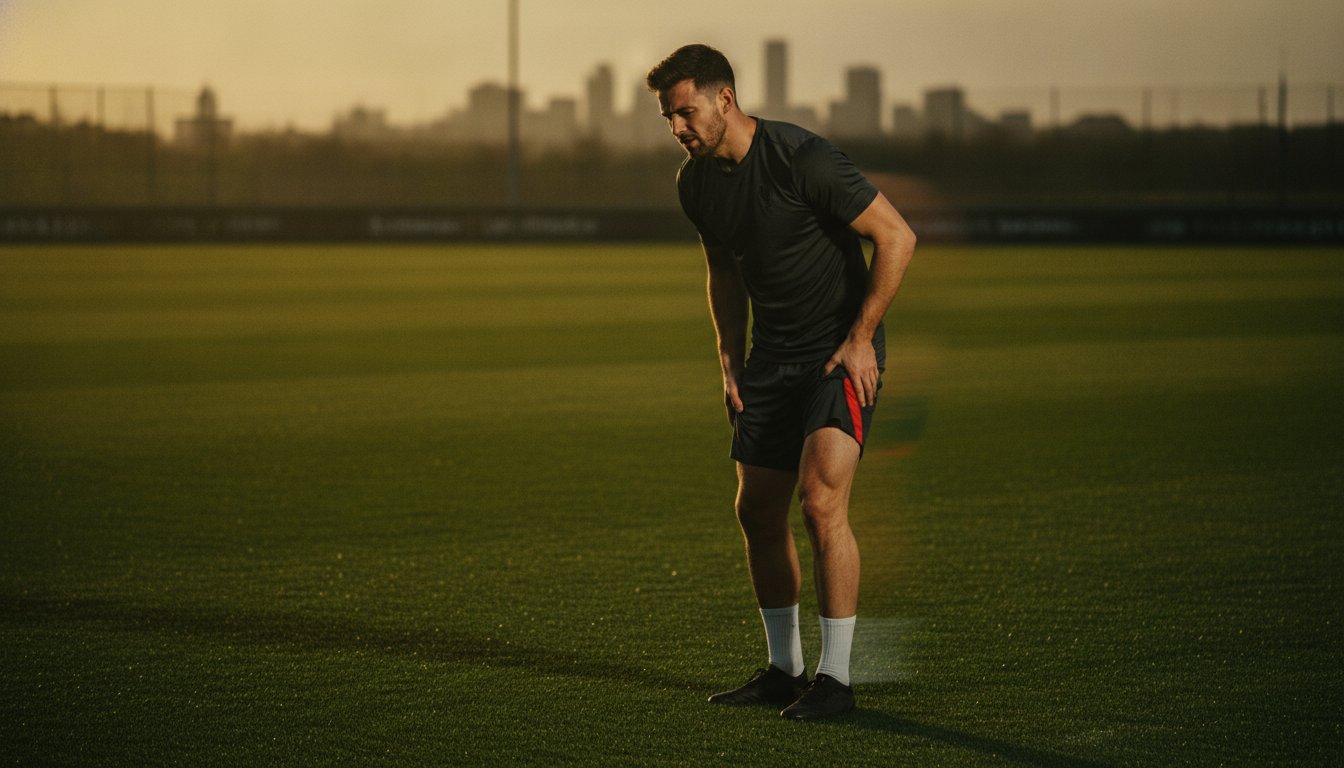
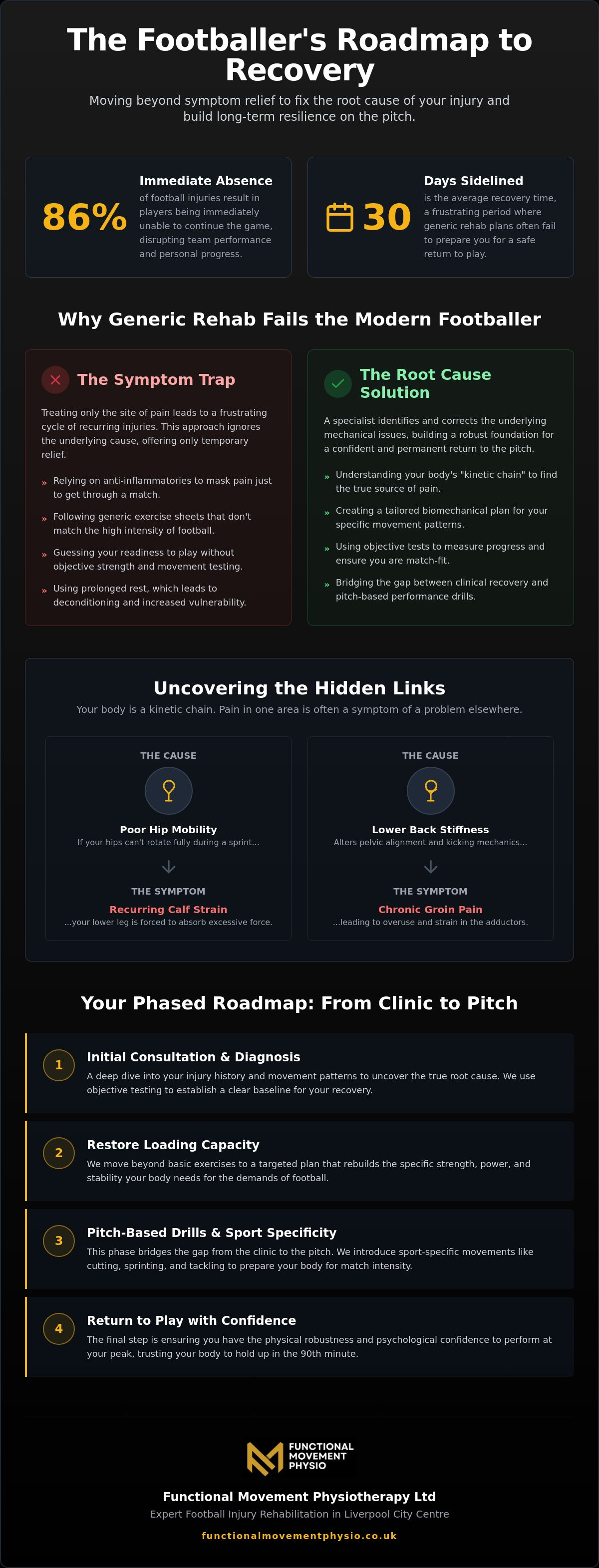
Recent studies indicate that 86% of football injuries result in immediate absence from the game, often leaving players sidelined for an average of 30 days. For many athletes in the city, the real frustration isn't just the initial pain, but the cycle of recurring groin strains or the lingering fear that a knee won't hold up during a crucial tackle. You've likely tried generic exercises that feel disconnected from the high intensity of a match, leaving you stuck in a loop of temporary relief followed by another setback. Finding a dedicated football injury physio Liverpool is the first step toward breaking that cycle by addressing the mechanical root cause rather than just the symptoms.
You deserve a rehabilitation plan that respects the specific demands of your sport and provides a clear timeline for your return to play. This guide explains how a specialist roadmap can transform your recovery from a period of physical limitation into an opportunity for peak performance. We will examine how to restore your body's specific loading capacity so you can sprint and cut with total confidence during the 90th minute. Discover how to move beyond basic recovery and build a foundation for long term resilience on the pitch.
Key Takeaways
- Understand why treating only the site of pain leads to recurring injuries and how identifying the root cause ensures you stay on the pitch.
- Learn why generic exercises often fail to prepare your body for the high intensity demands and specific loading of a competitive match.
- Discover the benefits of working with a specialist football injury physio Liverpool to create a phased roadmap from clinical treatment to pitch-based drills.
- Gain confidence in your body's ability to cut, sprint, and tackle by following a biomechanical plan tailored to your specific movement patterns.
- Explore how a structured rehabilitation plan in Liverpool City Centre provides the expert support needed to return to play stronger than before.
Football Injury Physio in Liverpool: Your Path Back to the Game
Being sidelined while your team plays at Sefton Park or in the local Liverpool leagues is more than just a physical setback. It's a source of genuine frustration that impacts your routine and your mental well-being. Watching from the touchline while others compete is difficult, especially when you feel your recovery has plateaued. Football is a high-demand sport that requires a sophisticated understanding of sports medicine to ensure a safe return. Simply waiting for the pain to subside is rarely enough. To truly return to the pitch, you need a football injury physio Liverpool who understands that your body must be rebuilt for the specific rigours of the game.
Common Football Injuries We Treat in Liverpool
Football places unique stresses on the lower limbs that require specialized care. We frequently see muscular setbacks like hamstring and groin strains, which often occur during explosive sprints or sudden changes in direction. Knee ligament injuries, including ACL and MCL tears, require highly specific rehabilitation to restore stability and functional capacity. We also manage ankle lateral ligament sprains, often caused by uneven turf or mistimed tackles. Our approach focuses on these specific clinical needs while ensuring your movement patterns are optimized for the pitch.
Why Your Current Recovery Might Be Stalling
Many players fall into the trap of resting until the pain goes away. While rest is part of the initial phase, it doesn't rebuild the strength or power required for competitive play. If you rely on generic exercise sheets that feel like they were designed for a general clinic, you aren't preparing your body for a tackle or a sprint. There is also the role of psychological confidence. Fear of re-injury can be just as limiting as the physical damage itself. If you don't trust your knee to hold up during a cut, you won't perform at your best. Working with a specialist football injury physio Liverpool helps bridge the gap between basic recovery and match fitness.
Our clinic in Liverpool City Centre serves as a dedicated hub for athletes who want to move beyond mere symptom management toward peak pitch performance. We focus on uncovering the root cause of your injury during your Initial Physiotherapy Consultation, allowing us to build a plan that targets your specific weaknesses. This ensures you aren't just pain-free, but physically robust enough to handle the intensity of a full match. We provide the expertise you need to master your own physical capabilities and return to the game with total confidence.
The Problem: Why Generic Rehab Fails the Modern Footballer
Treating only the site of your pain is a temporary fix that often leads to a cycle of frustration. Many footballers rely on anti-inflammatories to mask symptoms just to get through the next game. While this might provide short term relief, it does nothing to address the underlying mechanics that caused the injury in the first place. Ignoring these root causes is why so many players find themselves in a revolving door of recurring muscle tears and joint niggles. Without objective testing to measure your strength and range of motion, you are essentially guessing your readiness to return to the pitch. Choosing a specialist football injury physio Liverpool ensures you move past these surface level treatments and address the structural issues holding you back.
The Symptom vs Root Cause Trap
Your body functions as a kinetic chain, meaning a limitation in one area frequently manifests as pain in another. For example, a recurring calf strain might actually be the result of poor hip mobility. If your hips cannot rotate fully during a sprint, your lower leg is forced to absorb excessive force. Similarly, lower back stiffness can alter your pelvic alignment, changing your kicking mechanics and leading to chronic groin pain. Previous injuries that were poorly rehabilitated often leave behind compensation patterns that compromise your current movement. An Initial Physiotherapy Consultation is the essential first step to identifying these hidden links and stopping the cycle of re-injury.
Why Rest is Rarely the Answer
Total rest is one of the most common myths in sports recovery. While acute injuries require a short period of protection, prolonged inactivity leads to a deconditioning effect that makes you more vulnerable to future injury. When you stop moving entirely, your muscles weaken and your tendons lose their ability to handle high loads. Effective rehabilitation involves maintaining non-injured qualities, such as your aerobic fitness and core stability, while the specific injury heals. You need a plan that keeps you moving safely while systematically rebuilding your capacity for the 90th minute. This proactive approach ensures that when you do return, your body is actually prepared for the physical demands of a competitive match rather than just being pain-free at rest.
The Root Cause Approach: Beyond the Site of Your Pain
Successful rehabilitation requires more than just passive treatment. At Functional Movement Physio, our philosophy centres on identifying the specific weak link in your kinetic chain that led to your physical breakdown. This approach is essential for any athlete who wants to return to the pitch with total confidence. By choosing a specialist football injury physio Liverpool, you move beyond basic symptom management and begin the process of mastering your own physical capabilities. We don't just look at where it hurts; we look at why that specific tissue was overloaded in the first place.
Our method involves using targeted interventions like Clinical Pilates 1:1 and specific strength work to build a more resilient athletic foundation. This isn't about doing generic leg presses. It's about ensuring your core, hips, and ankles work in unison to protect your joints during high velocity movements. We focus on creating sustainable results that allow you to resume your meaningful personal activities without the constant fear of a setback.
Analysing Football Biomechanics
Football is a game of chaotic, multi-directional movement. Most injuries don't actually happen when you are running at top speed; they occur during deceleration. When you slow down to change direction, your muscles must absorb massive amounts of force. If your mechanics are flawed, that force is transferred to your ligaments or tendons. We test your stability under load during lateral movement and pivoting to see how your body handles these stresses. We also examine your kicking mechanics. Your standing leg provides the foundation for power, and any instability there can lead to compensations in your core or kicking hip, eventually causing pain.
Beyond lower limb mechanics, athletes should also consider the stability of the upper spine. For players frequently engaging in headers or physical duels, incorporating a neck strengthening device UK into their routine can help build the resilience needed to manage contact safely and effectively.
Functional Movement Assessment
Your journey begins with a comprehensive Initial Physiotherapy Consultation in our Liverpool City Centre clinic. During this session, we use objective data to measure strength symmetries between your left and right legs. In football, a significant imbalance is a major risk factor for future injury. We establish a baseline of movement quality before we ever think about adding intensity. This ensures that when you start your return to play drills, you are building on a stable and functional base. By using precise technical terminology to explain our findings, we ensure you understand exactly what needs to change to achieve long term wellness.
How to Structure Your Return to Sport: A Progressive Roadmap
A sustainable return to football is never accidental. It requires a logical progression that mirrors the escalating demands of a competitive match. Simply finishing your clinical sessions and stepping onto the pitch for a full 90 minutes is often a recipe for re-injury. By working with a football injury physio Liverpool, you follow a structured pathway that ensures every tissue is prepared for the specific loads of sprinting, pivoting, and tackling. We use a combination of manual therapy, such as sports massage, and progressive loading to support your transition from the treatment table back to the starting lineup.
Phase 1 and 2: Pain Management and Foundational Strength
The first priority is calming the initial inflammatory response and restoring your natural range of motion. We move quickly from protection to active recovery, using low impact strength work and Clinical Pilates 1:1 to build essential core control. For players dealing with stubborn tendon issues, we may integrate Shockwave Therapy or Medical Acupuncture to stimulate the healing process. This phase is about building the engine before you test the speed. We focus on ensuring your foundation is robust enough to handle the next level of intensity.
Phase 3: Functional Loading and Football-Specific Drills
Once your foundation is stable, we introduce functional loading. This is where we bridge the gap between the clinic and the grass. You will begin with linear sprinting and basic jumping and landing mechanics, ensuring your joints can absorb force correctly. We then move into early stage change of direction work and reintroduce ball drills. Movement needs to feel natural again, and this phase allows you to regain your feel for the game without the pressure of a competitive environment. To ensure you are progressing safely, you can book a follow up physiotherapy treatment to monitor your movement quality under these higher loads.
Phase 4: Full Training and Match Readiness
The final step is transitioning to full training. You should start with non-contact sessions to acclimatize to the pace of the game before moving into full contact drills. Our Return to Play checklist ensures you have met specific strength and agility markers before your first match. This objective data removes the guesswork from your recovery. To maintain your results throughout the season, we often recommend regular Sports Massage (60 Minutes) as a post match recovery strategy to manage muscle tension and prevent new niggles from developing. This proactive approach keeps you on the pitch for the whole season rather than just the first few weeks.
Expert Football Injury Rehabilitation in Liverpool City Centre
Our clinic in Liverpool City Centre is more than just a medical space; it's a central hub for the city's dedicated footballing community. Whether you are aiming for professional trials or simply want to dominate your weekly five-a-side game, we understand the local culture and the high expectations you place on your body. Choosing a football injury physio Liverpool means working with experts who recognize that the game is woven into the fabric of the city. We don't just treat your symptoms. We act as your high-performance mentor, guiding you through the complexities of recovery with clinical precision and empathetic support.
If you are relocating for a trial or visiting the city for intensive rehabilitation, finding a high-quality base is essential; Nicholson Lettings offers luxury, fully furnished apartments in Liverpool and St Helens that provide a perfect environment for rest and recovery.
Joining our clinic means becoming part of a community of active individuals who value long term wellness over temporary fixes. We believe that physical activity is the foundation of health, and our goal is to help you unlock your full potential. This partnership between expert and athlete ensures that you aren't just a patient on a list, but a collaborator in your own recovery. We provide the reassurance needed to alleviate the anxiety of being sidelined, focusing on a quiet confidence that stems from evidence-based practice and a commitment to your peak performance.
Personalised Care for Every Level
You are an individual with specific movement patterns and unique goals. Your rehabilitation shouldn't be a copy-paste version of someone else's plan. We tailor every stage of your recovery to ensure it aligns with your personal milestones and the specific demands of your position on the pitch. As your training volume increases during the return to play phase, we often integrate Sports Massage (60 Minutes) to manage the physical load and keep your tissues resilient. You gain direct access to your therapist, ensuring you have the professional guidance needed to navigate every challenge on the path to full fitness.
Book Your Initial Consultation Today
Taking the first step toward a permanent solution for your pain starts with an Initial Physiotherapy Consultation. This session is dedicated to uncovering the root cause of your injury and establishing a clear, evidence-based roadmap. For your first appointment at our Liverpool clinic, please bring any relevant imaging reports and wear comfortable clothing that allows us to assess your movement. You don't have to stay stuck in a cycle of frustration and fear. Book your appointment online today to start your recovery and join a community of active individuals who prioritize sustainable movement.
Secure Your Future on the Pitch
Returning to football requires a strategy that goes beyond simply waiting for the pain to fade. By identifying the root cause of your injury and following a phased rehabilitation roadmap, you ensure that your body is truly prepared for the high intensity demands of the game. We move past the temporary fixes of rest and medication, focusing instead on building a resilient foundation through biomechanical analysis and functional loading. This evidence-based approach is designed to give you total confidence in your ability to cut, sprint, and tackle without the fear of a recurring setback.
Our specialist clinic provides the expert sports injury rehabilitation you need to master your own physical capabilities. Choosing the right football injury physio Liverpool is the difference between a temporary fix and a permanent return to play. Whether you are dealing with a persistent groin strain or recovering from complex knee surgery, our team in Liverpool City Centre is here to act as your high performance mentor. You can book your football injury consultation in Liverpool today to start your journey back to full fitness. We look forward to helping you return to the pitch stronger and more resilient than before.
Frequently Asked Questions
How long will it take to get back to playing football after a hamstring strain?
Recovery times vary based on the severity of the tear and your specific movement goals. A minor grade one strain might see you back in three weeks; whereas a more significant grade two injury often requires six to eight weeks of structured rehab. Your timeline depends on reaching specific strength and speed markers rather than just waiting for the pain to stop. We use objective testing to ensure your hamstring can handle high velocity sprinting before you return to the pitch.
Do I need a GP referral to see a football injury physio in Liverpool?
No, you don't need a referral from your doctor to book an appointment with a football injury physio Liverpool. You can access our specialist services directly to begin your recovery immediately. This allows for early intervention; which is often crucial for managing acute inflammation and preventing long term compensations. We will communicate with your GP or consultant if necessary; but the first step is simply booking your initial consultation online.
Can I still do gym work while I am recovering from a football injury?
Yes, maintaining your overall fitness is a vital part of a successful recovery. We encourage you to continue gym work that doesn't aggravate your injury; such as upper body strength or low impact aerobic conditioning. This prevents total deconditioning and makes your eventual return to full training much smoother. We will provide a specific list of safe movements to ensure you stay active and maintain your athletic foundation while your injury heals.
What is the difference between a sports therapist and a physiotherapist for football?
Physiotherapists are medical professionals with a broad scope of practice that includes diagnosing complex root causes and managing post surgical conditions. While sports therapists focus specifically on musculoskeletal sports injuries; physiotherapists are trained to look at the entire kinetic chain and systemic health. This deeper clinical knowledge is essential for identifying why an injury keeps recurring and for managing high stakes rehabilitation like ACL reconstructions or chronic joint instability.
How many sessions of physio will I need to see results?
The number of sessions required is entirely dependent on your specific injury and the underlying root cause identified during your assessment. Some acute issues may show significant improvement in three to four sessions; whereas chronic or post operative cases require a longer term commitment over several months. During your initial consultation; we will provide a clear roadmap and an estimate of the sessions needed to reach your specific performance goals.
Will clinical pilates really help my football performance and injury prevention?
Clinical pilates is an exceptionally effective tool for footballers because it targets core stability and functional movement patterns. It helps you develop the pelvic control needed to stay stable during a tackle and the flexibility required for a full range of motion when kicking. By improving your body's efficiency; you reduce the load on your joints and significantly lower your risk of future muscular strains during explosive movements.
What should I do if my injury feels better but I am still scared to tackle?
Psychological confidence is just as important as physical strength during the final stages of recovery. If you feel hesitant; it usually means you haven't been exposed to enough unpredictable movement during your rehab. We address this by using a phased roadmap that includes contact drills and chaotic movement patterns in a controlled environment. Seeing objective data that proves your limb is strong enough often provides the mental reassurance you need to tackle with total commitment.
Do you offer post operative rehab for ACL reconstructions in Liverpool?
Yes, we provide specialist post operative rehabilitation for ACL reconstructions and other major surgeries at our Liverpool clinic. This process is highly structured and follows a specific clinical timeline to protect the new graft while slowly restoring your strength and agility. We work closely with you over several months to ensure you don't just return to the pitch; but that you do so with a knee that is more resilient than it was before the injury.

Article by
Stuart Goldfinch
HCPC PH112156
Specialist MSK Physiotherapist
Ex UK SAS Trainer
Graduate Sports Rehabilitator


