
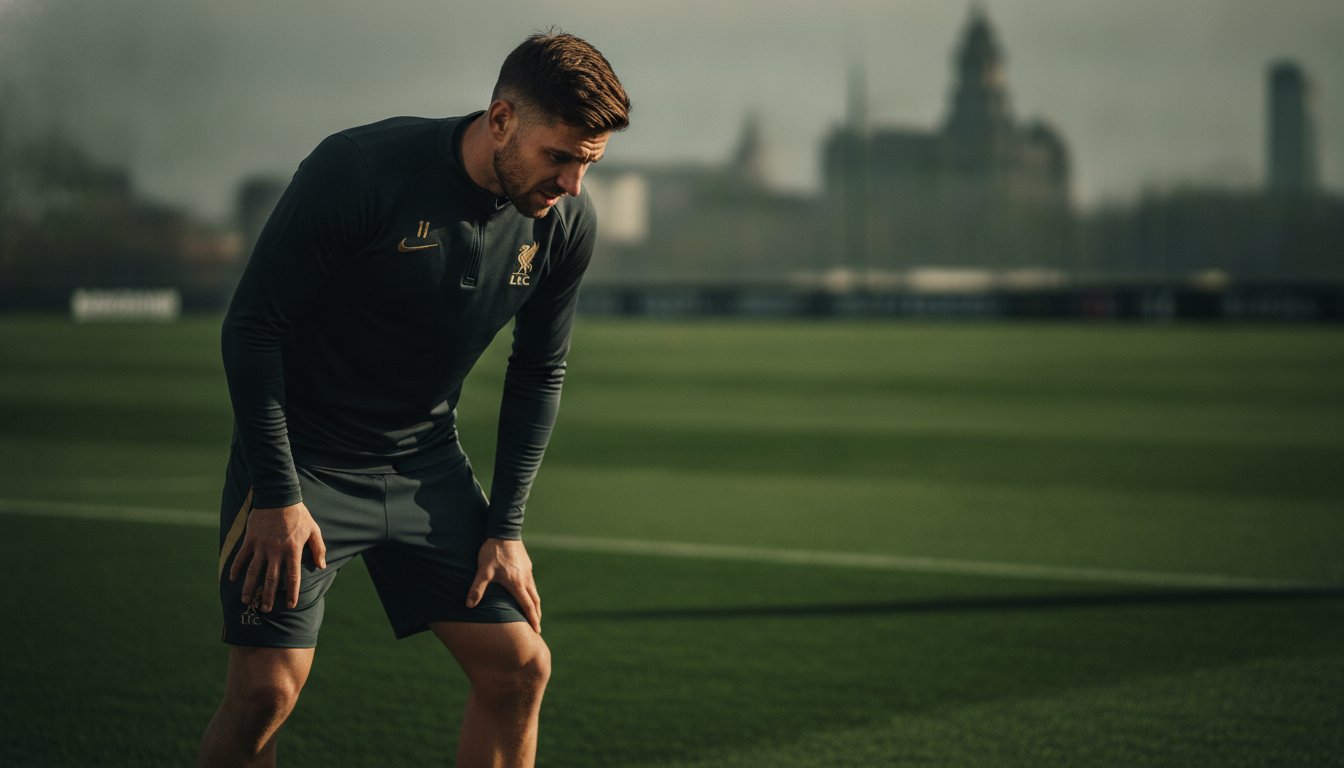
What if the goal of your recovery wasn't just to get back to walking, but to return to the pitch as a more resilient athlete than the day you were injured? Most people facing ACL reconstruction rehab Liverpool feel trapped by the limitations of generic physiotherapy. You might be frustrated by persistent quad muscle wastage or the conflicting advice regarding when it's truly safe to start running and pivoting again. It's natural to feel anxious about the 10% of reconstructions that fail within ten years, especially when your current progress feels stagnant.
We believe that a successful recovery requires more than just following a standard protocol. By focusing on a root cause approach, you can ensure that your knee is not only stable but capable of handling the high demands of your sport. This article provides a clear roadmap for the typical nine to twelve month journey from surgery to peak performance. You'll discover how to restore explosive power, regain total confidence in your movement, and understand exactly why the injury happened so you can prevent it from ever happening again.
Key Takeaways
- Understand why a successful surgery is only the foundation and how elite level rehabilitation determines your long term athletic future.
- Learn why a root cause approach to ACL reconstruction rehab Liverpool is essential for reversing muscle wastage and restoring explosive power.
- Discover how to retrain your nervous system to move past the protective habits that often lead to plateaus and secondary injuries.
- Follow a structured, phased roadmap that transitions you safely from post operative protection to high level pivoting and sprinting.
- Identify the specific biomechanical factors that caused your injury to ensure your return to the pitch is both confident and permanent.
ACL Reconstruction Rehab in Liverpool: Why Surgery is Only the Beginning
Surgery is a vital first step, but it's a common misconception that a successful operation guarantees a full return to sport. The hard truth is that even a perfect procedure can fail if your rehabilitation is subpar. While this ACLR surgery overview explains the technical mechanics of the graft, it's the months that follow that determine whether that graft lasts a lifetime. Professional ACL reconstruction rehab Liverpool ensures your new ligament is protected while your body learns how to move again.
The first six weeks after your operation are perhaps the most critical. During this window, your body is working to integrate the new tissue, and the graft is actually at its most vulnerable. It's an emotional transition. One week you're navigating the Liverpool city centre on crutches, and the next you're taking your first tentative steps without support. For many, the stress of a long rehabilitation process can impact mental wellbeing; if you or your family need support with mental health or related challenges during this time, the Addiction Centre provides expert guidance. Our goal is to move you beyond those initial hurdles toward your first pain free jog in Sefton Park. Unlike generic physiotherapy that gives you a basic exercise sheet, we focus on your specific sport, whether you're a footballer at a local hub or a padel player looking to regain your edge.
The Reality of ACL Recovery Times
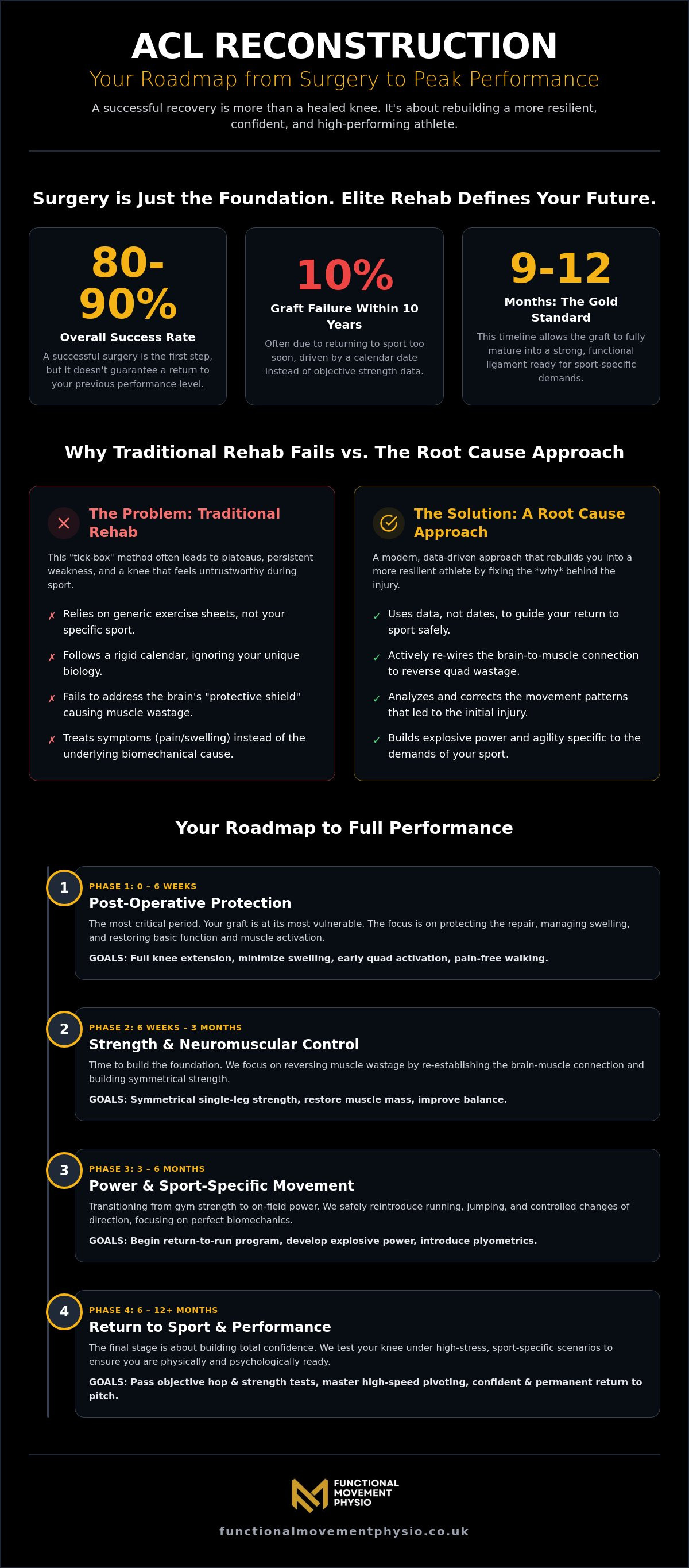
Biological healing cannot be rushed. Research indicates that while the success rate for ACL reconstruction is between 80% and 90%, approximately 10% of grafts fail within a decade. This often happens because athletes return to pivoting sports too soon. The 9 to 12 month window remains the gold standard for a reason. It allows the graft to undergo "ligamentization," where it transforms into a strong, functional ligament. When you book an Initial Physiotherapy Consultation at our Liverpool clinic, we set realistic milestones based on this biological timeline, not just a calendar date.
The Partnership Between Surgeon and Physio
We don't work in a vacuum. We maintain close communication with Liverpool based orthopaedic surgeons to ensure our Post-Operative Rehabilitation follows their specific surgical protocols. This partnership is vital. Your surgeon handles the structural repair, while we handle the functional restoration. We start analyzing your movement patterns from day one, ensuring you don't develop compensatory habits that lead to future issues. This proactive approach is why so many local athletes trust us for their ACL reconstruction rehab Liverpool, guiding their journey back to the pitch.
The Problem: Why Traditional Rehab Often Leaves You Short of the Finish Line
Standard rehabilitation often feels like a conveyor belt. You are given a photocopied sheet of generic exercises and told to see how it goes. This "tick box" approach is the primary reason many athletes plateau long before they reach their previous performance levels. It treats the surgery as the finish line, when in reality, the operation is simply the start of a complex biomechanical rebuild. If your ACL reconstruction rehab Liverpool doesn't evolve as you do, you'll likely find yourself stuck with a knee that feels "okay" for walking but remains untrustworthy on the pitch.
One of the biggest oversights in traditional physio is ignoring the brain. Your nervous system is incredibly efficient at protecting you. After a major trauma like an ACL tear, your brain creates a neurological "shield" around the joint. It literally turns down the electrical signal to your quadriceps to prevent what it perceives as further danger. This is why muscle wastage persists even when you're training hard. Without specific drills to "re-wire" this connection, you are essentially trying to power a high performance car with a faulty battery.
Relying on the calendar is another dangerous trap. Many protocols clear athletes for sport based solely on the fact that nine months have passed. Time doesn't guarantee strength. Returning to pivoting movements without objective data, such as limb symmetry indices or hop test results, significantly increases the risk of re-injury. We believe in using data, not dates, to dictate your progress. If you're feeling frustrated by a lack of clear direction, a tailored Post-Operative Rehabilitation plan can provide the objective milestones you need.
The Trap of Symptom Based Treatment
Icing, rest, and painkillers have their place in the days immediately following surgery, but they are not a long term strategy. These methods only address the symptoms of inflammation and pain. They do nothing to restore the explosive power or reactive stability required for sport. Many people "feel fine" during straight line running but fail miserably during a return to sport assessment because their underlying biomechanical weaknesses were never addressed. You cannot ice your way back to a competitive level of function.
Compensatory Movement Patterns
Your body is a master of compensation. You will unconsciously shift your weight to the "good" leg during squats or landings, a habit that often leads to secondary hip or lower back issues. We also frequently see restricted ankle mobility, which forces the knee to take more force during impact; for instance, Clínica Bernáldez Sportme notes that even common issues like ankle sprains can disrupt your biomechanics if not properly rehabilitated. Correcting these patterns early is essential. "Quad lag," or the inability to fully straighten the knee under load, is the enemy of ACL reconstruction rehab Liverpool. If these compensations aren't caught and corrected, you're simply building strength on top of a dysfunctional foundation.
The Root Cause Approach: Beyond the Knee Joint
To truly understand why an ACL tear occurs, we have to look far beyond the knee joint itself. The knee is often the "victim" of dysfunction occurring elsewhere in the kinetic chain, typically at the hip or the foot. If your ACL reconstruction rehab Liverpool only focuses on the surgical site, you're missing the underlying mechanics that likely caused the injury in the first place. We examine how your entire body moves as a single, integrated unit to ensure your new graft isn't subjected to the same destructive forces that claimed the original ligament.
Pelvic stability and gluteal strength are the primary defenders of your ACL. When the gluteal muscles are weak or slow to fire, the femur (thigh bone) can rotate inward and collapse toward the midline during landing or pivoting. This movement, known as dynamic valgus, places immense strain on the ACL. By identifying these "hidden" weaknesses through comprehensive gait analysis, we can reconstruct your movement patterns from the ground up. It isn't just about making the knee stronger; it's about making the entire leg more resilient.
Biomechanical Analysis for ACL Patients
We use high speed video analysis to capture exactly what happens when you move. This allows us to see "dynamic valgus" in real time, identifying the split second your knee caves inward during a squat or a jump. We also assess your hip rotation and ankle mobility, as restrictions in these areas directly increase the tension on your knee ligaments. Your foot strike and footwear are also critical factors. If your foot lacks the necessary support or flexibility, the resulting instability travels straight up the leg to the knee. This level of detail is a standard part of our ACL reconstruction rehab Liverpool sessions.
Building a Resilient Foundation
Rehab must progress from isolated muscle work to integrated functional movement. While leg extensions help build the quad, they don't teach your body how to land safely from a header or change direction on a padel court. We prioritize proprioception, which is your brain's ability to sense where your joint is in space without you looking at it. After surgery, this "internal GPS" is often scrambled. Retraining these neurological pathways is what gives you the confidence to move at high speeds again. We prepare your body for the specific, chaotic demands of Liverpool football pitches and sports halls, ensuring you don't just return to play, but stay there long term.
Your Roadmap to Recovery: From First Steps to Full Performance
Recovery is a structured evolution, not a race against the calendar. While biological healing takes time, your progress through ACL reconstruction rehab Liverpool should be dictated by your ability to meet specific physical benchmarks. We break this journey into five distinct phases, ensuring you master the basics before moving to high intensity movements. This systematic approach eliminates the guesswork and builds a foundation that can withstand the rigours of competitive sport.
Phase one focuses entirely on protection and range of motion. Your primary goals are to reduce swelling and, most importantly, get the knee completely straight. Phase two shifts toward load introduction. Here, we move beyond simple leg raises to build significant strength in the quads, hamstrings, and glutes. This is where we address the muscle wastage discussed earlier. Once you've built a baseline of strength, phase three introduces dynamic control, including low impact jogging and controlled jumping mechanics to prepare your joints for impact.
As you move into phase four, we focus on sport specific power. This involves cutting, pivoting, and explosive movements tailored to your specific goals on the pitch or court. The final stage is phase five: the return to play. You don't just "try it out" and hope for the best. You must pass our rigorous return to sport assessment with confidence. This ensures your body is neurologically and physically ready for the chaos of a live game.
Objective Milestones vs. Guesswork
We use objective strength testing to guide every transition. It's a non negotiable rule in elite ACL reconstruction rehab Liverpool that your operated leg must be at least 90 percent as strong as your healthy side before you return to contact sports. We also utilize a "hop test battery," which measures your ability to land and propel yourself with stability. These tests provide the data we need to safely move you from the clinic environment into a high performance gym setting.
Actionable Advice for the Early Stages
In the first few weeks, managing swelling is your full time job. Use the RICE protocol (Rest, Ice, Compression, Elevation) correctly by elevating your knee above your heart several times a day. Your top priority is achieving full extension. A knee that cannot get perfectly straight will never function correctly during running. To maintain your cardiovascular fitness without stressing the graft, we often introduce stationary cycling as soon as your range of motion allows. If you want to ensure your recovery is driven by data rather than dates, you can book your Post-Operative Rehabilitation plan today.
Specialist Post-Operative Care at Functional Movement Physio
Choosing where to undergo your ACL reconstruction rehab Liverpool is the most significant decision you'll make after leaving the operating theatre. At Functional Movement Physio, we've built a reputation among local athletes for one simple reason: we don't settle for "good enough." We understand that your goal isn't just to walk without a limp; it's to return to the sports you love with total confidence in your knee's stability. Our approach is built on a partnership between expert and athlete, moving you from the initial anxiety of surgery to the quiet confidence of peak performance.
Our facility is a space designed for high performance rehabilitation. We've moved away from the cold, clinical feel of traditional physiotherapy rooms, opting instead for an environment that mirrors the athletic settings you want to return to. This allows us to bridge the gap between early stage healing and the high intensity demands of your sport. You'll work 1:1 with specialists who speak your language and understand the specific biomechanical requirements of your activity, ensuring every minute spent in the clinic translates to progress on the pitch or the court.
A Personalised Plan for Every Patient
We reject the "one size fits all" protocols that lead to the plateaus and frustrations many patients experience in standard care. Your body is unique, and your ACL reconstruction rehab Liverpool should reflect that. We adjust your plan based on your specific physiological response and your individual progress through our milestone testing. By mastering your movement patterns under our guidance, you aren't just fixing a knee; you're developing a more resilient athletic foundation that protects you from future injuries across the entire kinetic chain. This focus on sustainable results is what transforms a standard recovery into an opportunity for physical optimization.
Book Your Initial Consultation Today
Your first step toward a confident recovery is our comprehensive Initial Physiotherapy Consultation. This 45 to 60 minute assessment allows us to deep dive into your surgical history, your current physical state, and your long term goals. We'll identify any immediate compensations and establish a clear, data driven roadmap for the months ahead. Early intervention is the most effective way to avoid the complications that often slow down recovery and lead to long term frustration. Don't leave your athletic future to chance. You can book your appointment here and take control of your journey back to full performance today.
Take the First Step Back to Peak Performance
Your recovery from surgery is a complex biomechanical rebuild that requires more than just a standard exercise sheet. You've learned that a successful return to the pitch depends on addressing the root cause of your injury and retraining your nervous system to move without fear. By prioritizing objective strength data over simple calendar dates, you ensure that your graft is protected while your explosive power is fully restored.
As specialists in post-operative sports rehabilitation, we provide the detailed biomechanical analysis and 1:1 care necessary to optimize your movement patterns. We have a proven track record with Liverpool athletes, helping them navigate the long journey of ACL reconstruction rehab Liverpool with quiet confidence and clinical expertise. You don't have to settle for a knee that just feels "okay" when you can aim for peak performance.
Take control of your recovery today and start building a more resilient future. Book Your ACL Rehab Consultation in Liverpool and let's get you back to the sport you love. You have the potential to return stronger than ever before.
Frequently Asked Questions
How soon after ACL surgery should I start physio in Liverpool?
You should ideally start your rehabilitation within the first 7 to 10 days following your operation. This early window is absolutely vital for managing post-operative inflammation and ensuring your knee can achieve full extension. Starting ACL reconstruction rehab Liverpool promptly helps prevent the build-up of excessive scar tissue and sets a strong foundation for your range of motion. Delaying this process can lead to persistent stiffness that becomes much harder to correct later.
Can I do my ACL rehab on the NHS or should I go private?
You can access treatment through the NHS, but many athletes find that generic protocols lack the sport-specific intensity and frequency required for a full return to play. Private care offers more frequent 1:1 sessions and advanced biomechanical testing that isn't always available in a standard hospital setting. This specialized approach ensures your recovery is guided by objective performance data and tailored to the specific demands of your sport or lifestyle.
What happens if I do not do my ACL rehab exercises?
Neglecting your prescribed exercises significantly increases the risk of graft failure and long term joint stiffness. Without consistent, progressive loading, your quadriceps will continue to waste away, leaving the new ligament vulnerable to re-injury during daily activities. You may also develop permanent compensatory movement patterns that lead to chronic hip or lower back pain, as your body tries to shift the workload away from your weakened knee.
When can I start running after my ACL reconstruction?
Most athletes begin a structured return-to-run program between 3 and 5 months post-surgery. However, this transition is not based on the calendar alone. You must first demonstrate adequate quadriceps strength and the ability to control your landing mechanics during a specific hop test battery. Running too early on a weak foundation can lead to persistent joint swelling and irritation of the graft, which may set your overall progress back by several weeks.
Is it normal for my knee to still feel "weird" six months after surgery?
It's very common for the knee to feel different or slightly "numb" for up to a year as the graft undergoes biological changes. This sensation often stems from the healing of small nerves around the incision site and the gradual process of the graft becoming a functional ligament. As long as you have good stability and no significant swelling, these sensations are usually a normal part of the recovery timeline and will gradually fade.
How do I know if I have re-torn my ACL graft during rehab?
A re-tear is typically accompanied by a distinct "popping" sensation followed by immediate, significant swelling and a feeling of the knee giving way. If you experience these symptoms during a pivoting movement or a fall, you should contact your specialist immediately for an assessment. We use specific clinical tests to check the integrity of the graft and determine if further imaging is required to plan the next steps of your care.
Do I need a knee brace for sports after ACL reconstruction?
Most modern evidence suggests that a knee brace is not necessary for a return to sport if your ACL reconstruction rehab Liverpool has been comprehensive. Relying on a brace can actually hinder your proprioception and muscle activation by providing a false sense of security. Your goal is to build a "natural brace" through elite-level strength in your quadriceps, hamstrings, and glutes, allowing your body to stabilize the joint naturally during high-speed movements.
Why is my quad muscle so much smaller than the other side?
This visible difference is known as arthrogenic muscle inhibition, a process where your brain reduces the electrical signal to the quad to protect the joint. It's a natural response to trauma, but the muscle won't improve with rest or light activity alone. You need specific, high intensity loading and targeted neurological drills to "wake up" the muscle fibers and restore the bulk required for explosive movement and long term joint stability.
Article by
Stuart Goldfinch
HCPC PH112156
Specialist MSK Physiotherapist
Ex UK SAS Trainer
Graduate Sports Rehabilitator


