
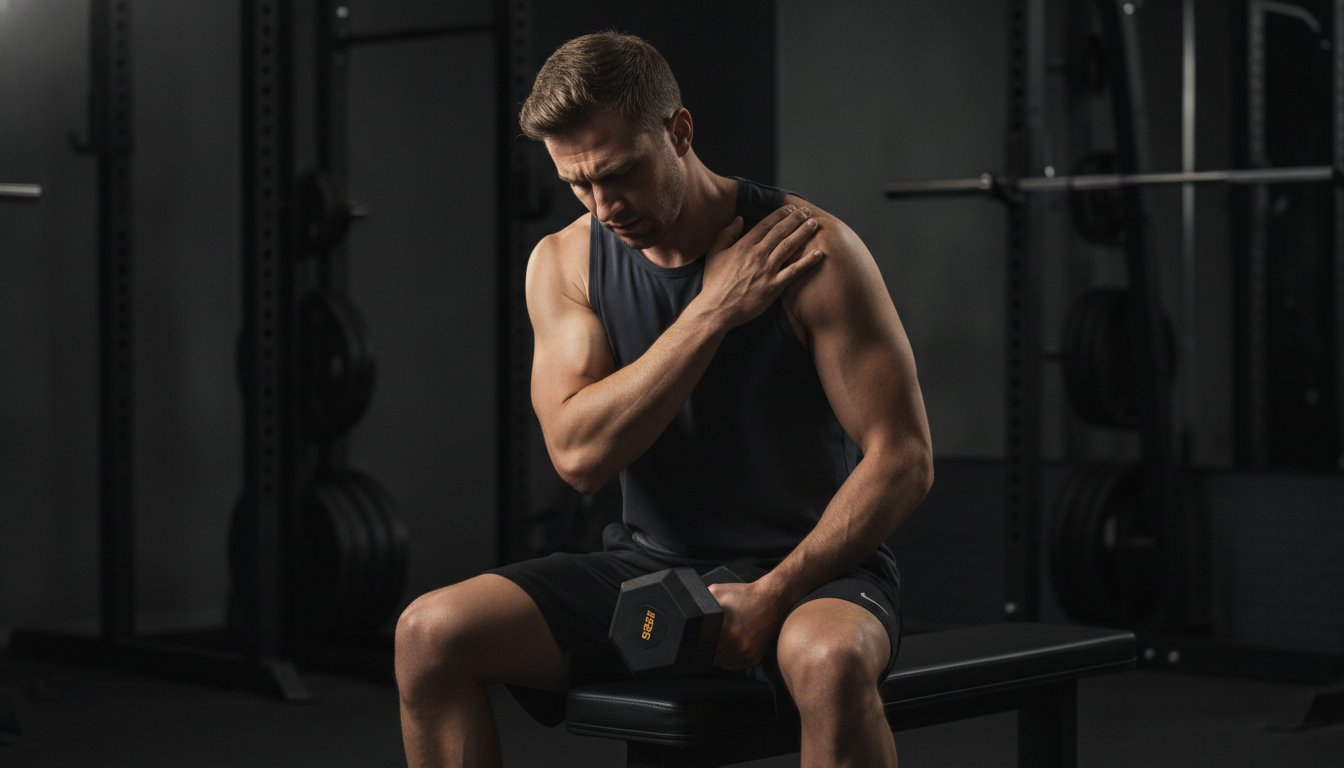
What if the reason your shoulder pain keeps returning isn't a lack of rest, but the fact that you've only been treating the symptom? It's incredibly frustrating to feel like you're doing everything right, yet still struggle with that sharp, stabbing sensation when reaching behind your back. When you seek a specialist for rotator cuff injury physio Allerton, you're likely looking for more than just a temporary fix for your inability to sleep comfortably at night.
We understand that generic exercises often fail to address the complex mechanics of your shoulder. This article promises to show you how a root cause approach can help you return to pain-free movement and lifting weights without the constant fear of re-injury. We'll explain exactly why the injury happened in the first place and provide a clear, sustainable roadmap to help you master your physical capabilities and get back to the sports you love.
Key Takeaways
- Discover why a root cause approach to rotator cuff injury physio Allerton is more effective than simply treating the area where you feel pain.
- Learn why the rest and wait strategy often leads to more stiffness and how to manage load for a faster recovery.
- Understand how the position of your shoulder blade acts as the vital foundation for your rotator cuff muscles.
- Compare the long term benefits of physical rehabilitation against the potential risks of steroid injections and surgery.
- Find out how a structured roadmap helps you return to lifting weights and sports with total confidence.
Why Your Rotator Cuff Pain Keeps Returning
Your shoulder is the most mobile joint in your body, designed for an incredible range of motion. However, this mobility requires extreme precision. When you experience pain, it's typically because the four stabilizing muscles that make up the rotator cuff have failed to manage the load you're placing on them. If you've been searching for rotator cuff injury physio Allerton, you likely know the frustration of a recovery that feels like it has stalled. You rest for a week, feel slightly better, and then the sharp pain returns the moment you try to lift a weight or reach into the back seat of your car.
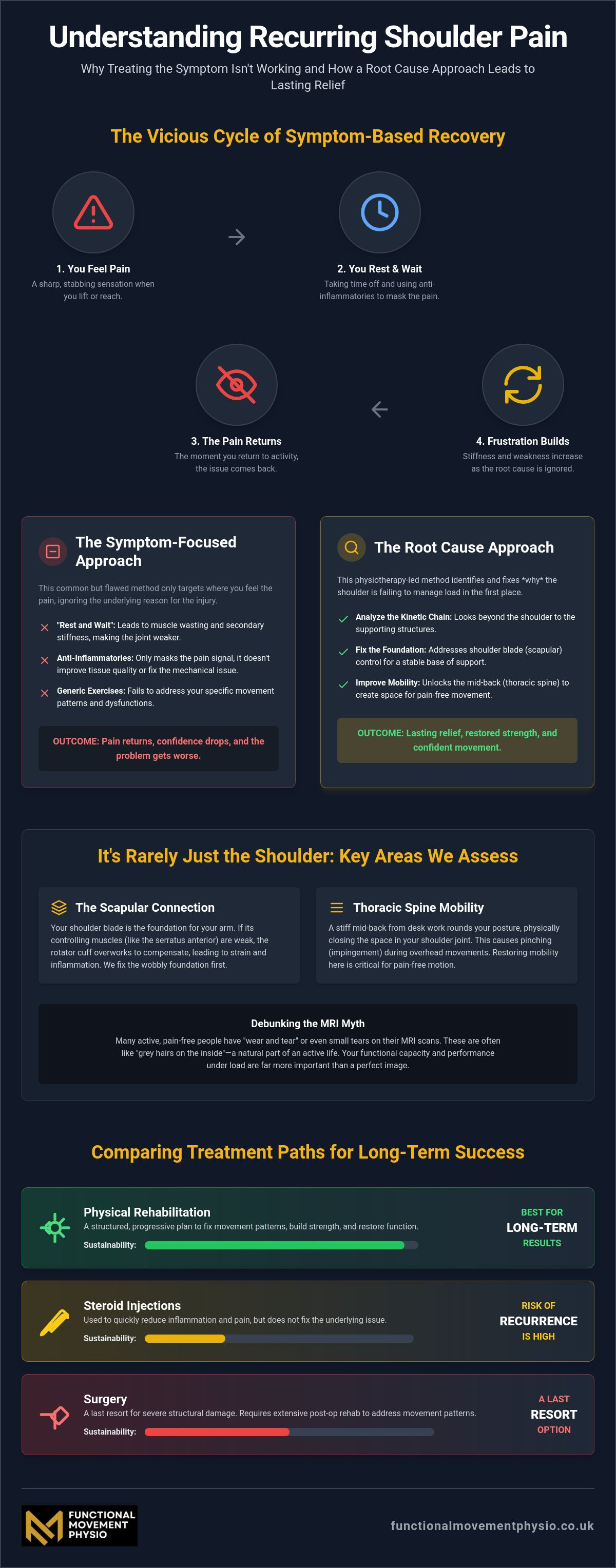
The "rest and wait" approach is one of the biggest contributors to chronic shoulder issues. While it might seem logical to stop moving, total inactivity often leads to secondary stiffness and muscle wasting. Similarly, relying on anti-inflammatories only masks the symptoms. These medications don't address the underlying structural weakness or the lack of control in the joint. They simply turn down the volume on the pain signal while the root cause remains untouched. To achieve lasting relief, we have to look at why the joint is struggling to handle tension in the first place.
The Problem with Symptom-Based Treatment
Applying ice or taking a week off might soothe the supraspinatus tendon temporarily, but these actions don't improve tissue quality. When you treat only the site of the pain, you ignore the compensatory patterns your body has created to protect the injury. You might notice your neck feeling tighter or your upper back aching as those muscles overwork to stabilize your arm. This often creates a "fear of movement," where you subconsciously change how you move to avoid that dreaded sharp catch, further entrenching the dysfunction.
Common Myths About Shoulder Tears
Many people believe that an MRI scan is the final word on their recovery. However, understanding what a rotator cuff tear is requires looking beyond the image. It's a clinical fact that many active, high-performing individuals have "wear" or even small tears in their tendons while remaining completely pain-free. We often view these changes as "grey hairs on the inside"; they are a natural part of an active life.
Our approach to rotator cuff injury physio Allerton prioritizes your functional capacity over perfect imaging. We don't just want to know what the scan says; we want to know how your shoulder performs under load. Surgery isn't always the answer, and for many, a structured, root-cause rehabilitation plan provides a more sustainable path back to peak performance.
The Root Cause Approach: Why the Shoulder is Rarely the Only Issue
At Functional Movement Physio, we don't view your shoulder as an isolated set of muscles. Many patients seeking rotator cuff injury physio Allerton have already tried localized treatments like ice or basic band exercises without success. This is often because the shoulder is simply the victim of dysfunction elsewhere in the kinetic chain. To achieve lasting results, we look at how your entire upper body moves together. A specialist physiotherapy Liverpool approach recognizes that your shoulder is only as strong as the structures supporting it.
The Scapular Connection
Think of your shoulder blade, or scapula, as the foundation for your arm. For your rotator cuff to function correctly, the scapula must move with precision. Muscles like the serratus anterior and trapezius act as the drivers of this movement. When these muscles are weak or poorly coordinated, it leads to scapular dyskinesis. This essentially means your shoulder blade is "stuck" or moving out of sync.
When the foundation is unstable, the rotator cuff muscles must tighten up just to keep the joint together. They stop acting as efficient movers and start acting as emergency stabilizers. This constant state of high tension leads to the micro-tears and inflammation that cause your daily frustration. If we only treat the tendon without fixing the "wobbly" foundation, the pain will inevitably return the moment you increase your activity level.
Thoracic Mobility and Shoulder Health
Your mid-back (thoracic spine) plays a silent but critical role in shoulder health. If your spine is stiff from hours of desk work, you lose the ability to extend your back properly. This rounded posture physically closes the subacromial space in your shoulder. Without this extension, there isn't enough physical space for the humerus (upper arm bone) to move without pinching the tendons. This mechanical restriction is a primary reason why many gym-goers experience sharp pain during overhead presses.
Just as your body requires a foundation of mobility to function without pain, a business requires a foundation of well-maintained infrastructure; The CFS Group provides the facilities management services necessary to ensure that professional environments operate seamlessly and efficiently.
This philosophy of looking beyond the site of pain is central to our Finding the Root Cause of My Running Pain approach. Whether you're a runner or a weightlifter, the principle remains the same: the site of the pain is rarely the source. While conservative treatments are highly effective, they must be applied to the correct area to work. If you're tired of temporary fixes, you might benefit from a more thorough Initial Physiotherapy Consultation to map out your specific movement gaps and start a targeted recovery plan.
Comparing Treatment Paths: Physiotherapy vs. Injections and Surgery
Choosing between conservative management and invasive procedures is a major decision for anyone dealing with shoulder pain. While surgery or injections might seem like a "fast" solution, they often fail to address the movement dysfunction that caused the injury in the first place. For the majority of people seeking rotator cuff injury physio Allerton, building long term resilience through progressive loading is the most sustainable path to recovery. Approximately 75% of patients with full thickness rotator cuff tears can successfully avoid surgery by following a structured physiotherapy program.
Steroid injections are a common alternative, but they come with significant trade-offs. While they provide temporary relief by reducing inflammation, they don't change how your shoulder moves. There is also clinical evidence suggesting that repeated corticosteroid injections can weaken the tendon tissue, potentially making the structural issue worse over time. We view pain as a signal that something is wrong with your mechanics. Masking that signal without fixing the movement pattern is like taking the batteries out of a smoke alarm while the fire is still burning.
Surgery is a significant commitment with a long road to recovery. A full return to sport or heavy lifting after a repair often takes 9 to 12 months of intensive work. As highlighted by Johns Hopkins Medicine on rotator cuff injuries, most treatment plans should begin with conservative options because many tears, especially degenerative ones, respond exceptionally well to targeted exercise. Our goal is to help you master your movement so you don't need to go under the knife.
When is Surgery Actually Necessary?
There are instances where a surgical consultation is the right move. Red flags include a sudden, traumatic loss of arm power or persistent, severe pain that hasn't improved after three to six months of dedicated rehabilitation. If surgery is ultimately the best path for your specific case, your success will depend heavily on high quality Post-Operative Rehabilitation. The procedure fixes the structure, but the rehab teaches your body how to use that structure again.
The Role of Shockwave and Manual Therapy
We use specific tools to accelerate your progress and manage symptoms during the early stages of rehab. Shockwave Therapy is particularly effective for chronic tendinopathy, using acoustic pulses to stimulate blood flow and cellular repair in stubborn tissues. We also incorporate sports massage to reduce protective muscle guarding. These interventions aren't meant to replace exercise; they are designed to create a "window of opportunity" where you can move with less pain and greater efficiency.
How to Start Your Rotator Cuff Rehabilitation Safely
Recovery is rarely a straight line. When you begin rotator cuff injury physio Allerton, your roadmap must be adaptable and focused on tissue resilience rather than just flexibility. Many people make the mistake of aggressively stretching a painful shoulder, which often irritates the sensitive tendons further. Instead, your recovery should center on the principle of optimal loading. Optimal loading is the application of specific mechanical stress to tissue to stimulate cellular repair and structural adaptation without exceeding the tendon's current capacity.
Professional guidance is essential during this process to ensure you're challenging the tissue enough to trigger healing without causing a flare up. We move through a phased approach that respects biological healing times while keeping you as active as possible. This structured progression ensures that each stage builds the foundation for the next, moving you closer to your peak performance goals.
Phase 1: Calming the System and Restoring Range
The initial goal is to settle the acute inflammation and regain basic movement. We use gentle manual therapy and specific isometric holds, which involve contracting the muscle without moving the joint. These exercises are highly effective because they provide an analgesic effect, helping to reduce pain while maintaining muscle activation. During this phase, it's vital to avoid "impingement" positions, such as reaching overhead with your thumb turned down, which can pinch the already sensitive tendons.
Phase 2: Building Functional Strength
Once your pain is manageable, we transition from isolated movements to integrated patterns. This is where we focus on how your shoulder works in tandem with your core and upper back. We prioritize scapular control during weight bearing activities like modified planks or controlled rowing movements. Many of our clients find that Clinical Pilates Liverpool is an excellent way to bridge the gap between basic rehab and full gym work, as it emphasizes the core-to-shoulder stability required for heavy lifting.
Phase 3: Return to Sport and Peak Performance
The final phase is about preparing your shoulder for the specific demands of your lifestyle. If you play tennis, padel, or enjoy heavy overhead pressing, we introduce high velocity drills that test the tendon's ability to store and release energy. We don't just guess if you're ready; we use objective markers to ensure your strength is symmetrical and your movement is efficient. This phase concludes with a long term maintenance plan, transforming your rehab into a sustainable performance strategy. If you're ready to stop guessing and start a professional recovery plan, you can book an Initial Physiotherapy Consultation to begin your journey back to full movement.
Specialist Rotator Cuff Physio in Allerton: Restoring Purposeful Movement
Residents in Allerton deserve a level of professional care that matches their active lifestyles. At Functional Movement Physio, we have created an environment that bridges the gap between clinical excellence and high performance mentoring. If you've been struggling with shoulder pain, our approach to rotator cuff injury physio Allerton focuses on more than just providing a temporary reprieve from discomfort. We are here to help you reclaim your physical independence and achieve sustainable, long term health through a partnership built on evidence and empathy.
Our philosophy is rooted in the belief that movement is the foundation of health. We don't just see a damaged tendon; we see an individual whose potential is being limited by physical restriction. By moving beyond simple symptom management, we help you transition from a state of limitation to one of peak performance. This journey requires a dedicated focus on your unique physical capacity and a commitment to resolving the underlying issues that led to your injury in the first place.
Your Initial Assessment in Liverpool
The first step in your recovery is a thorough Initial Physiotherapy Consultation. During this session, we conduct a detailed biomechanical screening that goes far beyond a basic physical exam. We analyze how your shoulder interacts with your spine, ribcage, and even your hips to find the true root cause of your dysfunction. This comprehensive look at your kinetic chain is what sets our rotator cuff injury physio Allerton services apart from generic treatments.
We take the time to listen to your specific aspirations. Whether you want to spend your weekends gardening without a dull ache or you're a competitive athlete aiming for a pain-free overhead serve, your goals form the foundation of our recovery plan. Our clinic is conveniently located for those living in Allerton and across South Liverpool, providing a professional, accessible setting where your long term wellness is the absolute priority.
A Partnership for Your Recovery
We don't just treat you; we partner with you. This collaborative relationship is essential for achieving results that last. We ensure you leave every session with a clear, confident understanding of why your injury happened and exactly how we are fixing it. By empowering you with this knowledge, we give you the tools to master your own physical capabilities and prevent future setbacks. We believe that an educated patient is a resilient one, a principle also championed by Functional Medicine Coaches who help people address the systemic foundations of their health.
This proactive approach to health management ensures that your recovery isn't just a one-time event, but a foundation for lifelong movement. The ultimate goal is the restoration of full, purposeful movement in your daily life, allowing you to return to the activities that give your life meaning. If you're ready to stop managing symptoms and start building real capacity, we invite you to take the first step toward a pain-free shoulder. You can book your appointment at book appointment to begin your roadmap to recovery.
Take Control of Your Shoulder Health Today
Recovering from a shoulder issue isn't about finding a quick fix or waiting for the pain to disappear. It requires a deep understanding of your body's mechanics and a commitment to addressing the root cause of your dysfunction. By focusing on shoulder blade stability and mid-back mobility, you can move beyond temporary symptom relief and build a joint that is resilient enough for the gym, the court, or daily life. Our specialist rotator cuff injury physio Allerton service is designed to bridge the gap between physical limitation and peak performance.
We provide the clinical expertise in sports injury and high-performance rehab needed to create a personalised plan focused on your specific goals. You don't have to stay stuck in a cycle of frustration and recurring pain. With our root cause diagnostic approach, we'll help you master your own physical capabilities and return to the activities you love with complete confidence. It's time to stop managing the pain and start optimizing your movement for a sustainable future.
Book your Initial Physiotherapy Consultation at our Allerton-serving clinic today and start your roadmap to recovery. We look forward to partnering with you on your journey back to full, purposeful movement.
Frequently Asked Questions
How long does it take for a rotator cuff injury to heal with physio?
Non-surgical recovery typically lasts between 8 and 16 weeks of structured rehabilitation. This timeframe allows for necessary tissue adaptation and the building of functional strength. Your specific journey depends on the severity of the initial load-management failure and how consistently you follow your personalised movement roadmap. We focus on steady, sustainable progress rather than rushed, temporary fixes.
Can I still go to the gym with a rotator cuff injury?
You don't need to stop training entirely, but you must modify your movements to stay within a tolerable pain threshold. Total rest often leads to muscle wasting and secondary stiffness, which complicates recovery. We help you identify safe ranges and exercises that maintain your fitness while promoting tendon health through the principle of optimal loading.
Is a rotator cuff tear the same as shoulder impingement?
No, these are distinct issues. Impingement describes the mechanical sensation of tissues being "pinched" during movement, whereas a tear is actual structural damage to the tendon. Many individuals seeking rotator cuff injury physio Allerton experience both, as poor movement mechanics often cause impingement that eventually leads to a tear over time.
Will I need an MRI scan before starting physio in Allerton?
You don't need an MRI to begin your recovery journey. A thorough physical assessment is the most effective way to identify movement dysfunction and the root cause of your pain. We only suggest imaging if your symptoms don't respond to conservative management as expected or if we suspect a specific red flag that requires surgical review.
What happens if I leave a rotator cuff injury untreated?
Ignoring the issue often leads to chronic compensatory patterns, where your neck and upper back overwork to protect the shoulder. Over time, this can result in muscle wasting and increased joint stiffness. Leaving the root cause unaddressed makes the eventual rehabilitation process longer and more complex as we have to "unlearn" these ingrained protective habits.
Can sports massage help with my rotator cuff pain?
Sports massage is an excellent tool for reducing the protective muscle guarding that often surrounds a painful joint. It helps "quiet" the nervous system, creating a window of opportunity where you can move with less restriction. However, it's a supportive treatment that must be paired with progressive loading to fix the underlying structural weakness.
How do I know if my rotator cuff is torn or just strained?
A true tear typically involves a noticeable loss of power when lifting your arm in specific directions, even if you try to push through the pain. A strain is generally a less severe overstretching of the fibers where pain is present but your functional strength remains relatively intact. Our clinical testing identifies these differences by measuring your capacity under tension.
Why does my shoulder pain feel worse at night?
Pain often intensifies at night because lying down changes the pressure within the small subacromial space of your shoulder joint. Without the distractions of your daily activities, your brain also becomes more sensitive to pain signals. We've found that improving your daytime mechanics and scapular control significantly reduces the frequency and intensity of these nocturnal flare ups.
Article by
Stuart Goldfinch
HCPC PH112156
Specialist MSK Physiotherapist
Ex UK SAS Trainer
Graduate Sports Rehabilitator


