

Pain relief is only part of a successful return to sport. Effective sports rehabilitation in Liverpool should also identify what is driving the problem and build your strength and confidence so you can return to activity.
If a recurring injury keeps interrupting your running or training, it’s understandable to feel stuck between resting and pushing through. A thorough assessment of your injury, movement and strength is a practical starting point, followed by a personalised rehabilitation plan.
This article explains what that assessment can involve, which treatments and exercises may support recovery, and how a tailored plan can address the underlying cause rather than just the symptoms. You’ll also learn how rehabilitation can help you progress towards your usual activities and reduce the risk of the same problem returning.
Key Takeaways
- Recurring pain can persist when treatment focuses only on symptoms instead of the factors contributing to the injury.
- A personalised assessment can help shape treatment and rehabilitation around your movement, strength and goals.
- Progressing activity in a structured way can support a more confident return to exercise and sport.
- Post-operative rehabilitation can help you work towards restoring movement and building physical capacity after surgery.
- Learn how professional follow-up care can adapt as your recovery and activity goals change.
The Problem
You may finish a run or gym session only to feel the same pain return later. Or an injury may settle with rest, then flare as soon as you resume your usual activity. That cycle is frustrating, especially when you’re unsure whether to stop, push on or try another approach.
Pain is a signal, not a complete explanation. Where you feel it does not always reveal why it developed. A sore tendon, for example, may be affected by changes in training load, reduced strength, movement habits or recovery. If treatment focuses only on calming the sore area, those contributing factors may remain. The discomfort can ease temporarily while the demands that triggered it are still present.
Rest can help an irritated area settle, but avoiding activity indefinitely does not rebuild the strength or confidence needed for running, lifting or sport. At the other extreme, continuing at the same intensity despite recurring pain can keep the problem active. The challenge is finding an appropriate activity level and adjusting it as your symptoms, movement and capacity change. Without a gradual progression, you can feel caught between doing too much and losing fitness through doing too little.
A symptom-led approach can miss the wider picture. Massage or other hands-on treatment may make movement feel easier, but that change alone does not show whether you can handle the demands of your sport. Pain relief is not the same as restored capacity. If you return to training before your strength, control or confidence has caught up, ordinary activity may expose the same limitation again.
The issue is not that every quick treatment is useless. It is that a single technique cannot answer every important question: what movements aggravate the problem, what your body currently manages well, and what needs to improve before you increase activity? Sports injuries, muscle and ligament injuries, tendon pain, overuse problems, back and neck pain, joint pain, mobility issues and nerve-related symptoms can all affect movement in different ways. Treating them as though they share one cause risks missing what makes your situation distinct.
Recurring pain can also change how you move. You might shorten your stride, avoid loading one side or skip exercises that feel uncomfortable. These adjustments may help in the moment, but they can obscure what is limiting you and make progress harder to judge. Fear of making things worse can then narrow your activity further, even when a carefully managed return is possible.
A lasting plan needs to consider the problem in context: your symptoms, activity demands and how your body responds as you move. That is why repeated flare-ups deserve more than another attempt to quiet the pain. The next step is to understand contributing factors and use that information to guide rehabilitation.
The Root Cause Approach
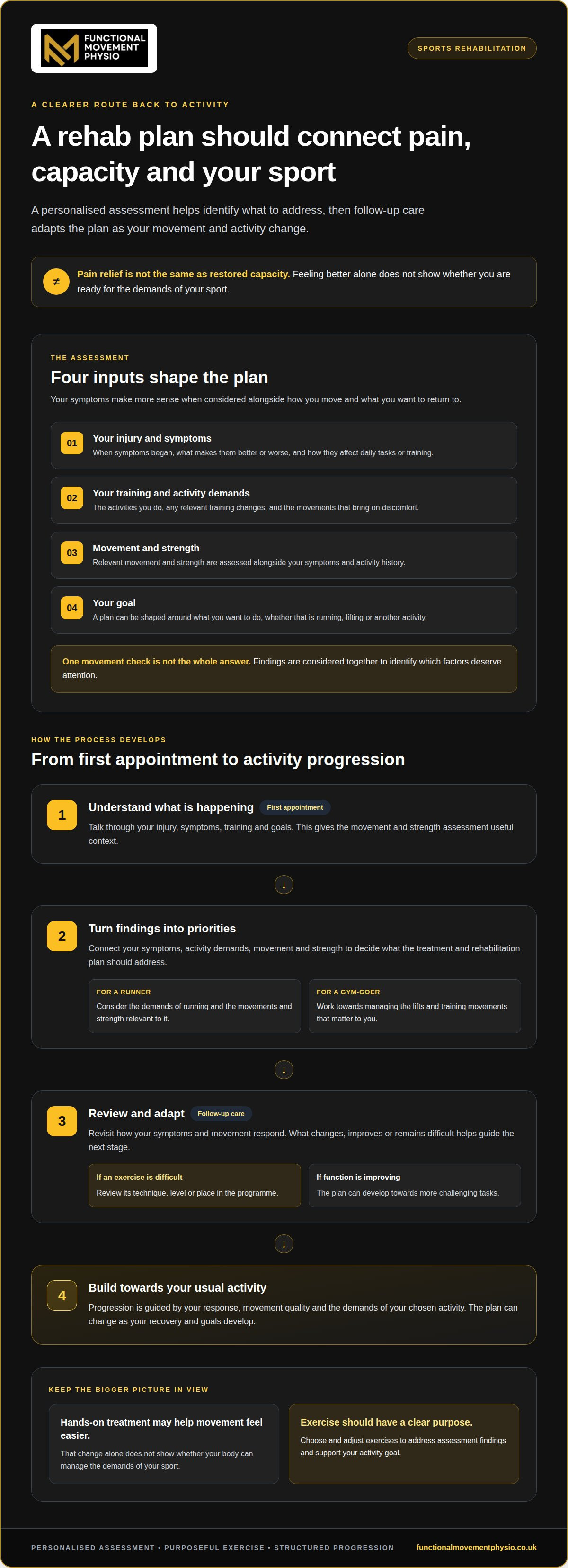
A personalised assessment connects your symptoms with the movements and demands of your usual activities. The treatment plan turns those findings into clear recovery priorities.
First Appointment Assessment
At your first appointment, a physiotherapist discusses your injury, training and goals, then assesses your movement and strength. These steps help identify areas to address and shape a personalised treatment and rehabilitation plan. For example, a runner with knee pain can explain when it appears, describe recent training changes and have relevant movement and strength assessed.
Your account gives the assessment context. The physiotherapist may ask when symptoms began, what makes them better or worse, and how they affect work, training or daily tasks. A gym-goer who notices discomfort during squats, for instance, provides a more useful starting point than a description of pain alone. Your goals matter too, because returning to lifting differs from preparing for a run.
Movement checks add another part of the picture. The physiotherapist can observe a relevant movement and assess strength around the affected area. A single observation does not explain every injury, so findings are considered alongside your symptoms and activity history. This helps distinguish what feels sore from what may be limiting a particular task.
The next step is to connect those findings. If running provokes symptoms, the assessment can consider your training demands alongside movement and strength. The aim is not to label every awkward movement as the cause. It is to build a reasoned view of which factors deserve attention and what the treatment plan should address first.
A clear plan gives you practical direction. It should relate treatment and exercise to your condition, current capacity and activity goal, rather than offer a generic routine. A plan for returning to gym training, for example, may focus on the movements you need to manage, while a runner’s plan may address the demands of running. Priorities can change as your response becomes clearer.
Follow-Up Treatment and Exercise Planning
Follow-up treatment reviews how your symptoms and movement respond to the plan. Your physiotherapist can reassess relevant tasks, discuss what has changed and adjust treatment or exercise accordingly. If a particular exercise is difficult, that information helps guide a suitable modification. Each review connects your experience with the next stage of rehabilitation.
An exercise programme should have a clear purpose. Your physiotherapist can choose exercises that address assessment findings, explain how to perform them and relate them to your activity goal. A runner’s programme may focus on strength and control relevant to running, while a gym-goer may work towards managing specific lifts. The right choice depends on your assessment, not a standard list.
Progress is guided by your response, movement quality and the demands of your chosen activity. If an exercise is manageable and your function is improving, the plan can develop towards more challenging tasks. If it aggravates symptoms or remains difficult, your physiotherapist can review its technique, level or place in the programme. Follow-up care is part of the decision-making process, not simply a repeat of the initial treatment.
The key takeaway is that assessment, treatment and exercise work as connected steps. Your history provides context, movement and strength checks help define priorities, and follow-up reviews show how the plan is working. This gives rehabilitation a clearer focus: address what is limiting your activity, then build towards the movements that matter to you.
Practical Steps for Long-Term Progress
Long-term progress means rebuilding your ability to move, train and take part in sport. A planned return should account for your current function and the demands of your chosen activity.
Return to Sport and Activity
Liverpool has NHS and private routes for sports injury care. You can speak with your GP about NHS pathways. No GP referral is needed to book a private physiotherapy appointment with FM Physio in Liverpool city centre.
Private health insurance acceptance depends on the insurer and clinic. FM Physio accepts Allianz, Aviva, Vitality, WPA, Medicash and Simplyhealth. Direct invoicing is limited to Medicash or Simplyhealth with an HCPC-registered physiotherapist. Check your policy terms for any excess or claim requirements.
Seek urgent medical assessment for a severe injury, rapidly worsening symptoms or sudden loss of normal function. Don’t continue training if an injury feels serious or prevents you from using the affected area safely.
Returning to activity is a progression, not a single test. A physiotherapist can assess whether your strength, movement and fitness are ready for the demands of your sport. For a runner, that may mean progressing from comfortable everyday walking towards running, then reviewing how your body responds as training demands increase.
Knee and ankle injury prevention should reflect the movements your sport requires. A tailored programme may develop leg strength and control for landing, running or changing direction. Exercises should suit your current ability and activity, rather than follow a generic routine that overlooks your injury history.
Return-to-play profiling considers the movements and physical demands of your sport. A footballer, for example, needs to prepare for accelerating, stopping and changing direction. Reviewing relevant strength and movement can help guide progression, rather than using pain alone to judge readiness.
Recovery Time and Influencing Factors
There is no single recovery time for common injuries. The type and severity of injury, your starting strength, the demands of your activity and your response to rehabilitation all influence progress. Your programme may need to change if symptoms shift or an exercise remains difficult.
Recovery varies from person to person. Some people return to running after rehabilitation, while others need more time to rebuild strength and confidence. A sprain, tendon problem or knee injury can each affect movement differently, so another person’s progress is not a timetable for your recovery.
Sports therapy may support care for muscle strains, ligament injuries, tendon pain and overuse injuries. The important question is how treatment and exercise relate to the problem affecting you. A personalised programme should adapt as your function changes and help you build towards the movements your sport requires.
Consistency matters, but doing more exercise is not automatically better. Follow the programme designed for your needs, and have it reviewed if your symptoms or function change. This helps you progress towards activity with a clearer understanding of what your body can manage and what still needs attention.
Functional Movement Physio: Post-Operative Rehabilitation
FM Physio provides post-operative rehabilitation to help you rebuild movement and work towards meaningful activity after surgery.
After an operation, progress involves more than waiting for discomfort to ease. Your movement, strength and confidence may need rebuilding in a way that reflects your procedure and goals. A rehabilitation plan can give you a structured route from everyday tasks towards the activities you want to resume.
Support After Surgery
Post-operative rehabilitation can help when surgery has affected how you walk, exercise or manage daily tasks. An initial physiotherapy consultation gives you time to discuss your operation, current difficulties and priorities. Follow-up treatment can then adapt as your movement changes and rehabilitation progresses.
Your plan should respond to your situation, not assume that every operation follows the same path. Returning to stairs after a lower-limb procedure, for example, involves different demands from rebuilding confidence to use an operated shoulder. Your physiotherapist can consider the movement you need and your progress when guiding treatment and exercise.
Bring details about your operation, recovery so far and current restrictions to your consultation. Any guidance from your surgical team can help shape a programme that fits your care. If a task such as standing from a chair or reaching overhead remains difficult, describe it clearly. Specific examples help direct the assessment towards your everyday needs.
Choosing Treatment for Your Needs
Physiotherapy is a clinical profession, while sports therapy is a separate area of practice. Merseyside Health describes sports therapy as a degree-level qualification. For post-operative care, focus on whether the assessment and treatment plan address your procedure, movement and goals, rather than relying on a job title alone.
Functional Movement Physio also offers initial physiotherapy consultations and follow-up physiotherapy treatment. Those options can support assessment and ongoing care as your needs develop. Sports massage is available in a 30-minute session, but massage is not a substitute for a post-operative rehabilitation plan when you need to rebuild function after surgery.
Some treatments suit particular problems rather than every recovery. Shockwave therapy, for example, is used for selected musculoskeletal conditions, but it is not a general replacement for rehabilitation. After surgery, the priority is a plan that reflects your operation and current function. Your physiotherapist can explain how treatment choices relate to your assessment.
Athletes may want to return to training quickly, but everyday movement provides useful milestones too. Walking comfortably, managing stairs or completing a work task can show how your capacity is changing. A physiotherapist can use these activities to guide progression before more demanding exercise becomes the focus.
Seek professional support if pain, stiffness or reduced strength is limiting your progress after surgery, or if you’re unsure how to resume activity. A physiotherapy assessment can clarify the next steps and connect treatment with the movement you want back. Your goals remain central, whether you’re rebuilding everyday independence or returning to sport.
If you’re ready to discuss rehabilitation after surgery, book an appointment with Functional Movement Physio.
Frequently Asked Questions
What Treatments Are Included?
Treatment may combine hands-on physiotherapy with rehabilitation exercises, depending on your needs and activity goals. The right mix depends on what is limiting your movement and what you want to return to, such as comfortable running or managing gym lifts. Your physiotherapist can explain the purpose of each part of your plan and how it relates to your progress, rather than applying the same approach to every injury.
What is Sport Rehabilitation?
Sports rehabilitation is professional care that helps you rebuild function after injury and prepare for the demands of activity. It considers more than whether you can manage everyday movement. Someone returning to tennis, for example, may need to regain confidence with reaching and changing direction. Rehabilitation connects the needs of your sport with appropriate treatment and progressive activity, giving your return a clear purpose.
Which Liverpool sports rehab providers specialise in particular injuries or sports?
FM Physio works with active people, including runners and athletes, in Liverpool city centre. The clinic supports people with runner’s knee, ankle sprains, shoulder and rotator cuff problems, hip or groin pain, and foot or Achilles overuse injuries. It also provides rehabilitation after anterior cruciate ligament (ACL) surgery. Describe your sport and the movements you’re struggling with so care can focus on your needs.
What treatments and rehabilitation programmes do Liverpool sports injury clinics offer?
Programmes vary according to your injury and the activity you want to resume. At FM Physio, rehabilitation is tailored to your circumstances rather than set as one fixed package. For a runner, relevant demands might include hills or changes in pace; for a gym-goer, they may involve particular lifts. Your physiotherapist can explain how treatment and exercise relate to those demands and how progress will be reviewed.
How do I choose a qualified sports rehabilitation therapist in Liverpool?
For physiotherapy, check that your practitioner is registered with the Health and Care Professions Council (HCPC). You should also understand how their assessment connects your injury with your activity goals. FM Physio’s physiotherapists are HCPC-registered. A clear explanation of why treatment is recommended, what it aims to address and how your progress will be reviewed can help you make an informed choice.
What should I expect at a first sports rehabilitation appointment in Liverpool?
Wear comfortable clothing that allows your physiotherapist to assess the affected area. Bring relevant details about your symptoms, previous treatment and the activities you want to resume. If you’d feel more comfortable with support, you may bring a companion or request a chaperone. These practical arrangements can help you feel prepared to discuss your concerns and take part in the assessment.
Book an appointment with Functional Movement Physio to discuss your rehabilitation needs.
How do Liverpool sports rehabilitation clinics compare by qualifications, services, and patient reviews?
Merseyside Health describes sports therapy as degree-level care for a broad range of injuries, with movement and strength assessment and a personalised rehabilitation plan. Its patient reviews mention returning to running and improvements after treatment; The Treatment Table reports treating more than 1,000 patients over five years. The available information does not provide a direct comparison of the clinics’ qualifications or review results.
Article by
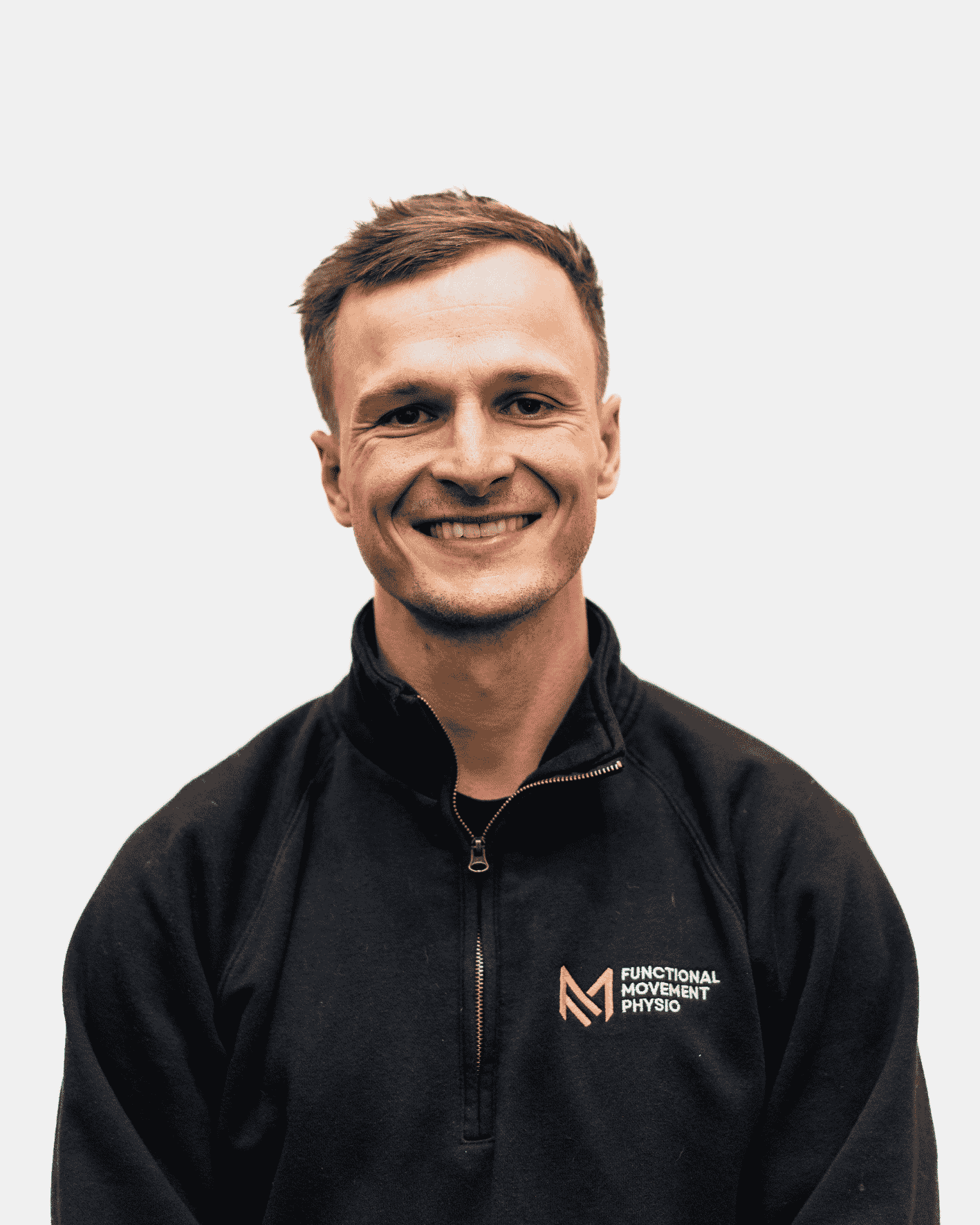
Stuart Goldfinch
HCPC PH112156
Specialist MSK Physiotherapist
Ex UK SAS Trainer
Graduate Sports Rehabilitator


