

Pain isn’t the only measure of progress. If you’re wondering how to know if physio is working, look at what you can do, how you move and how confidently you manage symptoms, not just how you feel on one day.
It’s understandable to feel frustrated when improvement is gradual, symptoms fluctuate or you’re unsure whether to continue. Progress doesn’t always mean pain disappears straight away. You may find everyday movements easier, feel more confident returning to training, or understand what aggravates your symptoms and how to respond.
This article explains practical signs that physiotherapy is helping, including changes in movement, strength and daily activity. You’ll also learn why symptoms can vary, how to judge whether your plan is addressing the factors behind the problem, and what to discuss if you feel stuck. The aim is to help you recognise useful progress and build towards lasting movement.
Key Takeaways
- Look beyond pain levels: changes in movement, daily tasks and confidence can also signal progress.
- Understand why short-term symptom relief may not address the factors behind recurring pain.
- Learn how a root cause approach can connect treatment with the activities you want to return to.
- Use practical measures to track changes over time and spot patterns in your symptoms and activity.
- Find out when to discuss exercises that aggravate symptoms and how physiotherapy support can help refine your plan.
The Problem
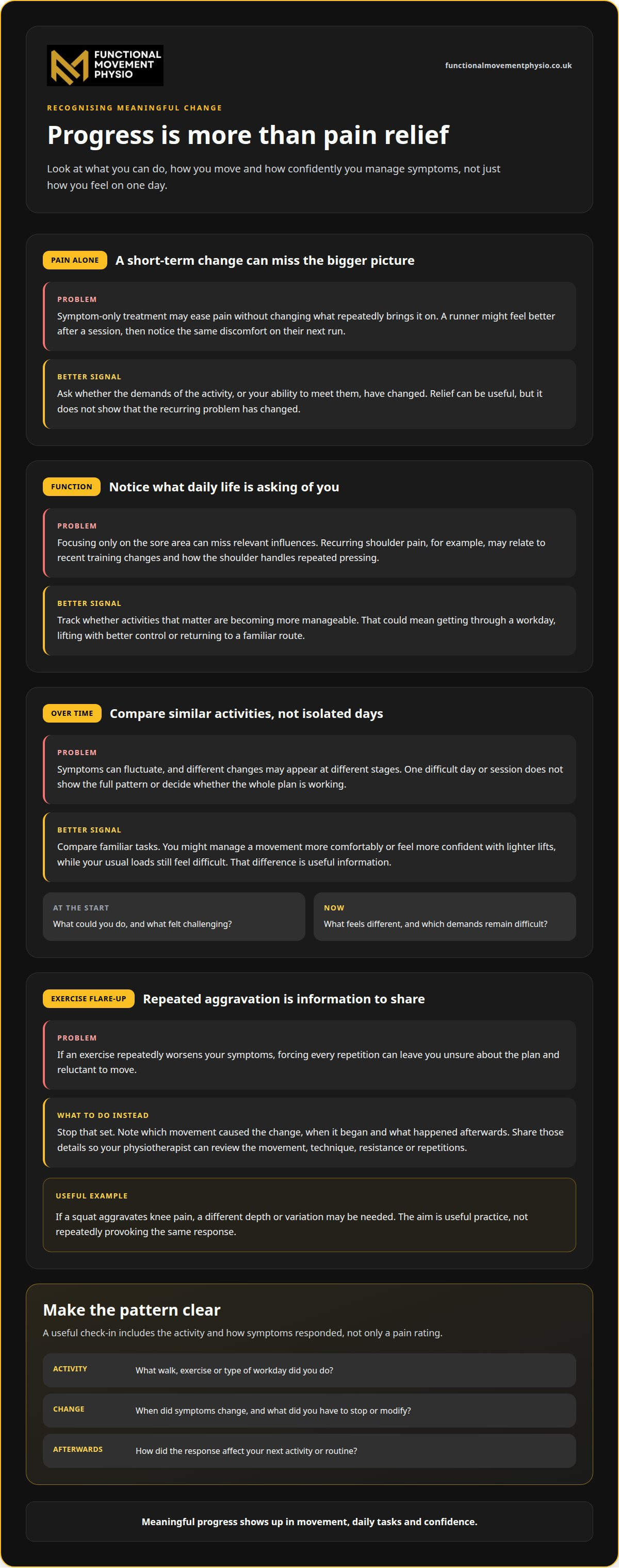
Symptom-only treatment aims to ease pain without changing what repeatedly brings it on. A runner might feel better after a session, then notice the same discomfort on their next run. Relief can be useful, but it doesn’t show whether the demands of running or their ability to meet them have changed.
Lasting progress means becoming better able to manage activities that matter to you. That could mean getting through a workday, lifting with better control or returning to a familiar route. If you’re asking how to know if physio is working, consider whether everyday tasks are becoming more manageable, not only whether pain briefly settles.
Focusing only on the sore area can miss other influences. Someone with recurring shoulder pain, for example, may need to consider recent training changes and how the shoulder handles repeated pressing. Treating discomfort alone may bring temporary relief, but the same demand can trigger symptoms again if the wider problem remains.
How Long Does Physiotherapy Take to Show Results?
A physiotherapy timeline is the period over which you notice changes in symptoms or function. There’s no single timetable for every injury or person. Your starting point, daily demands, condition and response to treatment all affect how progress unfolds.
Different changes can appear at different stages. You might manage a movement more comfortably before returning to your usual training. For example, you may feel more confident with lighter lifts, while your regular loads still feel difficult. That difference is useful information, not a verdict on the whole plan.
Compare similar activities rather than judging progress by one session. Note what you could do at the start, what feels different now and which demands remain challenging. The clearest answer to how to know if physio is working comes from noticing meaningful changes over time, such as completing a familiar task with less hesitation.
How Should Pain Change During and After Physiotherapy?
A pain response describes how symptoms behave during an activity and afterwards. Pain can vary as you return to movement, so one difficult day doesn’t show the full pattern. Compare familiar situations, such as the same walk, exercise or type of workday.
For example, if discomfort appears after you increase your running distance, note when it starts and how it affects your next activity. A useful discussion includes what you did, when symptoms changed and what you had to stop or modify. This gives your physiotherapist more context than a pain rating without details of the activity.
What If Physiotherapy Exercises Make Symptoms Worse?
A symptom flare-up is a noticeable increase in discomfort during or after an activity. If an exercise repeatedly worsens your symptoms, don’t force every repetition. Stop that set and note which movement caused the change, when it began and what happened afterwards.
Share those details at your next appointment. Your physiotherapist can review the movement, technique, resistance or repetitions, then adjust the exercise to match your current ability. A squat that aggravates knee pain, for instance, may need a different depth or variation. The aim is useful practice, not repeatedly provoking the same response.
If worsening symptoms keep affecting daily tasks, explain that clearly rather than quietly abandoning the whole programme. Describe what changed, which activities are now harder and whether the exercise affects your routine afterwards. This pattern helps your physiotherapist decide what to revisit. Continuing without discussing repeated aggravation can leave you unsure about the plan and reluctant to move.
The Root Cause Approach
A root cause approach looks at factors linked to your pain, not only the sore area. Knee pain, for example, is a symptom to understand, not a complete explanation. Your physiotherapist considers how you move, which activities provoke symptoms and what has changed in your routine. The aim is to build a plan around the pattern behind the problem.
That pattern can involve several influences rather than one fault. A sudden increase in walking, reduced strength after time away from activity, or a movement that repeatedly irritates an area can all shape how symptoms behave. Previous injuries, work demands and recovery habits also provide useful context. These details can help distinguish a short-lived flare from a recurring difficulty that needs a broader plan.
Assessment Connects Pain With Your Activities
A physiotherapy assessment is a structured review of your symptoms, movement and goals. It starts with what you find difficult, such as carrying shopping, sitting through a workday or returning to exercise. Your physiotherapist then examines relevant movements and asks how your symptoms respond. This connects what you feel with what your body needs to do in daily life.
For example, shoulder pain might appear when you reach overhead but not when your arm rests by your side. The useful question is what changes between those tasks. Your movement control, strength, recent activity and tolerance for repeated reaching can help shape the explanation. An assessment should test ideas against your experience, rather than assume everyone with similar pain needs the same treatment.
Treatment Builds Capacity, Not Just Temporary Relief
Capacity is your ability to tolerate the movements and demands of your life. If carrying a child, gardening or working at a desk brings on symptoms, treatment should address that specific demand. Exercises can develop strength or control for the movement involved. Hands-on treatment can support comfort, but it cannot replace the gradual practice needed to manage everyday tasks.
A useful plan gives each exercise a clear purpose. A step-up, for instance, can prepare your legs for stairs by practising a related movement. The difficulty should match your current ability, then progress as your control and tolerance improve. This doesn’t mean every session feels easier. It means treatment has a reason, and that reason connects to an activity you want to regain.
Root cause work also accounts for your environment and routine. If symptoms build after a long shift on your feet, the plan needs to consider that repeated demand. If you’ve stopped moving because pain feels unpredictable, rebuilding confidence becomes part of restoring activity. Progress can mean changing how you load a movement, then increasing that demand as your response becomes more manageable.
A meaningful treatment plan links assessment findings, exercise choices and your personal goals. You should be able to explain what each part is intended to address. As your needs change, the plan should change too. That connection helps you understand whether symptoms are shifting and whether you’re developing practical ways to move with greater confidence and manage the demands that matter to you.
Practical Steps for Long-Term Progress
Track activities you care about, such as walking to work or returning to lifting. Ask your physiotherapist to review the plan if progress stalls, symptoms keep worsening or exercises disrupt your routine.
Tracking Treatment Progress
Progress tracking means recording changes in symptoms and activities against a clear starting point. Choose a task, such as climbing the stairs at home, and note how it feels before treatment changes.
Keep your notes simple and consistent. Record the activity, what you managed and how symptoms affected it. For example, note whether you completed your usual walk without stopping or needed a rest halfway. A short entry after the activity can reveal changes that are easy to miss from one day to the next.
- Function: Record a task, such as reaching a high shelf or carrying shopping.
- Effort: Note whether the task felt easier, harder or unchanged.
- Symptoms: Describe when discomfort began and whether it changed your next activity.
- Confidence: Record whether you felt able to attempt the movement without avoiding it.
Use the same task and conditions where possible. If you track walking, choose a familiar route rather than comparing a short, flat walk with a longer, hilly one. For strength work, note the exercise variation and how controlled each repetition felt. This helps distinguish a real change from differences in activity or effort.
If you’re unsure how to know if physio is working, compare your notes across repeated activities. Look for changes in what you can do, how much effort it takes and whether symptoms alter your routine. One difficult day may offer little context. A clear record gives you and your physiotherapist specific details to discuss.
Reviewing the Treatment Plan
A treatment-plan review is a discussion about your response, goals and next steps. Ask your physiotherapist to review the plan when symptoms repeatedly worsen, exercises remain difficult to complete or a task isn’t improving as expected.
Bring a specific example to the discussion. Explain which exercise or activity caused difficulty, what happened afterwards and how it affected your routine. If getting up from a chair remains difficult, describe what happens during the movement and what you have to do differently. That detail gives your physiotherapist a clearer starting point for considering adjustments.
Review the plan when your goal changes, too. Returning to daily walking may be your first priority; later, you might want to resume lifting or a fitness class. Those activities place different demands on your body, so your plan should reflect the next movement you’re building towards. Ask how your exercises connect to that goal and what change would indicate you’re ready to progress.
At each review, compare your notes with your starting point. Consider function, symptoms and confidence together instead of focusing on one difficult session. If the same task remains limited, ask what the current plan is targeting and whether an adjustment could help. Specific questions and examples make the discussion practical. They also help you understand the next step rather than repeating exercises without a clear purpose.
Keep your record manageable: a few lines after a meaningful activity are easier to maintain than a detailed diary. Choose one daily task and one prescribed exercise to follow. For example, note how getting up from a chair feels, then record your control during the exercise. This gives you a consistent comparison and can help you explain how to know if physio is working at your next review.
Functional Movement Physio
FM Physio can help you make sense of your progress and connect treatment with the activities you want to return to. If symptoms keep recurring, exercises feel unclear or you’re unsure whether your plan addresses the factors behind your pain, an Initial Physiotherapy Consultation in Liverpool can help clarify your next steps.
The Initial Physiotherapy Consultation gives you time to explain what hurts, when symptoms appear and what you’re finding difficult. Your movement, activity demands and goals can then be considered together. For a runner, that might mean discussing when pain begins during a run and how it affects training. For someone who lifts, it could mean looking at which lifts or movements are difficult.
This puts your symptoms into context. Rather than treating a painful area in isolation, physiotherapy can explore how your current capacity, movement and routine relate to the problem. You can discuss what progress would look like in your life, such as walking comfortably, returning to a class or building towards regular training. Clear goals make it easier to review whether your plan remains relevant.
Follow-up Physiotherapy Treatment gives you an opportunity to review your response and adapt the plan as needed. Bring specific examples, such as an exercise that remains difficult, a daily task that feels easier, or a change in how symptoms affect activity. This gives the discussion a practical focus. Treatment can then be adjusted to reflect what you can do now and what you’re working towards.
That review matters if you feel stuck. A plan may need a different exercise, a change in difficulty or a clearer connection to your goals. If a movement repeatedly aggravates symptoms, explain what you tried and what happened afterwards. If daily tasks are improving but sport remains difficult, describe that difference too. These details help shape the next stage instead of relying on assumptions.
Sports massage may be used as part of support for muscle tension or physical discomfort, alongside a broader plan where appropriate. Functional Movement Physio offers Sports Massage (30 Minutes) and Sports Massage (60 Minutes). Massage may help you feel more comfortable, but lasting progress also depends on understanding your needs and building the capacity required for everyday movement or sport.
The right next step depends on what you’re experiencing. If you haven’t had your symptoms and movement assessed, an initial consultation can establish a starting point. If you’re already following a plan but unsure how it’s progressing, follow-up treatment offers a chance to review your response. Either way, explain your priorities plainly, including the activity you want to regain and what currently limits it.
Physiotherapy should help you understand the purpose behind your treatment, recognise useful changes and make informed adjustments as your needs evolve. The aim is not simply to chase short-term relief, but to work towards more confident, purposeful movement in the activities that matter to you.
Book an appointment with Functional Movement Physio to discuss your symptoms, progress and next steps.
Frequently Asked Questions
What are signs physiotherapy is working?
Signs can include moving more naturally, needing fewer pauses during a routine task, or feeling more confident trying an activity you previously avoided. For example, notice whether you can put on a coat or carry a work bag with less adjustment. These changes may show that movement is becoming more manageable, even if you still have some discomfort.
Book an appointment with Functional Movement Physio to discuss your progress and next steps.
Can you stop physiotherapy once symptoms improve?
Symptom improvement alone may not show whether you can manage the activities that matter to you. Consider your function and confidence over time, and discuss changes to your plan with your physiotherapist.

Article by
Stuart Goldfinch
HCPC PH112156
Specialist MSK Physiotherapist
Ex UK SAS Trainer
Graduate Sports Rehabilitator


