

More training isn't always the answer to staying injury-free. If you're trying to work out how to avoid running injuries in 2026, focus on building your training gradually, strengthening the muscles that support your stride, and allowing enough recovery for your body to adapt.
It’s understandable to feel frustrated when a niggle interrupts your running routine, especially when advice about mileage, stretching and shoes seems to conflict. You don’t need to stop at the first sign of discomfort, but pushing through pain that persists or worsens can make it harder to understand what’s causing it.
This guide explains how to adjust your training, build strength, choose comfortable running shoes and support recovery with rest, sleep, hydration and fuelling. You’ll also learn why lasting progress starts with addressing the factors behind pain, so you can return to purposeful movement with a clearer plan.
Key Takeaways
- Build strength alongside running to help your body manage the demands of each stride.
- Adjust training gradually, changing one factor at a time so you can understand how your body responds.
- Choose comfortable shoes and pay attention to changes in how they feel as you run.
- Support recovery with enough rest, sleep, hydration and fuelling, not just treatments for soreness.
- If pain keeps returning, look beyond the symptoms to identify what may be driving it.
The Problem
Running pain can make every decision feel uncertain. You might rest until it settles, change your shoes, stretch more or try a treatment that has helped before. These steps may ease discomfort, but relief alone doesn’t explain why the pain started or whether your body is ready for the same training load again.
Pain is what you notice, but it may not tell the whole story. A sore knee, for example, can be affected by how much you’ve run recently, how fast you’re running, your strength and how well you recover. The painful area matters, but focusing on it alone may miss other factors that influence how your body handles each stride.
A quick fix may feel effective at first without preventing the problem from returning. Massage or stretching may temporarily ease tightness or discomfort, while rest can reduce irritation. But if you return to the same combination of training demands, limited recovery and reduced capacity, the problem may reappear. Easing symptoms can help, but it isn’t the same as understanding what’s driving them.
Training changes can add up even when none feels dramatic on its own. You might run a little farther, add a faster session and fit in an extra run because you feel good. Each change increases the work your body has to manage. If your muscles and other tissues haven’t adapted to that demand, discomfort may develop. A sudden change in shoes or running surface adds another unfamiliar stress, making it harder to tell which change matters.
Look for patterns rather than judging a run by one sore moment. Useful details include:
- Where the discomfort starts and whether it changes during a run.
- Whether it returns at a similar point, after a particular session or when you increase your training.
- Whether it affects your stride, daily movement or willingness to run again.
These clues don’t diagnose an injury on their own. They help show how symptoms relate to the demands on your body, which is more useful than repeatedly treating the same sore spot without considering the wider picture.
Ignoring pain can be as unhelpful as fearing every sensation. General muscle soreness that settles within 24 hours can occur after a run, particularly when you’re adapting to increased distance or pace. Sharp, worsening or persistent pain deserves more attention. If discomfort changes how you run, continuing to push through can alter your movement and make it harder to judge what your body can currently tolerate.
The aim isn’t to find one perfect stretch, shoe or treatment that prevents every problem. It’s to understand why your current training is provoking symptoms, what your body needs to manage it, and how to return to running without repeating the same cycle. Moving from chasing relief to investigating the cause is a better starting point for lasting progress.
The Root Cause Approach
Lasting progress starts with asking more than “Where does it hurt?” A useful assessment considers what changed before the pain began, how your body responds to running and what may be limiting your ability to manage training demands. The sore area is part of the picture, but it doesn’t always explain the whole problem.
Running involves repeated work shared across your body. Your feet, calves, knees, hips and trunk all help move you forwards and absorb load. If one area has less strength, movement control or capacity than the task requires, another may take on more work. That doesn’t mean a particular muscle is automatically causing pain. It means the way your body handles the task deserves attention.
Changes in range of motion, strength, movement control and power can occur before running pain begins. Considering these factors gives a fuller picture than focusing only on the sore spot. A clinician can also consider your recent training, recovery, previous injuries and goals, then relate those details to your symptoms.
An assessment should make sense of how the issue behaves. Discomfort that appears only after faster running, for example, differs from pain that starts early, worsens as you continue or affects everyday movement. The timing, location and response to activity help guide next steps. They don’t diagnose the problem by themselves, but they can show which demands your body currently finds difficult to manage.
Care should address factors contributing to the problem, rather than follow a routine simply because it helped someone else. Depending on your needs, this could mean adjusting a training demand, improving strength, developing movement control or gradually rebuilding tolerance to running. The plan should reflect your assessment and progress as your capacity changes.
Progression matters. If you wait for pain to settle and then return to your previous workload, the mismatch between demand and capacity may remain. Building back gradually lets you monitor your response and adjust the plan before discomfort becomes your main measure of progress. Strength work is most useful when it addresses a specific need and fits around your running, rather than adding training for its own sake.
Good care also explains the purpose of each step. You should understand what the plan addresses, how to judge your response and what the next stage is working towards. This makes it easier to stay consistent without treating every ache as a reason to stop or pushing through symptoms that are changing how you move.
When pain keeps returning, a physiotherapy appointment can help connect your symptoms with your running demands and build a plan around the underlying factors. The goal is not simply to settle the current discomfort, but to restore the strength and confidence you need for purposeful movement.
3. Practical Steps to Avoid Running Injuries
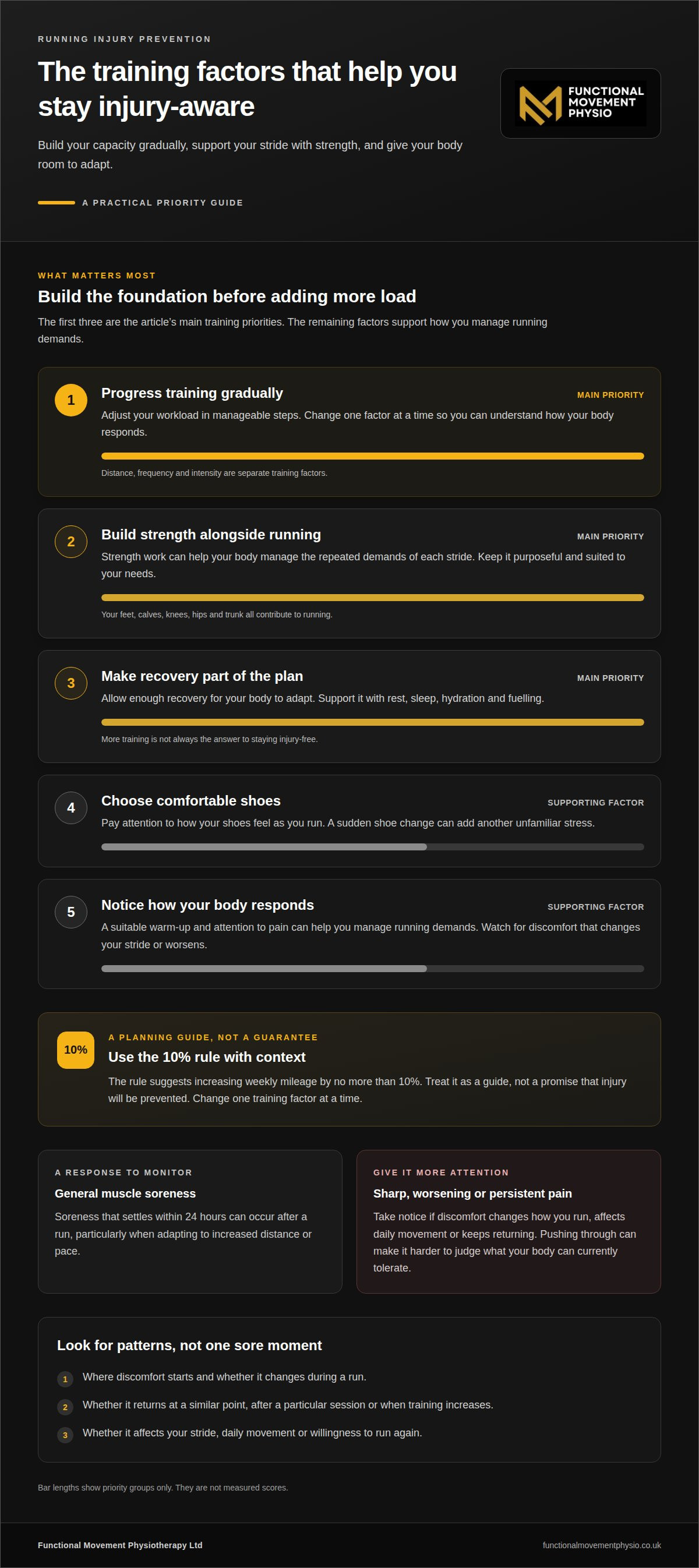
For practical guidance on how to avoid running injuries in 2026, focus on gradual training changes, regular strength work and enough recovery. Comfortable shoes, a suitable warm-up and attention to pain can also help you manage running demands and reduce overuse risk.
The 10% rule suggests increasing weekly mileage by no more than 10%. Treat it as a planning guide, not a guarantee. Change one factor at a time, since distance, frequency and intensity all affect your training load.
In the UK, useful safety steps include warming up for three to five minutes and stopping if pain affects your gait. Don’t push through discomfort that worsens or changes how you run.
Build strength with two to three sessions each week, fitted around your runs. Newcastle Hospitals recommends three sets of three to ten repetitions for the listed exercises unless otherwise stated. Its forward plank guidance is to hold for 15-60 seconds and repeat two to three times. Choose controlled exercises for the muscles that support your running, rather than adding demanding work without a plan.
Before a run, prepare with light jogging and dynamic movements, such as 10 squats. Afterward, a three-to-five-minute cool-down helps you move gradually into rest. Stretching may support flexibility, but it shouldn’t replace strength work or become your whole injury-prevention routine. Swimming or cycling can support fitness while varying the repetitive load of running.
Progress your running programme by changing one variable at a time. If you add distance, keep pace and frequency steady while you assess your response. Increase weekly mileage gradually, and consider reducing volume by one-third every third week to allow recovery. Beginners can use run-and-walk intervals, such as running for 30 seconds then walking for one minute, before building continuous distance. Returning runners should resume below their previous training level.
Running shoes don’t guarantee injury prevention, but comfort matters. Choose a pair that feels comfortable immediately, and replace shoes when they wear out. A commonly recommended replacement range is 300-500 miles. Introduce unfamiliar footwear gradually, especially if you’ve had a running-related injury. A key part of how to avoid running injuries in 2026 is recognising that new shoes won’t necessarily address pain caused by a sudden training change or inadequate recovery.
Recovery also depends on what happens between sessions. Include at least one easy or rest day for every heavy training day, and avoid adding hard runs when you’re already fatigued. After a run, refuel with carbohydrates and protein within 30-60 minutes. Drink water before, during and after running, and stay hydrated across the week. Aim for at least seven hours of sleep per night; nutrition, sleep and stress management all support recovery and fitness.
If shin splints or other pain keeps returning, or your stride changes, reduce the activity that provokes it and seek an assessment rather than relying on treatment that only eases symptoms.
Functional Movement Physio
Functional Movement Physio can help if running pain keeps returning, affects your stride or leaves you unsure how to train. The next step is to understand what may be contributing to the problem, rather than relying on repeated symptom relief. Physiotherapy can help you relate your symptoms to your movement, training and recovery.
An Initial Physiotherapy Consultation is a starting point for a new injury, recurring discomfort or a setback that hasn’t improved as expected. You can discuss when the pain began, what aggravates it and how it affects your running or daily activities. These details help shape the consultation around your needs and goals, whether you want to return to regular runs or move with more confidence.
Support can be useful when pain repeatedly interrupts training, changes how you run or persists despite adjustments to your routine. It can also help when you’re returning after an injury and feel uncertain about how to progress. Getting guidance doesn’t mean giving up running. It means taking your symptoms seriously and working towards a return that considers what’s affecting your ability to run comfortably.
Follow-up Physiotherapy Treatment provides continuity as you work through an agreed plan. Progress isn’t measured only by whether a painful area feels better on one day. It also means understanding how your body responds to running and whether you’re moving towards the activities that matter to you. As your symptoms and capacity change, ongoing care can help keep the focus on meaningful, sustainable movement.
Some runners also include Sports Massage in their wider care. It may be relevant if muscle tightness or soreness is a concern, but massage alone doesn’t identify every factor behind recurring pain. There’s a difference between easing a symptom and understanding the wider issue. If pain keeps returning, discuss the pattern and your running goals as part of physiotherapy, rather than using massage as a substitute for that conversation.
You don’t need to arrive with a perfect explanation or detailed training plan. Describe what you’ve noticed: when symptoms appear, what makes them better or worse, and how your recent running has changed. Be clear about what you want to return to. That might be a comfortable easy run, a longer distance or simply getting through daily life without worrying about another flare-up.
Physiotherapy can’t promise that every injury will be prevented or resolved with one treatment. It offers a practical way to investigate the problem, understand what could be maintaining it and plan appropriate next steps. The focus is on your situation, not a generic routine. If you’re unsure whether a change in symptoms needs attention, support can help you make a more informed decision about what to do next.
Functional Movement Physio offers physiotherapy support for runners who want to address the reasons pain is disrupting their activity and work towards returning to purposeful movement. If you’re ready to discuss your symptoms and goals, you can book an appointment with Functional Movement Physio.
Keep Moving Towards Your Next Run
Progress doesn’t depend on getting every training decision right. It comes from paying attention to how your body responds, making thoughtful adjustments and building a routine that supports the running you want to do.
If pain continues to interrupt your plans, you don’t have to work through conflicting advice alone. A focused conversation can help you decide what to address and how to move forward. For guidance on how to avoid running injuries in 2026, keep the goal practical: understand what is affecting your movement and take a sustainable next step.
With a clearer plan, you can work towards running with greater confidence and returning to the activities that matter to you.
Frequently Asked Questions
How can new or returning runners reduce their risk of injury?
Start with a running routine that matches your current fitness, not the distance or pace you managed in the past. If you’re new to running, run-and-walk intervals can help build tolerance; if you’re returning, begin below your previous training level. Note changes in distance, pace and frequency so you can spot how each adjustment affects your body. Avoid increasing several demands at once.
How can I tell if I have shin splints or a stress fracture in my shin?
You can’t reliably tell shin splints from a stress fracture by symptoms alone. A stress fracture is a bone injury caused by repeated stress over time, and shin pain can have several causes. Increasing shin pain should be assessed to check for a stress fracture. Don’t assume the problem has resolved just because it eases with rest if pain returns when you run.
What can you do to prevent running injuries?
Avoid sudden training spikes and notice how your body responds after harder sessions. For example, if a faster run leaves you unusually sore, don’t add extra distance to your next run as well. Keep a brief training record of session types and symptoms. It can help you spot patterns and make informed adjustments before pain repeatedly disrupts your routine.
How quickly should runners increase weekly mileage to reduce injury risk?
The 10% rule suggests increasing weekly mileage by no more than 10% at a time. Treat it as a planning guide rather than a proven safety threshold or guarantee: the right progression depends on your current running, recovery and response to training. A small increase can still be too much if you also add faster sessions or more running days, so change one training variable at a time.
How should runners warm up, cool down and build strength to prevent injuries?
Begin with a few minutes of easy movement, then use dynamic actions that resemble running, such as controlled leg swings or marching. After your run, ease down with a short period of gentle movement rather than stopping abruptly. Build strength with exercises you can control, such as squats, calf raises and planks. Increase the challenge gradually and allow recovery between demanding sessions.
How can runners choose suitable shoes and replace worn running shoes?
Choose running shoes that feel comfortable as soon as you try them, rather than expecting an uncomfortable pair to improve with use. Check how they feel during runs and look for noticeable wear or a change in support. A commonly recommended replacement range is 300-500 miles, but wear varies with the shoe and how you use it. A shoe change won’t necessarily address pain caused by training load.
What are the early signs of common running injuries, and when should you stop running?
Notice pain that becomes sharper, worsens as you run, returns in the same place or changes your stride. Stop if pain affects your gait, and don’t push through sharp pain. If discomfort doesn’t improve after the first 10 minutes, stop the run; seek assessment if the same pain occurs on two consecutive runs or persists for a week or two.
How do sleep, nutrition and rest days affect running injury risk?
Recovery helps your body adapt to training, so repeated hard sessions without easier days can leave you less prepared for your next run. Aim for at least seven hours of sleep per night and include carbohydrate and protein in your post-run food. Regular meals also support training and recovery better than relying on a single snack to make up for inadequate fuelling throughout the day.

Article by
Stuart Goldfinch
HCPC PH112156
Specialist MSK Physiotherapist
Ex UK SAS Trainer
Graduate Sports Rehabilitator


