

Shoulder pain doesn’t always begin in the shoulder. Rotator cuff problems, muscle or joint irritation, injury, and pain referred from the neck or elsewhere can all play a part, so shoulder pain physiotherapy in Liverpool starts with finding the likely source rather than guessing from symptoms alone.
If reaching overhead, training or sleeping has become uncomfortable, it’s understandable to worry that movement could make things worse. The right assessment can clarify what may be driving your shoulder pain and which movements are appropriate for you.
This article explains common shoulder pain causes, including how rotator cuff problems and referred pain are assessed. You’ll also learn what physiotherapy may involve and how a tailored home exercise plan can support a gradual return to the activities that matter to you.
Key Takeaways
- Shoulder pain can come from the shoulder itself or be referred from elsewhere, so the source matters when choosing what to do next.
- An assessment can look beyond the painful spot, including how your neck, shoulder movement and strength may relate to your symptoms.
- Rotator cuff problems often respond to appropriate exercise, with progress shaped by your symptoms and activity goals.
- A tailored home exercise programme can help you build confidence and return gradually to sport and everyday movement.
- Learn which symptoms may point to a cause outside the shoulder and why they deserve careful assessment.
What causes shoulder pain?
Shoulder pain can arise from muscle or ligament irritation, joint mechanics, age-related changes, nerve problems, disease or trauma. Repetitive work movements, long hours at a desk, posture and sports training can also contribute. Pain may develop gradually or follow an injury, so how it began helps guide assessment and treatment.
A useful assessment considers your symptoms and their impact on daily activities, then checks shoulder movement and strength. Neck symptoms matter too: pain travelling down an arm or into the hand may point to a cause beyond the shoulder. In Liverpool, physiotherapy and sports injury treatment should reflect these findings, not focus only on the sore spot.
For context on shoulder rehabilitation and exercise, watch this video:
Your treatment plan depends on the assessment findings. Physiotherapy may include exercises, soft-tissue techniques, joint mobilisation, massage, taping or posture advice. A personalised home exercise plan gives you practical ways to build movement and strength between appointments. For example, if reaching a high shelf is difficult, you might practise controlled reaching before progressing to more demanding movements.
Each treatment should have a clear purpose. Exercises build capacity for daily tasks and sport; joint mobilisation may address restricted movement; soft-tissue treatment can target muscle tension. Your physiotherapist should explain how each part relates to your symptoms and goals, then review your response and adapt the plan as your movement changes.
Frozen shoulder can bring pain and marked stiffness, making arm movement difficult. It is most common between ages 40 and 60, and improvement can take many months. During the painful stage, a GP may discuss a steroid injection. Exercise can support movement, with its intensity guided by your symptoms and restriction rather than forcing the arm through sharp discomfort.
There is no single number of physiotherapy sessions that suits every shoulder problem. The likely course depends on the cause, symptom severity, your activity goals and how your movement responds to treatment. Your physiotherapist can review your progress at each appointment and adjust the plan as your needs change.
Seek urgent medical assessment if shoulder pain follows a significant injury, becomes severe quickly or comes with other concerning changes in your health. Don’t delay care if symptoms feel urgent or prevent you from using your arm. Physiotherapy is better suited to ongoing movement problems once urgent concerns have been addressed.
Neck and shoulder pain may also follow injuries, stress-related tension, or joint and nerve issues. During pregnancy, shoulder-tip pain alongside severe stomach pain or vaginal bleeding warrants urgent medical help, the Scottish Government advises.
What Is the Rotator Cuff?
The rotator cuff is a group of muscles and tendons around the shoulder that helps control arm movement. If these tissues are irritated, lifting a shopping bag, reaching overhead or putting on a coat may become painful. Rotator cuff pain can also limit training, especially during presses, swimming strokes or throwing movements.
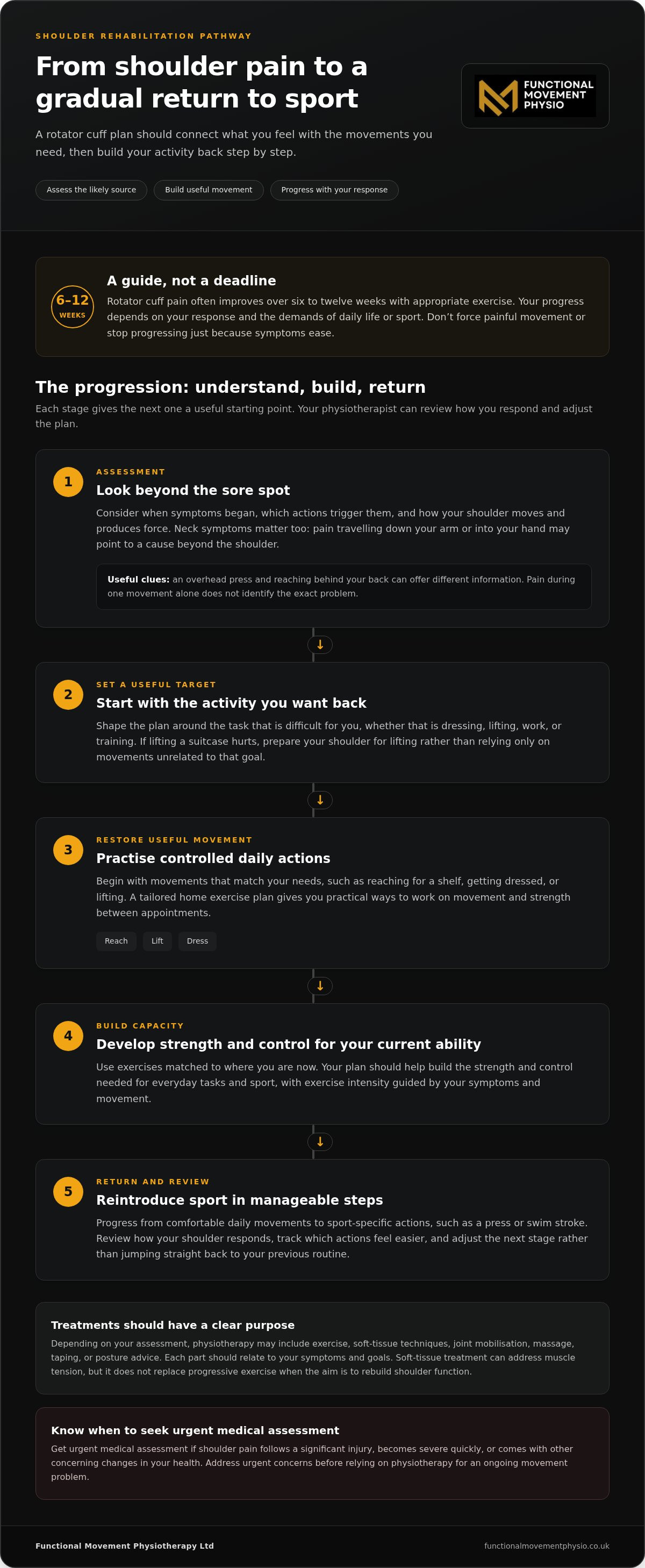
Pain during a movement doesn’t identify the exact problem by itself. An assessment considers when symptoms began, which actions trigger them, and how your shoulder moves and produces force. For example, pain during an overhead press and difficulty reaching behind your back offer different clues. These details help shape rehabilitation around your needs.
Returning to sport works best as a gradual progression, not a sudden test of whether the pain has gone. You might first practise comfortable daily movements, then build strength and control for sport-specific actions. A runner returning to gym training, for example, can increase shoulder loading gradually rather than jump straight into their previous routine.
Sports physiotherapy can connect rehabilitation exercises to your goals. A useful plan may include:
- Practising the arm movements needed for dressing, lifting or work.
- Building strength and control with exercises matched to your current ability.
- Reintroducing a sports movement, such as a press or swim stroke, in manageable steps.
- Reviewing your response and adjusting the next stage of activity.
Sports injury rehabilitation focuses on restoring useful movement and capacity, rather than relying only on short-term symptom relief. Your exercises should relate to the task that’s difficult. If lifting a suitcase is painful, your plan needs to prepare your shoulder for lifting, not simply repeat movements unrelated to that goal.
Sports massage may help address soft-tissue tension, but it doesn’t replace progressive exercise when the goal is to rebuild shoulder function. A physiotherapy clinic can consider massage alongside movement assessment and rehabilitation, depending on your symptoms and priorities. You should understand how each treatment fits the plan and what you can practise between appointments.
Rotator cuff pain in Liverpool often improves over six to twelve weeks with appropriate exercise. That period is a guide, not a reason to force painful movement or stop as soon as symptoms ease. Progress depends on your response and the demands of your daily activities or sport. Keep track of which actions feel easier and discuss setbacks during review.
If shoulder pain is stopping you from training or managing daily tasks, an assessment can help connect your symptoms with a practical return-to-activity plan. You can book an appointment to discuss your shoulder and rehabilitation goals.
Why choose private shoulder physio in Liverpool?
A structured assessment connects shoulder symptoms with movement, strength and your daily goals. For shoulder pain physiotherapy in Liverpool, compare the assessment offered, the physiotherapist’s experience and how follow-up supports progress.
Shoulder Assessment and Diagnosis
A useful assessment starts with your history: when pain began, which movements aggravate it, and how it affects work, sleep or sport. The physiotherapist checks shoulder mobility, strength and relevant soft tissues. They may also assess your cervical spine, since neck-related symptoms can sometimes be felt around the shoulder.
A biomechanical assessment examines how your body moves during a task, such as reaching overhead. Many shoulder problems can be assessed from your history and examination without an initial scan. Ask how the findings shape your treatment plan, including whether surgery or another medical opinion needs discussion.
Physiotherapist Qualifications and Experience
Check the physiotherapist’s professional registration and experience assessing shoulder conditions. Ask how they evaluate strength, mobility and the cervical spine, and how those findings guide treatment. An example involving sport, such as pain during swimming or weight training, can help you judge whether their approach fits your needs.
Look for clear explanations, not just a list of techniques. You should understand the working diagnosis, the purpose of each treatment step and how progress will be reviewed. If surgery is part of your history, ask how rehabilitation accounts for the procedure and your current movement.
Clinic Location, Availability and Reviews
Consider how a Liverpool clinic’s location fits your home, work or usual travel route, then look at appointment availability and review details. Useful reviews describe assessment, communication and support with returning to activities, not just a star rating. Check whether follow-up appointments can fit your schedule and support ongoing progress.
Functional Movement Physio provides physiotherapy and sports injury rehabilitation in Liverpool, including assessment and follow-up treatment for shoulder pain. Look for a service that discusses shoulder conditions and rehabilitation clearly. Compare how the assessment and follow-up fit your needs, rather than relying on location or review scores alone.
Costs and NHS Physiotherapy Access
Private assessment and follow-up costs depend on the appointment and treatment involved. The price depends on the case and is given after a quote request. Factors include appointment length, assessment needs and whether follow-up treatment is required. Compare what each appointment covers, rather than price alone.
According to the NHS, most adults in England who are registered with a GP can self-refer to community musculoskeletal services, which may include physiotherapy. Check your local NHS service’s referral route and eligibility information. If you prefer private care, an initial physiotherapy appointment can establish your symptoms, movement and next steps.
Exercises and home exercise programmes
A home exercise programme turns assessment findings into practical work between appointments. Exercises should support the movements you need for daily life, work or sport, rather than rely on a generic routine.
Tailored Home Exercise Programmes
Your physiotherapist should match exercises to your symptoms, current movement and goals. If reaching a high shelf is difficult, your programme can focus on controlled reaching and the shoulder movement needed for that task. Ask them to explain each exercise’s purpose, how to perform it and what changes to monitor.
Your plan should fit your routine. Choose a consistent time and place, such as practising after breakfast, and keep the instructions easy to follow. Record which exercises you completed and how your shoulder responded. That information helps your physiotherapist adjust the programme at review, instead of relying on memory or guesswork.
Home Rehabilitation Exercises
Home rehabilitation exercises may develop mobility, control or strength, depending on your assessment. A comfortable arm movement can help you practise reaching, while a strengthening exercise may prepare your shoulder for carrying a bag. Each exercise should connect to a task you want to manage, not simply add activity without a clear purpose.
Follow the technique and movement range demonstrated by your physiotherapist. Don’t force a stretch or add repetitions just because an online routine suggests it. If an exercise clearly increases your symptoms, note the movement and when the change occurred. Share that detail at your next appointment so the programme can be reviewed.
Stretching isn’t automatically right for every painful shoulder. Your physiotherapist can explain whether your plan should prioritise mobility, strength or controlled movement. This helps you avoid treating every shoulder problem as stiffness, especially when a particular action, rather than general movement, triggers discomfort.
Exercise Rehabilitation
Exercise rehabilitation builds your ability to manage specific demands. Start with movements suited to your current capacity, then progress towards the activities you want to resume. For example, a gym-goer can practise controlled shoulder movement before returning to a press. A runner can pay attention to relaxed arm movement during training.
Progress should be guided by your response, exercise quality and daily function. Keep a brief record of which tasks feel manageable, what remains difficult and whether symptoms change after exercise. Bring those observations to follow-up appointments. They help your physiotherapist adjust the next stage rather than continue an exercise that no longer fits your needs.
Consistency matters more than collecting exercises. Follow the agreed plan, practise the technique shown and raise concerns at review. If you’ve had shoulder surgery, follow your post-operative rehabilitation guidance instead of starting general shoulder exercises independently.
Intrinsic and referred causes of shoulder pain
Pain felt at the shoulder can begin there or be referred from elsewhere. That distinction matters: treating the painful spot alone may miss what’s driving your symptoms. For example, a shoulder joint problem and irritation involving the cervical spine can both cause discomfort around the shoulder, but assessment needs to consider different body areas.
Intrinsic causes arise within shoulder structures, including muscles, tendons, ligaments and the joint. A musculoskeletal assessment considers how symptoms change with shoulder movement, strength testing and pressure around soft tissues. If lifting your arm reproduces pain, that helps describe the pattern but doesn’t confirm a diagnosis by itself. Your history and examination guide the next step.
Referred pain starts outside the shoulder but is felt there. Possible sources include:
- The cervical spine, which can also relate to symptoms travelling into the arm or hand.
- The diaphragm, which can refer discomfort towards the shoulder.
- Conditions elsewhere in the body, including apical lung cancer.
These examples don’t mean shoulder pain usually signals a serious condition. They show why its location alone cannot establish the cause. A clinician considers the full symptom pattern, how it began and whether neck movement or other findings relate to the discomfort. This broader view helps determine whether a musculoskeletal treatment plan fits or further medical assessment is needed.
At your appointment, explain when symptoms occur, what changes them and whether you also notice neck pain, altered sensation or discomfort beyond the shoulder. For example, pain limited to a particular shoulder movement gives different information from pain that travels down the arm. A clear account helps the clinician assess the shoulder joint, cervical spine and relevant soft tissues before discussing treatment.
The practical point is simple: don’t assume the place that hurts is the source. Assessment should connect your symptoms with movement findings and your wider health picture. If a physiotherapist cannot explain how the findings support the working diagnosis, ask what other causes they have considered. This helps you understand whether rehabilitation is appropriate or another route should come first.
Cervical-spine and diaphragm pain, as well as cancer such as apical lung cancer, are also listed among possible extrinsic causes.
Functional Movement Physio: Initial Physiotherapy Consultation
Functional Movement Physio offers an Initial Physiotherapy Consultation to assess your shoulder symptoms and identify what may be driving them. It’s a practical next step if pain, stiffness or weakness affects work, exercise or everyday movement. Your assessment can shape an individual treatment plan focused on your goals, not symptoms alone.
If ongoing care is appropriate, Follow-up Physiotherapy Treatment can support your progress as movement and activity demands change. Discuss what you want to return to, whether that’s lifting comfortably, training at the gym or managing daily tasks more easily.
To discuss shoulder physiotherapy in Liverpool, contact Functional Movement Physio or visit functionalmovementphysio.co.uk.
Make Your Next Move With Confidence
You don’t need to guess which exercise or treatment to try next. A useful first step is to identify one movement you want to regain, such as reaching comfortably, returning to training or sleeping without shoulder discomfort. That goal gives your rehabilitation a clear direction.
If you’re considering shoulder pain physiotherapy in Liverpool, note what currently limits you. Write down which movements bring on symptoms, what you’ve changed in your routine and what you hope to do again. These details can make the first conversation more focused and keep your next steps relevant to everyday life.
Progress comes from informed decisions and steady practice, not pressure to return before you’re ready. Choose a next step that helps you move with greater understanding and purpose.
Keep your goal in view and take the next step towards moving well again.
Frequently Asked Questions
Do you visit anywhere in Liverpool?
Functional Movement Physio sees patients at its clinic in Liverpool city centre’s Baltic Triangle, at 27 Norfolk Street, Liverpool, L1 0BE. Appointments take place at the clinic, so consider how you’ll travel there when arranging your visit. If you’re coming from another part of Liverpool, allow for travel time and bring any relevant information about your shoulder symptoms or previous treatment.
Why does my shoulder hurt more at night?
Shoulder discomfort can feel worse at night if your sleeping position places pressure on sensitive tissues or holds your arm uncomfortably. Lying directly on the affected side can aggravate symptoms for some people. Try supporting your arm with a pillow and changing position. If night pain keeps disrupting sleep or is getting worse, discuss it with a healthcare professional rather than repeatedly changing exercises yourself.
What causes shoulder pain and when should you see a physiotherapist?
Shoulder pain may relate to the muscles, tendons or joint, or be referred from another area such as the neck. Consider physiotherapy if symptoms keep returning, limit dressing or work, or stop you training as usual. Before an appointment, note which movements bring on pain and what you’ve stopped doing. This gives the assessment practical details to connect your symptoms with everyday function.
What shoulder physiotherapy treatments are available in Liverpool?
Treatment can include an Initial Physiotherapy Consultation to assess your symptoms, followed by Follow-up Physiotherapy Treatment as appropriate. Available options also include Sports Massage (30 Minutes), Sports Massage (60 Minutes), Shockwave Therapy and Clinical Pilates 1:1. The assessment helps determine which approach fits your needs and goals. For example, treatment for difficulty returning to exercise should relate to the movements and demands involved in that activity.
How much does private shoulder physiotherapy cost in Liverpool?
The price depends on your case and is given after a quote request. Cost factors include whether you need an initial assessment, the treatment involved and whether follow-up appointments form part of your care. Ask for the cost relevant to your planned appointment before proceeding. This lets you understand the expected commitment without relying on a general average that may not reflect your assessment or treatment needs.
What exercises can help shoulder pain, and which should you avoid?
The most suitable exercises depend on your assessment findings and which movements you can perform comfortably. Your physiotherapist may recommend controlled mobility work or strengthening, then adjust it as your symptoms change. Avoid forcing a stretch or repeating a movement that sharply increases pain. If overhead lifting aggravates your shoulder, for example, pause that movement and ask how to build back towards it safely.

Article by
Stuart Goldfinch
HCPC PH112156
Specialist MSK Physiotherapist
Ex UK SAS Trainer
Graduate Sports Rehabilitator


