

Hands-on treatment is one part of a back-pain plan, not the whole solution. Manual therapy for back pain in Liverpool is applied after a physiotherapist assesses the affected area and chooses an approach suited to your needs. Treatment may involve moving joints or working with soft tissues, alongside exercise and education about your condition.
Recurring pain can make you unsure whether movement will help or make things worse. Manual therapy may help ease discomfort or restricted movement, but lasting progress also depends on what you do between treatment sessions.
This guide explains how joint mobilisation and soft tissue techniques are used, how they can work alongside exercise and practical advice, and what shapes an individual treatment plan. Understanding each step can help you build confidence as you work towards returning to the activities that matter to you.
Key Takeaways
- Understand how joint movement techniques and soft tissue treatment differ, and what each may aim to address.
- See why hands-on care works best as part of a plan that also includes exercise and practical guidance.
- Learn which details about your pain, movement and daily activities help shape an individual treatment plan.
- Know what to expect from the assessment and how progress can guide the next steps in treatment.
- Explore how an initial physiotherapy consultation can help you move from recurring symptoms towards addressing their underlying causes.
Joint mobilisation and soft tissue therapy
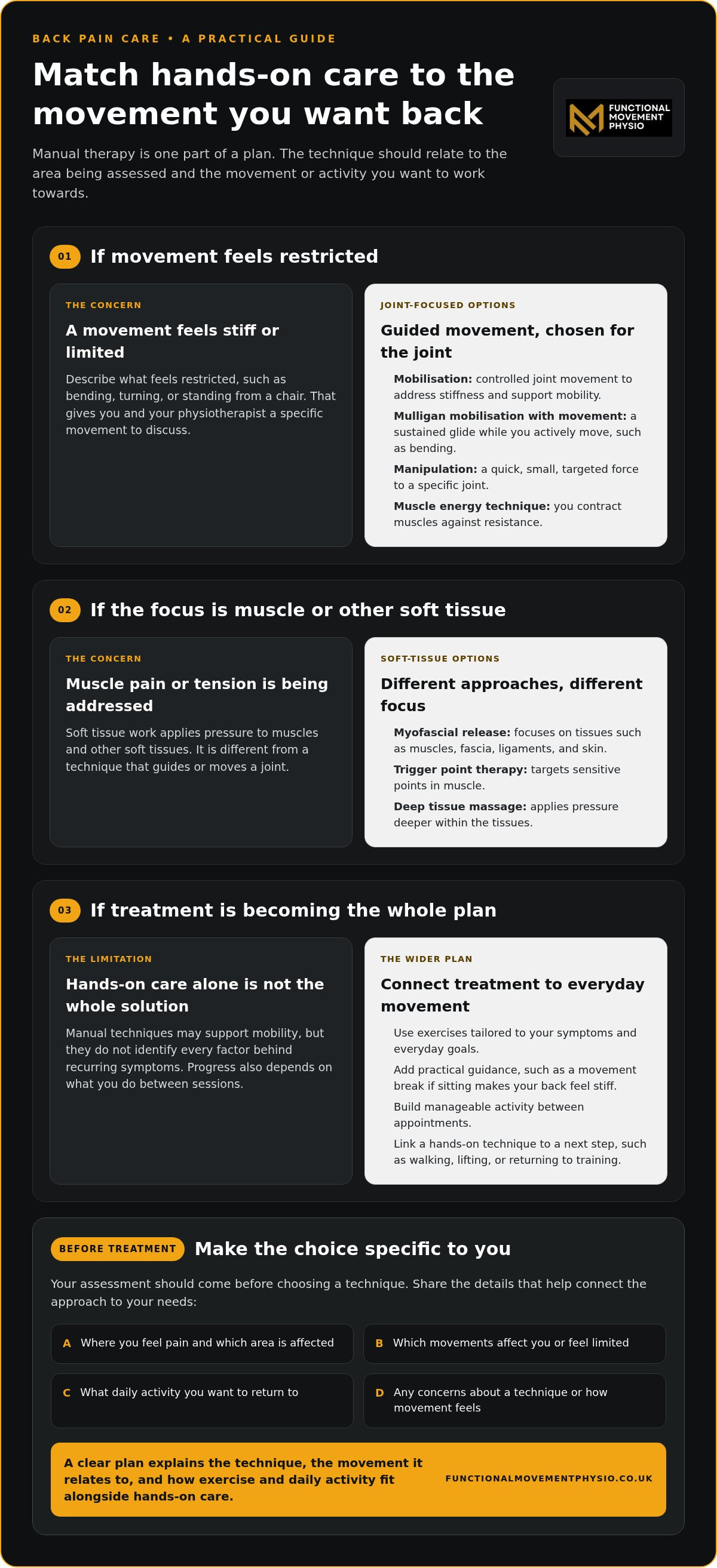
Hands-on care can include joint mobilisation, manipulation and soft tissue techniques. Each uses a different approach, from guided spinal movement to focused pressure on muscles. If you’re considering manual therapy for back pain in Liverpool, ask how the chosen technique relates to your movement and the area being treated.
Joint Mobilisation
Joint mobilisation uses controlled movements to address stiffness and support mobility. For lumbar spine mobilisation, a physiotherapist guides movement in the lower back rather than applying a quick thrust. Mulligan mobilisation with movement combines a sustained joint glide with an active movement, such as bending. The technique is chosen to suit the joint and movement being assessed.
Mulligan techniques use sustained, low-velocity glides while you actively move. For example, the physiotherapist guides a joint as you repeat a movement that feels restricted. This differs from spinal manipulation, which uses a faster, targeted force. The speed and method distinguish these approaches.
Manual therapy can also include muscle energy techniques, in which you contract muscles against resistance. A physiotherapist may use this approach to work with movement around a joint. Rather than applying pressure without a clear purpose, they select a technique related to the movement being addressed.
Before treatment, describe which movement feels limited, such as turning, bending or standing from a chair. This helps connect the hands-on approach to an activity you want to do more comfortably. It also gives you a specific movement to revisit when discussing how treatment fits your recovery plan.
Spinal and Peripheral Joint Manipulation
Spinal manipulation applies a high-velocity, low-amplitude force to a targeted area. In plain terms, the movement is quick and small, with force directed at a specific joint. Manipulation can also be used on peripheral joints outside the spine. The area treated depends on the location and pattern of your symptoms.
Manipulation differs from Mulligan mobilisation, which uses a sustained glide alongside your active movement. Neither term describes soft tissue massage. Before treatment, ask the physiotherapist to explain the technique, target area and intended movement. This helps you understand the plan and raise any concerns.
Soft tissue work applies pressure to muscles and other soft tissues. Myofascial release focuses on tissues such as muscles, fascia, ligaments and skin. Trigger point therapy targets sensitive points in muscle, while deep tissue massage applies pressure deeper within the tissues. These approaches generally focus on soft tissues rather than joint movement.
A session may focus on a tense muscle rather than moving a spinal joint. The approach depends on the area and issue being treated, such as restricted movement or muscle pain. Hands-on techniques can support mobility, but they don’t identify every factor behind recurring symptoms. A useful treatment plan links the technique to the movement and daily activity you want to restore.
Manual therapy alongside exercise and education
Hands-on treatment is most useful as part of a plan that also builds your confidence to move. Exercise, practical education and daily activity can help you work towards lasting change, rather than relying on treatment alone.
Manual Therapy Alongside Exercise
A physiotherapist can combine manual therapy with exercises tailored to your symptoms and everyday goals. If sitting makes your back feel stiff, for example, your plan might include a movement break and an exercise to practise at home. The aim is to make activity manageable and gradually restore movements that matter to you.
Manual techniques may help you move more comfortably during rehabilitation, while exercise gives you an active role between appointments. Ask how a hands-on technique connects to your next step, such as walking, lifting or returning to training. Your plan should make that connection clear, rather than treating temporary symptom change as the only measure of progress.
How do osteopathy, chiropractic and physiotherapy compare for back pain? All three professions may use hands-on approaches, but their methods and overall care plans can differ. Physiotherapy can combine manual treatment with exercise and education. Compare the assessment and self-management plan as well as the treatment technique.
How much does manual therapy for back pain cost in Liverpool? The price depends on the assessment, treatment approach and appointment length, and is given after a quote request.
Which Liverpool clinics offer manual therapy for back pain? At a Liverpool physiotherapy clinic, look for an assessment of your movement and a clear explanation of how hands-on treatment fits your wider plan. The approach to exercise and daily activity matters alongside the manual techniques used.
Risks and Suitability
Your assessment should come before choosing a technique. Tell the physiotherapist where you feel pain, which movements affect it and what you want to get back to doing. This helps them decide whether manual treatment suits the area and your current needs.
What are the risks and side effects of manual therapy for back pain? What you feel during or after treatment depends on the technique and area treated. Discuss any concerns before treatment, and tell the physiotherapist if a movement or technique feels uncomfortable.
Who should avoid manual therapy or seek medical advice first? If you’re unsure whether hands-on treatment is suitable, share your concerns during the assessment before treatment begins. Your symptoms, the affected area and how you respond to movement help guide that decision.
Choosing a Qualified Manual Therapist
Choose a practitioner who assesses the affected area before selecting a technique and explains how it relates to your symptoms. Ask how treatment connects with exercise, education and a practical goal, such as returning to regular walks or gym sessions.
How can I choose a qualified manual therapist in Liverpool? Look for a physiotherapist who explains the assessment, treatment options and role of exercise in plain language. You should understand why a technique is being used and how progress will be reviewed.
The NHS University Hospitals of Liverpool Group pain physiotherapy team uses education, exercise, daily-task pacing and goal setting to support rehabilitation. If you want an individual assessment and a plan shaped around your movement goals, you can book a physiotherapy appointment.
Patient-centred pain assessment and treatment planning
A useful assessment starts with your experience, not a label attached to your posture. Your symptoms, movement and daily activities help the physiotherapist decide which findings matter and whether manual therapy for back pain in Liverpool suits your needs.
First, describe where you feel pain and what changes it. Explain whether bending, sitting, walking or lifting affects your back. Mention when symptoms began, whether they have changed and what you have stopped doing. These details connect the assessment to a practical goal, such as returning to work, running or gym training.
The NHS University Hospitals of Liverpool Group describes pain lasting less than three months as acute pain and pain lasting longer than three months as chronic pain. Duration is one detail, not a complete explanation. Tell the physiotherapist about previous episodes, current concerns and any advice or treatment you have already tried.
Next, the physiotherapist assesses the affected area before deciding which manual therapy approach to use. They may observe how you stand, bend, turn or move between positions. Posture observations are most useful alongside your symptoms and function. For example, the assessment may compare a comfortable movement with one that reproduces your familiar back pain.
A mobility assessment looks at how your back and nearby areas move during relevant tasks. A runner might describe discomfort during a stride or when increasing training; someone else might struggle to reach down or rise from a chair. These examples help focus the assessment on movements affecting your routine, rather than treating one observation as the whole problem.
Discuss symptoms that travel away from your back, including into a leg, and explain when they appear. The physiotherapist can consider these details alongside your movement and other findings. Be specific: say whether symptoms change with walking, sitting or a particular exercise. This helps tailor your plan to your symptoms and movement.
- Your priorities: name an activity you want to resume, such as lifting comfortably.
- Your response: explain which movement eases or aggravates your symptoms.
- Your history: mention previous episodes and what you have tried.
Your treatment plan should link assessment findings to practical next steps. If bending is limited, the plan might address that movement and build towards an everyday task involving bending. If symptoms interrupt running, your training demands and return-to-running goal should inform the discussion. Manual therapy is selected with the affected area and your needs in mind.
At follow-up, describe what changed after treatment and how activities felt between appointments. For example, report whether sitting, walking or a training session felt different. This feedback helps the physiotherapist review the plan, adjust its focus and keep treatment connected to your progress and purposeful movement.
Appointment process and treatment planning
A well-structured appointment connects back pain with practical goals. The process moves from discussing your concerns to agreeing on treatment and rehabilitation steps you can use between visits.
Do I need a GP referral to see a manual therapist in Liverpool? No GP referral is needed to book private physiotherapy directly. NHS access follows local pathways, which may include self-referral or referral through a GP.
Before your appointment, note what you want help with and which activities are difficult. Record whether lifting shopping, sitting at work or returning to running brings on symptoms. Bring details of previous treatment and any exercises you already follow. These examples help make the first discussion specific to your everyday needs.
At the appointment, explain how pain affects your routine and what you hope to change. The physiotherapist can then assess relevant movement and discuss a suitable approach. If muscle tightness is part of your experience, describe where you notice it and which actions affect it. Clear information connects treatment choices with your goals.
The next step is agreeing a plan. This might combine hands-on treatment with an exercise or a change to how you approach a daily task. Ask how each part supports rehabilitation, and what you should practise before your next appointment. For example, a walking goal can be broken down into a pace and distance that feel manageable for you.
Progress is reviewed by discussing how your symptoms and activities respond. Before a follow-up, note what felt easier, what remained difficult and whether an exercise fitted your routine. If a movement causes concern, describe exactly what happened rather than stopping silently. That feedback gives the physiotherapist useful information for adjusting your plan.
Plan appointments around the demands of work, training and home life. A runner’s rehabilitation needs to fit around running, while someone who sits at work may need practical movement breaks. Identify the activity you want to resume first. This keeps treatment focused on function, not just how your back feels on the treatment table.
Each appointment in ongoing care should have a clear purpose. A follow-up can review your response, progress an exercise or revisit the treatment approach. If your needs change, such as symptoms returning during training, raise this and agree on the next step together. The plan should stay connected to the factors affecting your movement and your long-term aims.
Manual therapy for lower back pain
For lower back pain, manual therapy may help manage pain and support mobility. Its role is best understood alongside your symptoms, movement and daily function.
Treatment for Lower Back Pain
A physiotherapist assesses the affected area before choosing a manual technique. Lumbar mobilisation, for example, applies movement to the lower spine, while soft tissue work targets muscles. The choice depends on the area being treated and the movement or discomfort you want to address.
One proposed effect of lumbar mobilisation is reduced nerve input from the painful area and a higher pain threshold. This relative reduction in pain sensitivity is called hypoalgesia. The mechanism is not simply that a joint is “put back in place”; mobilisation is considered for its potential effects on pain and movement.
Strain-counterstrain uses a different approach: the therapist places you in a comfortable position and holds it for 90 seconds. The technique chosen should relate to your assessment and the function you want to regain, such as bending more comfortably or returning to a usual walk.
Evidence for Manual Therapy
What evidence supports manual therapy for back pain? Manual therapy is commonly used for non-pharmacological pain management and to increase mobility. Lumbar mobilisation may affect pain thresholds, but it should be considered as part of a broader plan rather than the sole route to lasting relief.
The proposed effect on pain thresholds may involve electrochemical changes in how threshold potential is regulated. This describes a possible mechanism, not a promise of a particular result. In practical terms, notice whether a relevant movement, such as standing from a chair, becomes easier.
Low back pain may improve without treatment after 2 to 3 weeks. That possibility makes it useful to consider how symptoms and function change over time, not just how your back feels immediately after hands-on care. Note a specific activity, such as walking or lifting, and discuss how it changes.
Bed rest for low back pain should not last more than 2 days. This supports keeping appropriate movement in view rather than relying on prolonged rest. A physiotherapist can relate manual treatment to your activity, symptoms and rehabilitation needs, including how you build back towards normal tasks.
Evidence should guide expectations: manual therapy may support pain management and mobility, but a temporary change alone does not show that the cause of recurring symptoms has been addressed. Consider whether the plan also explains your next steps, such as progressing movement and managing daily activities.
Functional Movement Physio: Initial Physiotherapy Consultation
Functional Movement Physio offers an Initial Physiotherapy Consultation in Liverpool to help you understand your back pain and plan next steps. If recurring symptoms limit running, training or everyday movement, an assessment can explore how they relate to your activities and goals.
The consultation gives you the opportunity to discuss your pain, movement and previous approaches. Treatment planning can then focus on factors affecting your function, rather than hands-on care alone. Follow-up Physiotherapy Treatment supports continued progress as your needs and activity levels change.
Sports Massage (30 Minutes) and Sports Massage (60 Minutes) are also available for targeted soft tissue treatment. The right option depends on what you want help with and how it fits your wider plan.
Visit Functional Movement Physio to arrange an appointment and discuss your next step.
Make Your Next Move Count
Progress is easier to recognise when you connect it to something you want to do. Choose a meaningful activity, such as a comfortable walk, a gym session or a return to running, and notice how your back responds as you work towards it.
Choosing manual therapy for back pain in Liverpool should be part of a wider conversation about your movement, priorities and the factors that may be keeping symptoms going. Turn what you have learned into a plan for active recovery, rather than measuring success only by how your back feels immediately after treatment.
Functional Movement Physio can help you explore the next step through an individual physiotherapy appointment in Liverpool. Bring a clear example of what you want to do more comfortably, and use it to guide a discussion about your needs and goals.
With a clearer understanding of your movement and a practical direction forward, you can build towards returning to the activities that matter to you.
Frequently Asked Questions
How are they applied?
The physiotherapist applies a selected technique to a specific area, then checks how your movement responds. They might reassess a comfortable bend after treatment or ask you to repeat a movement from your assessment. You can describe what you feel throughout. This feedback keeps treatment focused on a meaningful task, rather than applying the same approach to every back-pain presentation.
Is this a manipulation?
Not always. Manipulation is one form of manual therapy, using a quick, small movement directed at a joint. Other options use slower, controlled movements or pressure on soft tissues, so a hands-on appointment doesn’t automatically mean manipulation. If you’re concerned about a particular technique, say so before treatment and ask what the physiotherapist plans to do. You can discuss the approach and your preferences before deciding how to proceed.
What types of manual therapy are used for back pain in Liverpool?
Options include spinal mobilisation, spinal manipulation, muscle energy techniques, Mulligan mobilisation with movement, and soft tissue approaches such as myofascial release or trigger point therapy. The technique depends on the assessment and the movement or tissue being addressed. For example, a physiotherapist may consider guided joint movement or targeted work on a tense muscle. Ask how the chosen method relates to your symptoms and activity goals.
What should I expect at a first manual therapy appointment for back pain?
Expect to explain how your back affects daily life, including a specific task such as getting dressed, lifting or driving. The physiotherapist will assess relevant movement before discussing whether hands-on care suits your needs. Wear clothing that lets you move comfortably, and bring questions about techniques or activities you’re unsure about. You should leave with a clearer understanding of the treatment approach and what to focus on between appointments.
Who should avoid manual therapy or seek medical advice first?
If you’re unsure whether hands-on treatment is suitable, share your concerns during the assessment before treatment begins. If your pain has lasted longer than three months, discuss your options with your GP.

Article by
Stuart Goldfinch
HCPC PH112156
Specialist MSK Physiotherapist
Ex UK SAS Trainer
Graduate Sports Rehabilitator


